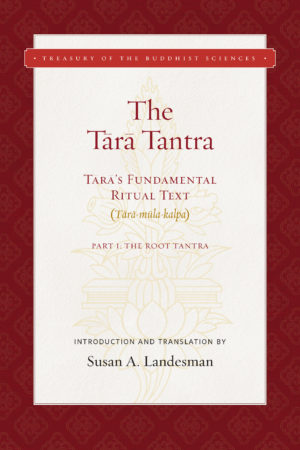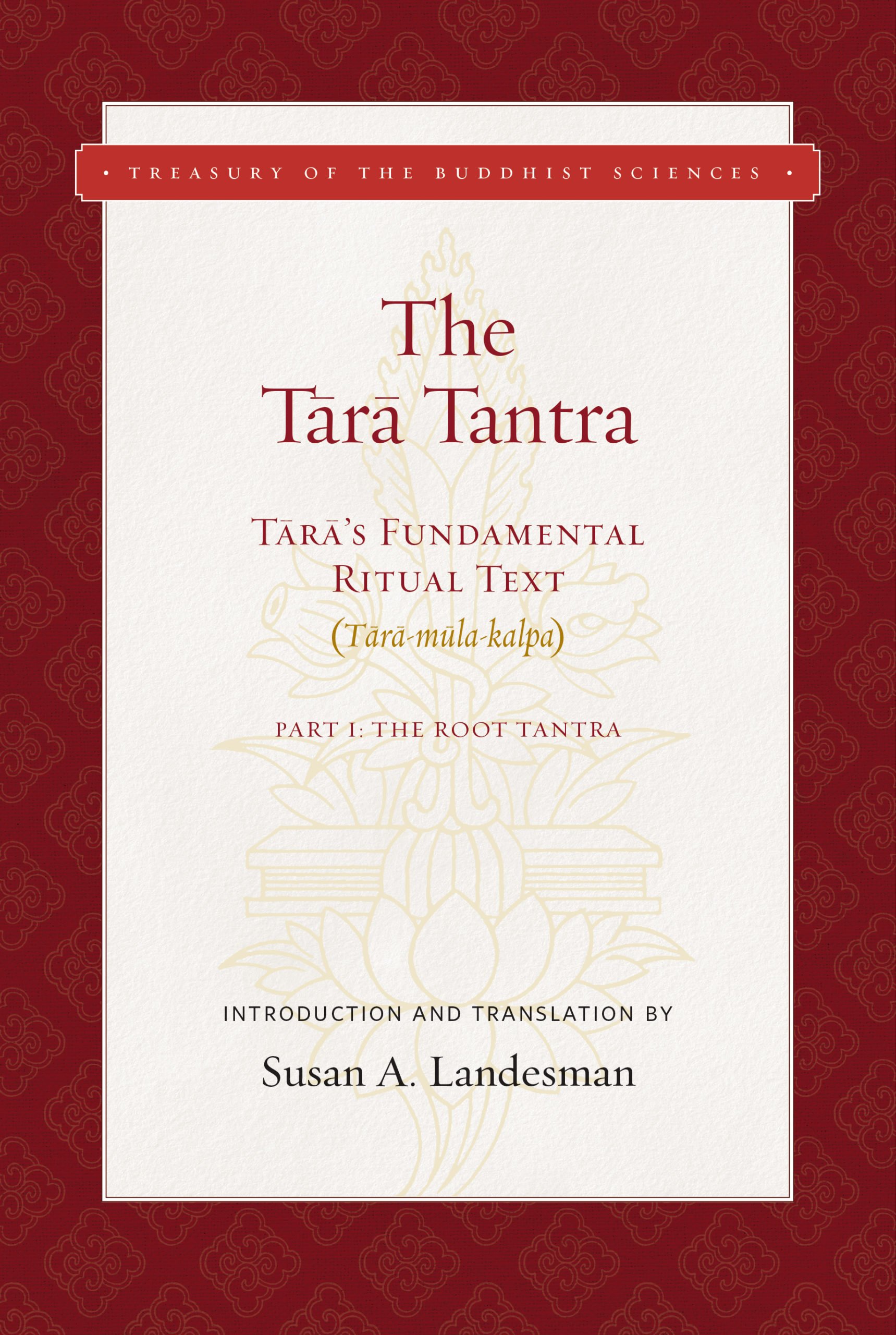
THE TāRā TANTRA
Tārā’s Fundamental Ritual Text (Tārā-mūla-kalpa)
This volume contains an English translation of the “root text” of the Tārā-mūla-kalpa, a scripture-ritual compendium that captures an important Buddhist tantric tradition in mid-formation. In this regard it is utterly unique and unlike any other text in the Buddhist canon. Its contents document the emergence of the quintessential female Buddha Tārā in seventh-century India. As her popularity grew, her cult spread throughout Southeast Asia, as well as Tibet, where she became revered as the “Mother” of the Tibetan people. Tārā is worshiped for a variety of reasons, from health and long life, to wealth, protection from enemies, and ultimately, the mind of enlightenment. Her presence pervades the evolution of Buddhism in Tibet, including within royal circles, as well as mentor and guide to many important Buddhist scholars, practitioners, and lineage holders.
About the Author

Susan Landesman is an independent scholar and educator living and working in New York City. She is the author of “Tārā and the Tārā-mūla-kalpa: The Tara Cult’s Formative Period in India,” “Goddess Tārā: Silence and Secrecy on the Path to Enlightenment,” “Tara” (in the Oxford Bibliographies), and The Tārā Tantra: Part II: The Uttara-tantra (forthcoming). She specializes in Indo-Tibetan Buddhism, Tibetan art, and women in Buddhism, having completed her doctorate in Indian and Tibetan languages and cultures at Columbia University.
Book Information
- Hardcover
- 512 pages, 6 x 9 inches
- $69.95
- ISBN 9781949163124
- eBook
- 512 pages
- $42.99
- ISBN 9781949163131
Praise
Beloved across the Himalayan region and beyond, the figure of Tārā has offered inspiration to artists, meditators, rulers, and ordinary women and men for centuries. Susan A. Landesman has done an exceptional service to English readers with her groundbreaking translation and study of the core ritual text, inviting readers to discover new aspects of this most famous exemplar of enlightenment in female form.
Annabella Pitkin, assistant professor of Buddhism and East Asian religions, Lehigh University
Susan Landesman’s translation of the Tārā-mūla-kalpa is a major and accessible work of scholarship that should be of great interest to both scholars and practitioners. It sheds light on an important and early tantric Buddhist work that played a foundational role in the development of the practice traditions connected with one of Tibetan Buddhism’s most popular deities. Her translation of Buton Rinpoche’s masterful Tibetan translation is excellent, both clear and accurate, and her introduction illuminates the history of this text, its reception in Tibet, and the development of practice traditions associated with Tārā. I congratulate Dr. Landesman for her excellent work on this volume.
David B. Gray, Bernard J. Hanley Professor and chair of Religion, Santa Clara University
Discover More
Becoming the Master on the Course and In Life
Now available! Save 20% with code BTM20 until February 3.
On the course or in your mind—golf is a game of balance. Here, timeless Buddhist teachings meet golf-pro expertise to elevate every part of your game.
Ever feel like you’ve invested in the best equipment, taken countless lessons, and put in endless practice—yet your game just isn’t improving? Or that your shots look flawless on the range but fall apart the moment you’re in a real match? Maybe you’ve walked off the course frustrated—with yourself, your swing, or even the game itself—forgetting that golf is actually meant to be enjoyable.
Enter a Buddhist master from Tibet, Geshe YongDong Losar, and a golf pro, Jesse Moussa. Drawing on decades of golf experience and centuries of Buddhist wisdom, they team up to reveal the mental side of the sport: how to eliminate distraction, maintain focus and equilibrium, and let your skills grow naturally—like the grass.
This book is your opportunity to learn from two masters how to meet the game with presence, balance, and joy—and to step up to the ball with confidence every time.
Learn about Geshe YongDong’s previous book Calm Breath, Calm Mind.
The Seven Siddhi Texts
Available early! Use code SST20 to receive 20% until December 23.
The first English-language translation (with rich historical introduction and extensive annotation) of a key group of Indian Buddhist tantric texts that have had profound influence on the Tibetan Buddhist tradition.
The Seven Siddhi Texts is a key collection of Indian Buddhist tantric exegetical treatises that have shaped the interpretation of unexcelled yoga tantra and Mahāmudrā (Great Seal) practice in Tibet from the eighth century ce to the present. The scholar-yogi authors of these seven texts—drawing upon their scriptural knowledge and personal insight—clarify the intended meanings underlying cryptic, seemingly antinomian passages in root tantras such as the Esoteric Community Tantra (Guhyasamāja-tantra) pertaining to sex, violence, and magical powers, which have proved controversial for many traditional and modern scholars. These seven treatises come from the famed mahāsiddha (great adept) tradition, which often defied the rigid social, religious, and gender norms of premodern India in quest of nondual wisdom. The translator’s introduction places the collection in its Indian sociohistorical context, traces its reception in Tibetan Mahāmudrā practice lineages, and addresses modern misinterpretations. As a window into the earliest Indian Buddhist tantric communities, the Seven Siddhi Texts is a treasure for both practitioners and scholars of these increasingly popular subjects.
This volume is part of the Treasury of the Buddhist Sciences series, copublished by the American Institute of Buddhist Studies (AIBS) and Wisdom Publications in association with the Columbia University Center for Buddhist Studies and Tibet House US. You can learn more about the series here.
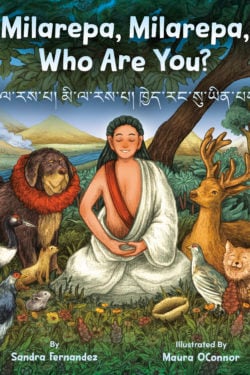
Milarepa, Milarepa, Who Are You?
A charming, beautifully illustrated, bilingual book about one of Tibet’s greatest spiritual teachers—sure to inspire awareness, compassion, and wisdom in children and adults alike that includes an online guide for parents and teachers.
Milarepa is celebrated throughout the Himalayas as one of the most inspiring Buddhist figures from Tibetan history. This beautifully illustrated telling of his life and teachings, with Tibetan translation, lets children explore his extraordinary story. Milarepa went through an incredible transformation, overcoming suffering and his own misdeeds with the help of a wise teacher to become a great spiritual teacher in his own right.
Through the story and teachings of Milarepa, we can see that it is always possible to let our inner goodness shine, no matter what we’ve done in the past. Every moment creates a new opportunity to settle the mind and open the heart. Milarepa’s resilience, fearlessness, mental clarity, and compassion have been beacons of inspiration for a thousand years and resonate as deeply today as they have through the centuries.
To honor Milarepa’s spontaneous songs—classically known as dohas in Sanskrit, which communicated his experiences to others—this book is written in poetic form. It explores the wisdom of his teachings in the form of a rhythmic, call-and-response duet.
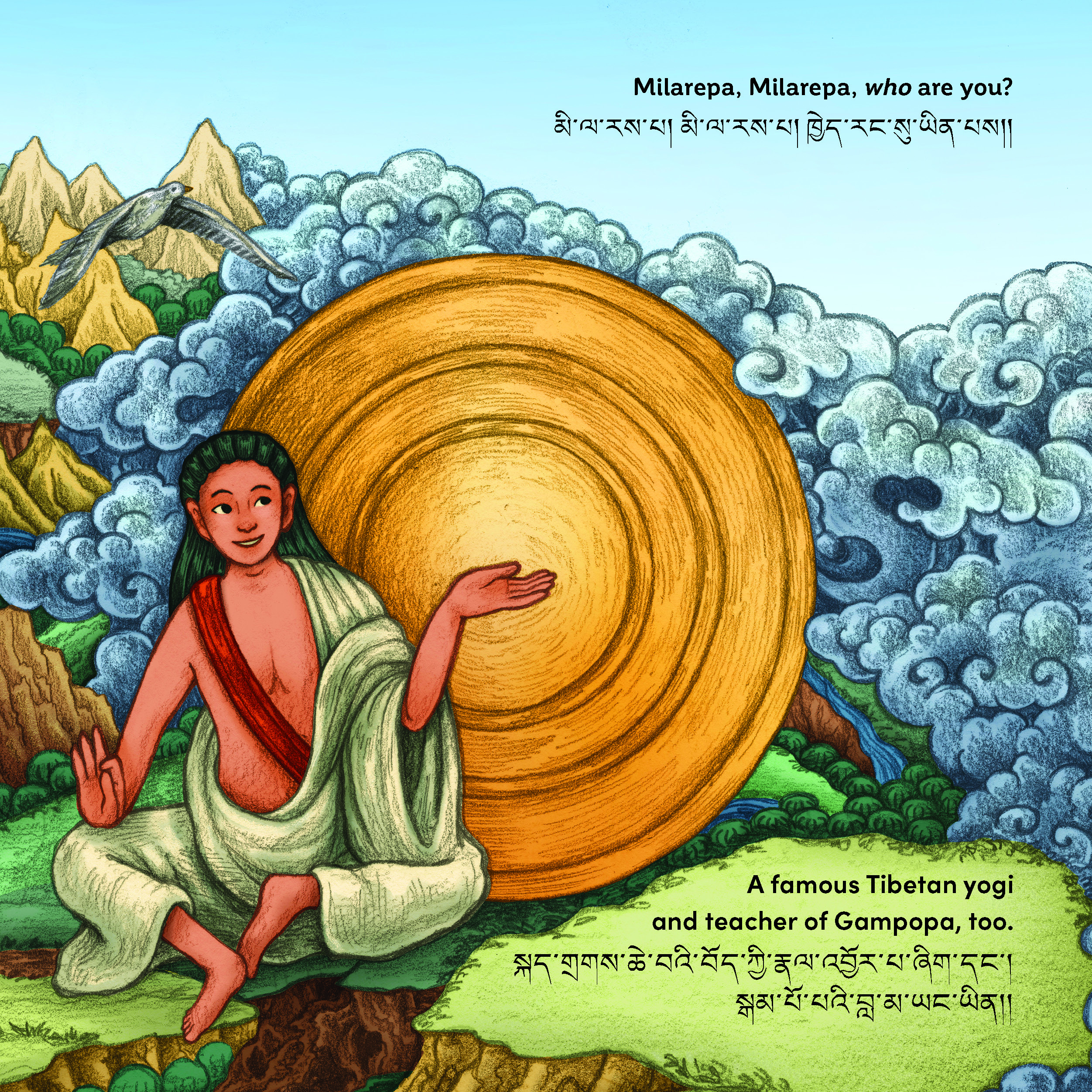
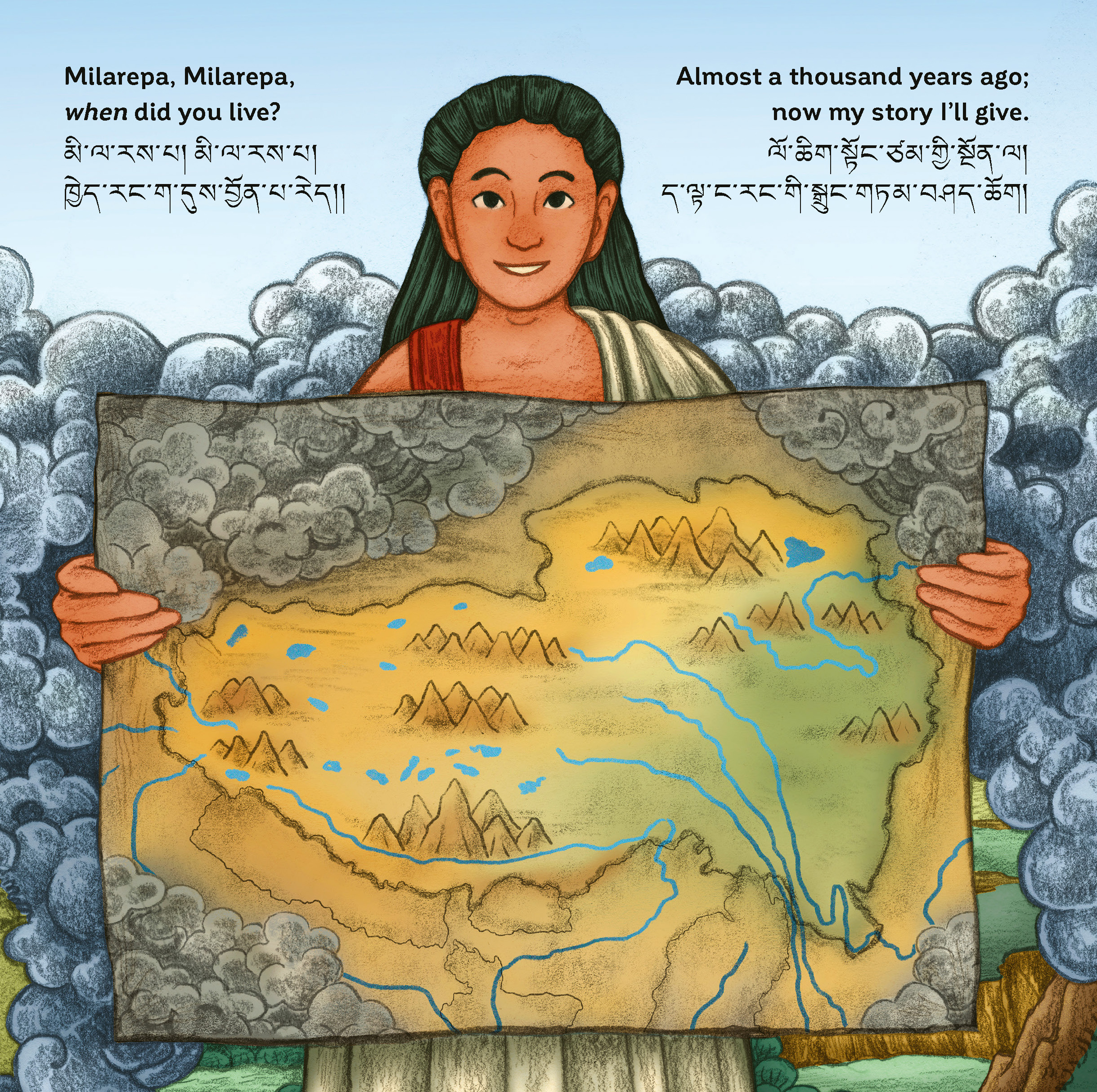
Click here to receive an online guide for parents and teachers that further expands on the themes of the book by providing lesson ideas, meditation activities, and guidance for learning about language, history, and art.
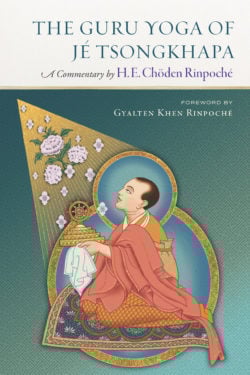
The Guru Yoga of Jé Tsongkhapa
Explore the guru yoga practice of Jé Tsongkhapa with a legendary meditation master.
The Hundreds of Deities of Tuṣita is an inspiring and well-loved guru yoga practice that originated from Jé Tsongkhapa himself and was disseminated by the First Dalai Lama. In this book, Chöden Rinpoché—a celebrated scholar who was chosen as a debate partner for His Holiness the Dalai Lama, as well as an accomplished yogi who spent nineteen years in solitary retreat—offers two different commentaries to guide the reader’s understanding.
Rinpoché’s first commentary is based on the tantric oral tradition as presented by the great lama and scholar Pabongkha Dechen Nyingpo in his own inspired commentary on The Hundreds of Deities of Tuṣita, called A Treasury of Precious Jewels, which is presented here in full. Rinpoché adds clarifying instruction to Jé Pabongkha’s work, bringing out the deeper meaning of the text and revealing how ordinary practitioners may understand and apply Pabongkha’s instruction. The second commentary from Rinpoché is a condensed commentary based on the sūtra tradition. Thus, the reader is treated to two different perspectives of the guru yoga practice of Jé Tsongkhapa.
Previously published as Opening the Door of Blessings, this edition has been revised and updated, and is an essential edition to any practitioner’s library.
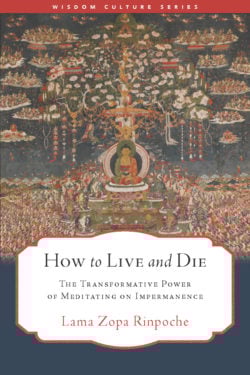
How to Live and Die
What death is, how we die, what minds we need at death and what happens after death—only by knowing about death and rebirth can we actually fully understand what life is and so learn how to live fully.
—Lama Zopa Rinpoche
There is arguably no truth more foundational to Buddhism than this: everything is impermanent. We can see this in the world all around us; old systems break down, relationships change. Death comes for those we love and, inevitably, for us.
In this book, the late, beloved teacher Lama Zopa Rinpoche walks us through the traditional, revelatory practices of meditating on the fact of impermanence and even—especially—on death itself. Rather than shy away from this reality, we look straight at it, and thus we learn not only how to not fear death, but how to live.
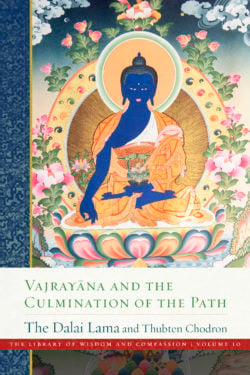
Vajrayāna and the Culmination of the Path
The final volume of the Library of Wisdom and Compassion by His Holiness the Dalai Lama takes us to the uncommon practices and realizations of Vajrayāna and the culmination of the path to the full awakening of a buddha.
His Holiness the Dalai Lama skillfully illuminates the unique qualities and complexities of Vajrayāna, as practiced in Tibet, and clarifies the method to eradicate the subtlest obscurations preventing the full awakening of a buddha. Speaking to newcomers and advanced students alike, he explains the similarities and differences of the Sūtra and Tantra paths. Having gathered many of the doubts and difficult points concerning the tantric path, he clarifies the purpose of receiving proper empowerment by qualified gurus and the ethical restraints and commitments required to enter the path of secret mantra. The paths and stages of the four tantric classes are explained, as are the generation-stage and completion-stage practices of Highest Yoga Tantra. You are introduced to the practices of clear appearance and divine identity common to all tantric sādhanas, as well as the unique practices of illusory body and actual clear light that overcome the subtlest defilements on the mind and eliminate all obscurations quickly.
The understanding of emptiness in Sūtra and Tantra is the same, but the consciousness perceiving emptiness differs. In Highest Yoga Tantra that consciousness is great bliss, which arises from knowing the methods to manipulate the channels, winds, and drops of the subtle body. In short, in Vajrayāna and the Culmination of the Path the Dalai Lama sets out the path that leads to blissful awakening and enables us to be of great benefit to all sentient beings.
Learn more about the Library of Wisdom and Compassion series.
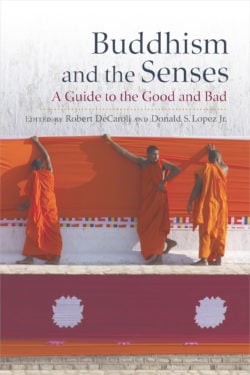
Buddhism and The Senses
Across Buddhist traditions, the five senses—sight, sound, smell, taste, and touch—are perceived both positively and negatively. Share eminent scholars’ fascination and deep insight into what makes a sensuous experience good or bad.
Following the exhibition Encountering the Buddha: Art and Practice across Asia at the National Museum of Asian art, ten eminent scholars present their insights into Buddhism’s fascinating relation with the five senses (sight, sound, smell, taste, and touch), which careens between delight and disgust, rarely finding a middle way. While much of Buddhist literature is devoted to overcoming the attachment that dooms us to rebirth in samsara, primarily by deprecating sense experience and showing that whatever brings us sensual pleasure leads only to all manner of physical and mental pain, in texts such as the Lotus Sutra, sensory powers do not offer sensory pleasure but rather knowledge, clear observation, and ability to preach the Dharma. Considering such religiously and historically contingent ambiguity, this volume presents each of the five senses in two instantiations, the good and the bad, opening up the discourse on the senses across Buddhist traditions.
Just as the museum departed from tradition to incorporate sensory experiences into the exhibition, this volume is a new direction in scholarship to humanize Buddhist studies by foregrounding sensory experience and practice, inviting the reader to think about the senses in a focused manner and shifting our understanding of Buddhism from the conceptual to the material or practical, from the idealized to the human, from the abstract to the grounded, from the mind to the body.
Includes essays by Bryan J. Cuevas, Debra Diamond, D. Max Moerman, Reiko Ohnuma, James Robson, Melody Rod-ari, Kurtis R. Schaeffer, John Strong, and Lina Verchery.
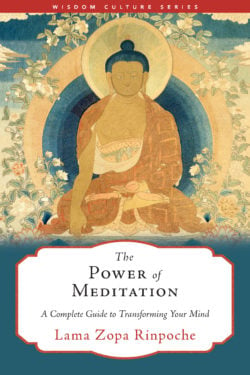
The Power of Meditation
What is meditation, and how do we practice it?
In The Power of Meditation, Lama Zopa Rinpoche, beloved teacher and co-founder of the Foundation for the Preservation of the Mahayana Tradition, offers clear explanations and instructions for the life-changing practice of meditation.
From preparatory procedures, such as selecting a space and adopting the proper motivation, to the details of posture and how to focus the mind, Rinpoche offers step-by-step instruction that serves as both a starting point for beginners and a new vantage on familiar techniques for more experienced sitters. In his own direct and plain-spoken style, Rinpoche offers concise explanations for different kinds of meditation, such as shamatha, or calm abiding meditation, and vipashyana, or insight meditation, delineating their specific techniques and applications. And finally, Rinpoche presents tips for bringing our newfound clarity off of the cushion and into our daily lives, making each moment meaningful.
The Wisdom Culture Series, published under the guidance of Lama Zopa Rinpoche, provides English-language readers with key works for the study and cultivation of the Mahayana Buddhist path, especially works of masters within the lineage of Lama Tsongkhapa and the Geluk school of Tibetan Buddhism.
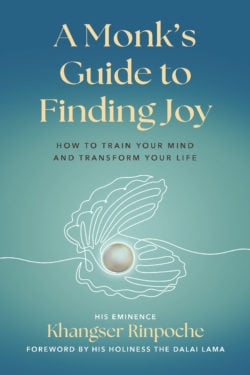
A Monk’s Guide to Finding Joy
A profound and practical guide to uncovering your own wise mind and kind heart.
We all want to find happiness. But how do we go about it? In this easygoing and clear-sighted guide, celebrated Buddhist meditation and philosophy master His Eminence Khangser Rinpoche provides us with down-to-earth advice on how to train our minds and find our own innate wisdom and kindness along the way. He helps us see the profound insight that is open to us all, and how it can awaken us to the truth of the way things are. This insight into the truth, and the practices that help you cultivate this awareness, transform suffering into wisdom and compassion—and ultimately joy.
A Monk’s Guide to Finding Joy brings the ancient Tibetan mind-training tradition into our twenty-first-century lives. Through stories, real-life examples, reflections, and meditation practices—all told with warmth and humor—H.E. Khangser Rinpoche shows us how we can transform the suffering of our life into happiness. When we train the mind from within the context of our difficult emotions, we can find true joy, just as the oyster transforms sand into a pearl.
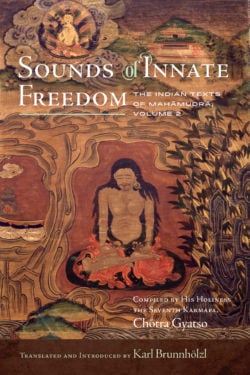
Sounds of Innate Freedom, Vol. 2
The second volume in a historic six-volume series containing many of the first English translations of the classic mahāmudrā literature compiled by the Seventh Karmapa.
Sounds of Innate Freedom: The Indian Texts of Mahāmudrā are historic volumes containing many of the first English translations of the classic mahāmudrā literature. The texts and songs in these volumes constitute the large compendium called The Indian Texts of the Mahāmudrā of Definitive Meaning, compiled by the Seventh Karmapa Chötra Gyatso (1456–1539). Translated, introduced, and annotated by Karl Brunnhölzl, acclaimed senior teacher at the Nalandabodhi community of Dzogchen Ponlop Rinpoche, the collection offers a brilliant window into the richness of the vast ocean of Indian mahāmudrā texts cherished in all Tibetan lineages, particularly in the Kagyü tradition, giving us a clear view of the sources of one of the world’s great contemplative traditions.
This volume 2 (thirty-four texts) contains two long-established sets of Mahāmudrā works: “The Sixfold Pith Cycle” and short texts of Maitrīpa’s “Twenty-Five Dharmas of Mental Nonengagement,” which present a blend of Madhyamaka, Mahāmudrā, and certain tantric principles, as well as two commentaries by Maitrīpa’s students. The vital focus of this volume is the accomplishment of true reality.
Click here to explore other volumes available in The Sounds of Innate Freedom series.
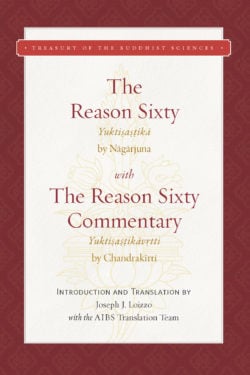
The Reason Sixty
The Reason Sixty: Second Edition presents two key Indian Buddhist philosophical masterpieces that integrate the Buddhist ethos of wisdom and compassion, with their profound relevance to contemporary thought clarified by a renowned scholar of contemplative science.
This volume contains English translations of two critical treatises of the Middle Way (Madhyamaka) Buddhist philosophical school: the Reason Sixty, by the most important of Indian thinkers Nāgārjuna (2nd century CE), and the commentary by his most influential successor, Chandrakīrti (7th century CE). These two treatises emphasize the non-foundationalist reasoning for which Madhyamaka thought is famed, here within the context of that quintessential Buddhist topic, universal compassion, thereby illuminating the nondual nature of these two fundamental components of Indian Buddhist thought. The full import of Nāgārjuna’s verses are brought to life by Chandrakīrti, whose influence in Tibetan Buddhist educational institutions remains profound to the present. Translator Joseph Loizzo, a Harvard-trained psychiatrist and Columbia-trained Buddhologist, elucidates the relevance of these two treatises to the linguistic turn in contemporary philosophy and emphasizes their practical, therapeutic possibilities. Comparing in particular the deep resonances between Chandrakīrti’s commentary and Wittgenstein’s later work, Loizzo presents a masterful analysis in cross-cultural thought that highlights the transformative potential of philosophy.
This volume is part of the Treasury of the Buddhist Sciences series, copublished by the American Institute of Buddhist Studies (AIBS) and Wisdom Publications in association with the Columbia University Center for Buddhist Studies and Tibet House US. You can learn more about the series here.
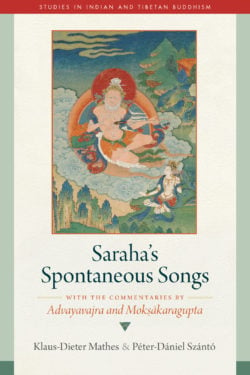
Saraha’s Spontaneous Songs
“Completely abandon thought and no-thought, and abide in the natural way of a small child.” —Saraha
To find liberation and realize the true nature of reality, the Indian Buddhist master Saraha says we must leave behind any conceptual assessment of reality, since no model of it has ever been known to withstand critical analysis. Saraha’s spontaneous songs, or dohās, represent the Buddhist art of expressing the inexpressible. The most important collection of Saraha’s songs is the Dohākoṣa, the Treasury of Spontaneous Songs, better known in Tibet as the Songs for the People, and the Tibetan mahāmudrā tradition, especially within the Kagyü school, has done the most to preserve the lineage of Saraha’s instructions to the present day.
But Saraha was also widely cited in Indian sources starting around the eleventh century, and one Indic commentary, by the Newar scholar Advayavajra, still exists in Sanskrit. In addition, we have independent root texts of Saraha’s songs in the vernacular Apabhraṃśa in which they were recorded. These Indian texts, together with their Tibetan translations, are here presented in masterful new critical editions, along with the Tibetan translation of the commentary no longer extant in Sanskrit by Mokṣākaragupta. Finally, both commentaries are rendered in elegant English, and the authors offer a brisk but comprehensive introduction.
Saraha’s Spontaneous Songs provides the reader with everything needed for a serious study of one of the most important works in the Indian Buddhist canon.
Learn more about the Studies in Indian and Tibetan Buddhism series.
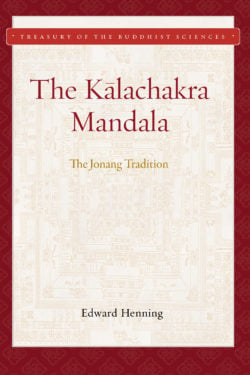
The Kālachakra Mandala
A detailed, beautifully illustrated presentation of the construction and symbolism of the famed Kālachakra mandala, the crown jewel of the Indo-Tibetan tantric traditions.
This volume contains an extensive analysis of the construction and symbolism of the mandala of the Kālachakra tantric system, the most intricate and explicit of the Indian Buddhist unexcelled yoga tantras, the most advanced teachings within the Indo-Tibetan tradition. Indo-Tibetan tantric traditions, particularly the unexcelled category, depend on imagery and visualization for the processes of purifying cyclic existence, and Kālachakra is the most detailed. The late scholar-practitioner Edward Henning, one of the earliest Western specialists on this material, offers this labor of love as a testament to the genius of the Tibetan tradition in preserving and transmitting these teachings over a thousand years. Well known internationally now due to the Dalai Lama’s many public initiations, the Kālachakra mandala serves as a primary focal point for meditators both new and seasoned. Henning draws primarily from the Jonang tradition of Kālachakra practice, particularly the modern master Banda Gelek, to elucidate and clarify inconsistencies across traditions and literature, including the authoritative Indian commentary Stainless Light (Vimalaprabhā), regarding the construction and visualization of the three-tiered mandala with its hundreds of deities. In addition to providing detailed information on the images to be visualized, Henning provides in the final chapter a clear and extensive explanation of the symbolism of the habitat and inhabitants that are to be animated during the meditation session. An excellent companion to the translations of the Kālachakra Tantra and Stainless Light chapters co-published by the American Institute of Buddhist Studies and Wisdom Publications, this beautifully illustrated volume is a must-have for scholars and practitioners alike.
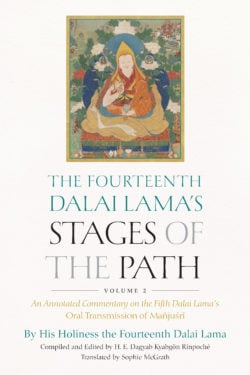
The Fourteenth Dalai Lama’s Stages of the Path, Volume 2
Central to Buddhism is knowing our own minds. Until we do, we are driven by unconscious, often destructive desire and aversion. We couldn’t have a better guide for inner transformation than the Dalai Lama.
The Fourteenth Dalai Lama’s Stages of the Path, Volume 2: An Annotated Commentary on the Fifth Dalai Lama’s Words of Mañjuśrī is the second volume of the Dalai Lama’s outline of Buddhist theory and practice. Having introduced Buddhist ideas in the context of modern society in volume 1, the Dalai Lama turns here to a traditional presentation of the complete path to enlightenment, from developing faith in the Dharma to attaining the highest wisdom. This book, compiled by the revered Tibetan lama Dagyab Rinpoché, comments on the Fifth Dalai Lama’s stages of the path titled Oral Transmission of Mañjuśrī. The volume will appeal to all readers interested in the Dalai Lama’s works, both those new to Buddhism and those looking to deepen their understanding of the Tibetan presentation of the Buddhist path.
Click here to read about His Holiness the Fourteenth Dalai Lama’s achievements.
The Fourteenth Dalai Lama’s Stages of the Path: Volume 1: Guidance for Modern Practitioners is available here.
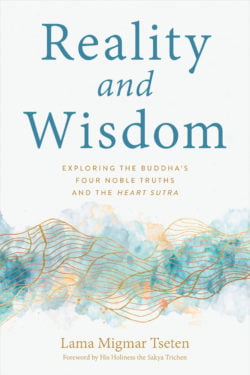
Reality and Wisdom
Written in a warm and accessible style by one of today’s most respected Tibetan Buddhist masters, Reality and Wisdom leads the reader on a journey of discovery beginning with the very first teachings of the Buddha and into the profound experience of emptiness.
The first section of the book explores the bedrock Buddhist teachings of the four noble truths—insights into freedom from suffering from craving—which underpin all schools of Buddhism. Lama Migmar presents and explores these foundational Buddhist truths with humor and insight, explaining how, from a Mahayana Buddhist perspective, these truths serve as crucial supports for cultivating the transformative wisdom of emptiness.
In the book’s second half, Lama Migmar illuminates the terse and enigmatic lines of the Heart Sutra, perhaps the most studied and revered of all Mahayana Buddhist scriptures. The Heart Sutra presents the reader with a vision of reality as it is perceived by a buddha, a vision underpinned by and infused with the radical flexibility and possibility of emptiness and the engagement and responsiveness of profound compassion.
The clarity, warmth, and vibrancy of Lama Migmar’s writing combined with the comprehensiveness and detail of his presentations of key Buddhist teachings make this book a valuable resource for a range of readers, from beginners to more advanced practitioners seeking to deepen their practice.
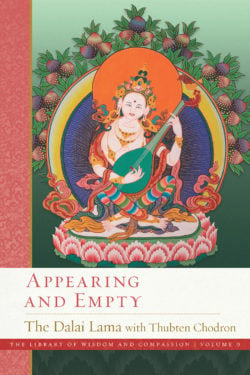
Appearing and Empty
In Appearing and Empty the Dalai Lama skillfully reveals the Prāsaṅgikas’ view of the ultimate nature of reality so that we will gain the correct view of emptiness, the selflessness of both persons and phenomena, and have the means to eliminate our own and others’ duḥkha.
In this last of three volumes on emptiness, the Dalai Lama takes us through the Sautrāntika, Yogācāra, and Svātantrika views on the ultimate nature of reality and the Prāsaṅgikas’ thorough responses to these, so that we gain the correct view of emptiness—the selflessness of both persons and phenomena. This view entails negating inherent existence while also being able to establish conventional existence: emptiness does not mean nothingness. We then learn how to meditate on the correct view by cultivating pristine wisdom that is the union of serenity and insight as taught in the Pāli, Chinese, and Tibetan traditions. Such meditation, when combined with the altruistic intention of bodhicitta, leads to the complete eradication of all defilements that obscure our minds. This volume also introduces us to the tathāgatagarbha—the buddha essence—and how it is understood in both Tibet and China. Is it permanent? Does everyone have it? In addition, the discussion of sudden and gradual awakening in Zen (Chan) Buddhism and in Tibetan Buddhism is fascinating.
Learn more about the Library of Wisdom and Compassion series.
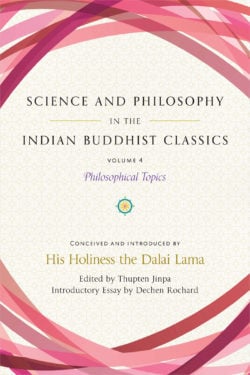
Science and Philosophy in the Indian Buddhist Classics, Vol. 4
This fourth and final Science and Philosophy in the Indian Buddhist Classics volume provides, through extensive passages, a window into the works of the great thinkers from the flowering of philosophy in classical India.
This is the second philosophy volume in the Science and Philosophy series. Whereas the first philosophy volume presented the views of the non-Buddhist and Buddhist schools in sequence, the present works selects specific topics for consideration, including the nature of the two truths, the analysis of self, the Yogacara explanation of reality, emptiness in the Madhyamaka tradition, a survey of logic and epistemology, and the Buddhist explanation of language and meaning. Like earlier volumes, it provides, through extensive extracts, a window into the works of the masters of the Nalanda tradition. The final section on language is particularly unique and largely crafted by Thupten Jinpa.
Explore the entire series here.
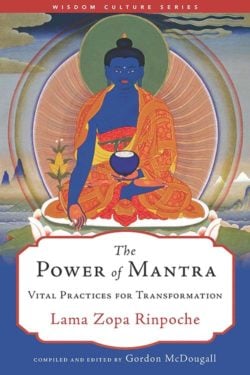
The Power of Mantra
Energize your practice with the potent energy of mantra.
In this book, beloved teacher Lama Zopa Rinpoche guides us through the most popular mantras in Tibetan Buddhism: Shakyamuni Buddha, Chenrezig, Manjushri, Tara, Medicine Buddha, Vajrasattva, and more.
A mantra—literally “that which protects the mind”—is a series of Sanskrit syllables that evoke the energy of a particular buddha or bodhisattva. It works as a sacred sound that brings blessings to ourself and others, and as a tool to transform our mind into one that is more compassionate and wise.
In clear and succinct teachings, Lama Zopa shows us why we need different mantras and how each mantra works. He also explains their importance and power, giving specific instructions for practicing them. The exquisite, full-color illustrations of the deities that accompany the text make this book a beautiful guide, one suitable for both beginners and experienced practitioners.
The Wisdom Culture Series, published under the guidance of Lama Zopa Rinpoche, provides English-language readers with key works for the study and cultivation of the Mahayana Buddhist path, especially works of masters within the lineage of Lama Tsongkhapa and the Geluk school of Tibetan Buddhism.