THE WISDOM ACADEMY PRESENTS
The Wisdom of the Nalanda Tradition
An Online Course in Honor of H.H. the Dalai Lama
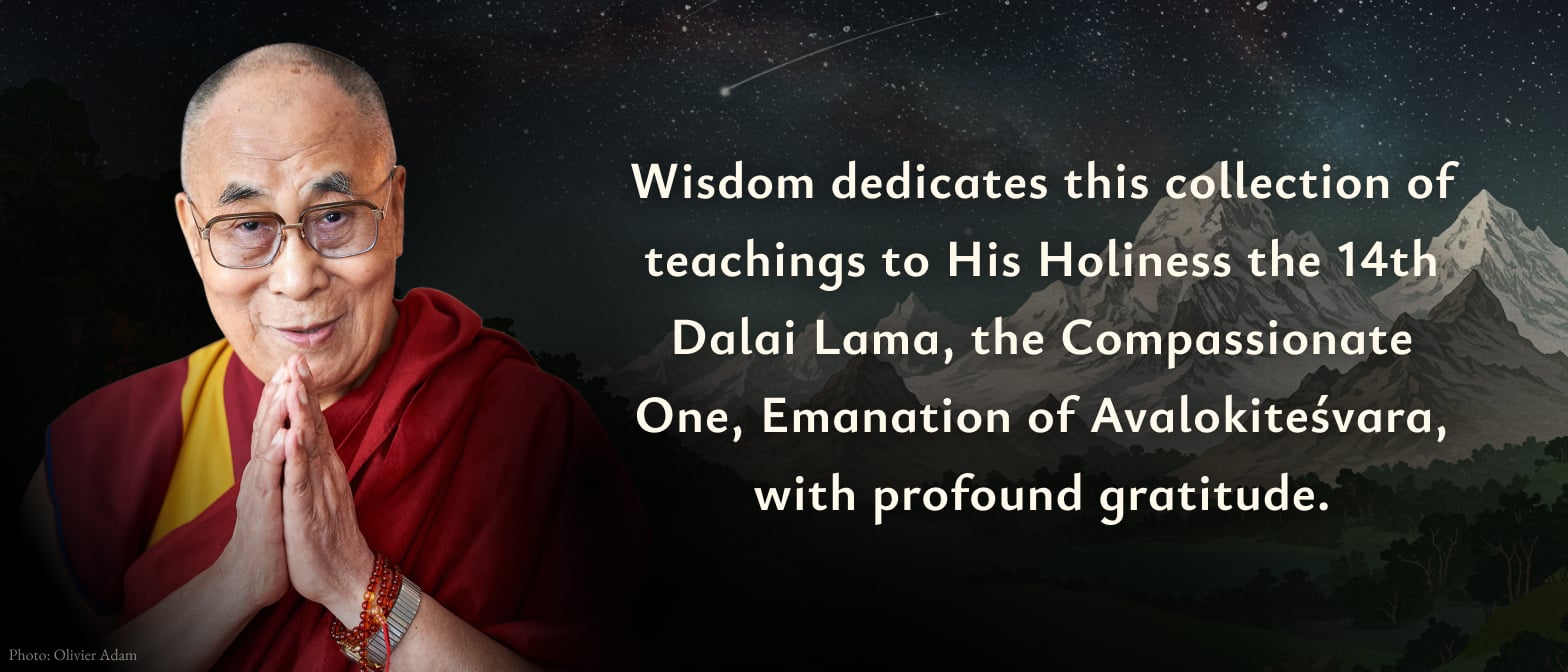
On the occasion of His Holiness the Dalai Lama’s 90th birthday, Wisdom is honored to offer this online course on a donation basis, to share and celebrate the liberating teachings of the Nalanda Tradition.
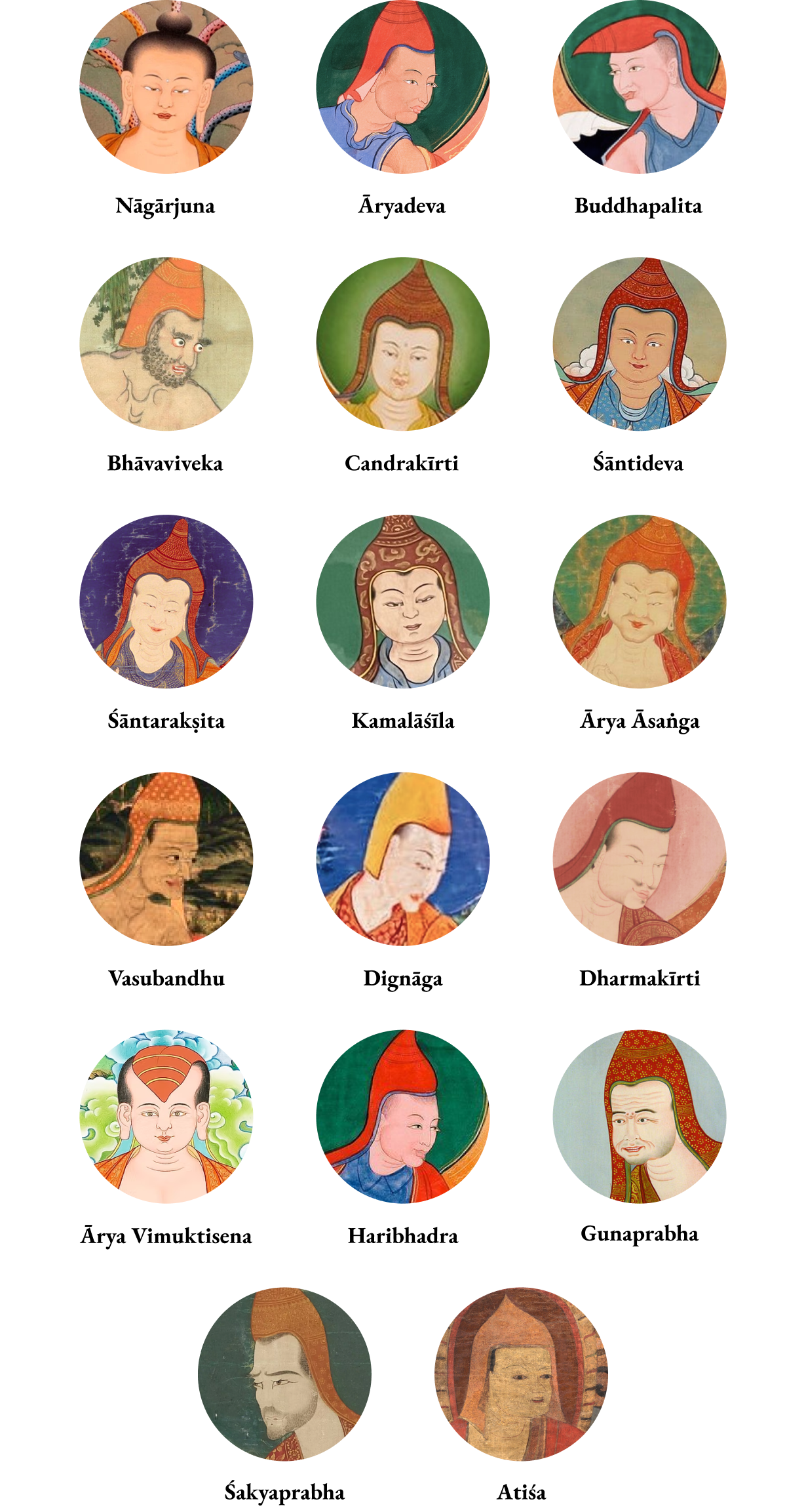
We have created this course, based on the book series Science and Philosophy in the Indian Buddhist Classics, in support of His Holiness’s vision that the world should discover, and benefit from, the jewels of India’s Buddhist teachings, embodied by the seventeen Nalanda masters—including figures such as Nāgārjuna, Śāntideva, and Dharmakīrti.
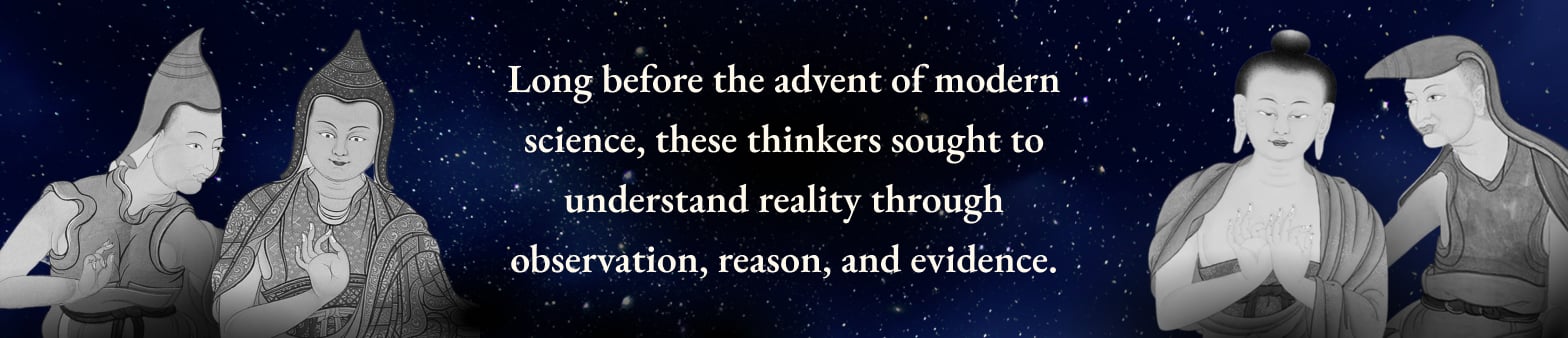
Their legacy—the Nalanda tradition that forms the basis of Tibetan Buddhism—is one of intellectual freedom, integrity, and courage. Through their quest for understanding, we can rediscover a liberating truth: No matter what we face in our lives and our world, we can illuminate it with the light of our minds, our human curiosity. There is no darkness to which we cannot bring the light of the mind’s true nature.
You’re warmly invited to join this course, and in doing so, step into His Holiness’s vision with us, onto a path where we’ll see how the brilliance of the Nalanda tradition can illuminate our minds, our reality, and the wonder of existence.
Scroll down to find out how to join.
Wisdom is delighted to offer this course on a donation basis, honoring the tradition of dāna — generosity that sustains the teachings for all.
As a nonprofit organization, Wisdom’s mission is to make authentic Buddhist teachings accessible to anyone who seeks them. We don’t have a set price—instead, we invite you to contribute what feels right for you. Your offering directly supports Wisdom’s ongoing work of producing and sharing these precious teachings with students around the world.
Please choose an offering level that feels right for your circumstances:
• Pay What You Can — any amount you’re comfortable giving; all are welcome to join.
• $75 — Open Offering: for those needing reduced tuition to participate.
• $177 — Sustaining Offering: helps cover course development and platform costs.
• $357 — Patron Offering: supports your participation and helps another student join.
Every donation, no matter the size, is deeply appreciated. Your generosity makes it possible for Wisdom to continue offering authentic Buddhist teachings worldwide and helps keep the Dharma flourishing for all.

After enrolling, check your email for a welcome email with instructions on how to take the course. When you enroll in any Wisdom Academy course, you agree to our terms of use. Enrolled students have lifetime access to course materials. Wisdom is a 501(c)(3) nonprofit. Your tuition supports the creation of more courses like this one. Thank you! For more about our terms, please see the Wisdom Academy FAQ.
- Deepen your practice through understanding: Learn why analytical meditation matters, how philosophical inquiry supports contemplative realization, and the great masters’ insights into emptiness and selflessness.
- Understand the mind as a dynamic system: Explore Buddhist analyses of perception, cognition, and awareness alongside parallels in contemporary psychology.
- Develop critical insight through the Nalanda method: Learn how reason, logic, and direct experience work together to form a disciplined path of inquiry.
- Bridge science and contemplative wisdom: Discover how Buddhist philosophy and modern physics both reveal a relational view of reality.
- Transform philosophy into lived experience: Follow the philosophical schools as stages of inner realization rather than abstract systems.
- Cultivate compassion grounded in wisdom: See how genuine understanding naturally matures into empathy and ethical action.
- And beyond.
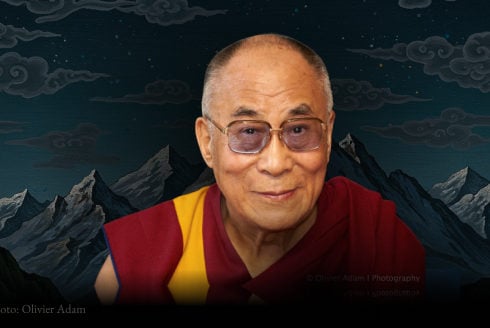
Lesson 1: The Power of Reasoning
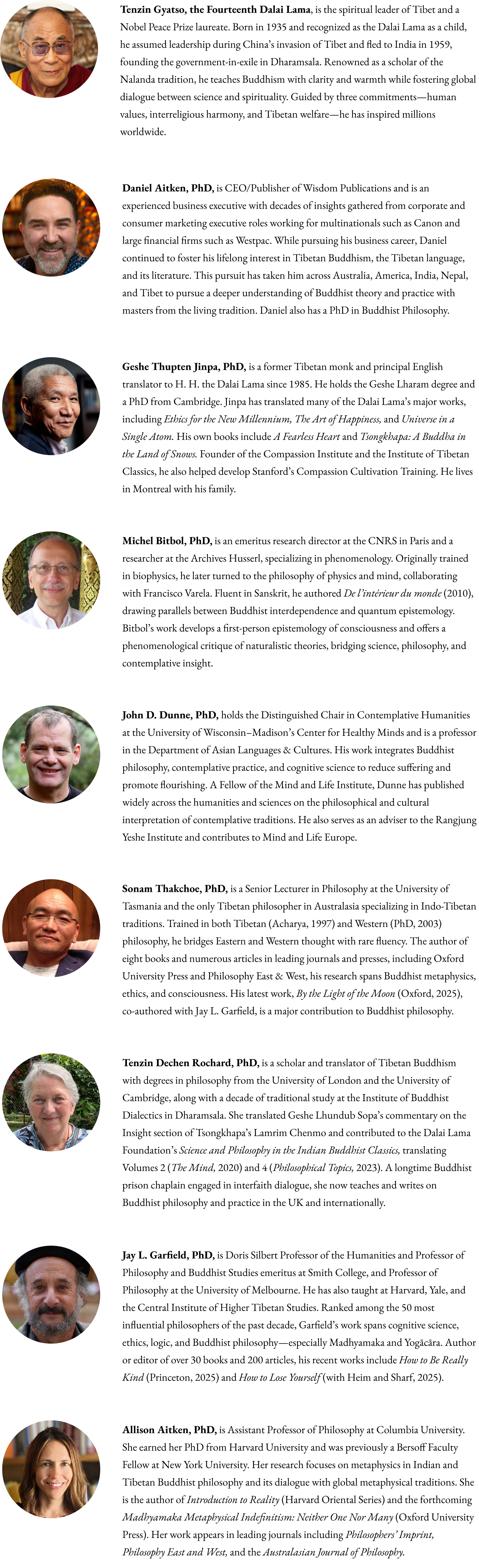
His Holiness the Dalai Lama opens the series in conversation with Wisdom CEO/Publisher Daniel Aitken, PhD, exploring the Nalanda Tradition’s devotion to reasoning. He discusses why Buddhist inquiry has always relied on logic and debate rather than faith, and how this heritage naturally complements modern science.
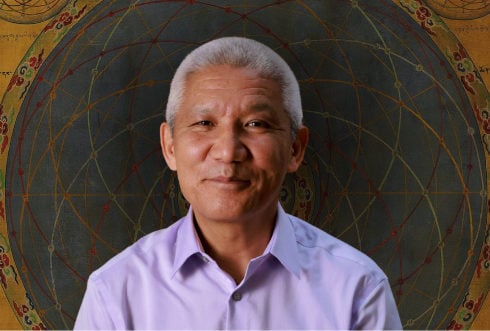
Lesson 2: The Buddhist Science of the Physical World
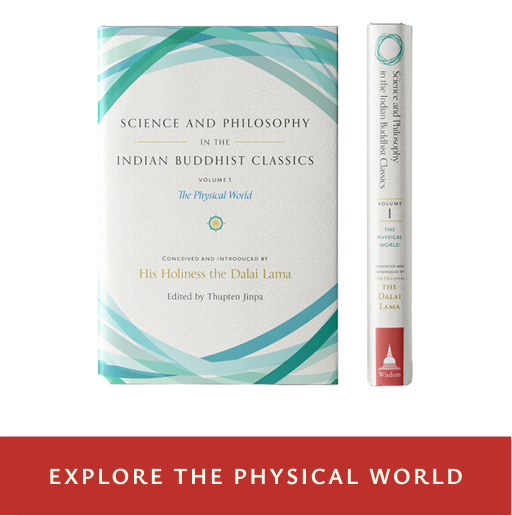
In this lesson, series editor Geshe Thupten Jinpa, PhD, guides you into the first volume of the Science and Philosophy series, The Physical World, revealing how Buddhism developed its own science of the physical world—mapping atoms, elements, time, and the cosmos to uncover the deep law of cause and effect that still shapes our lives today.

Lesson 3: The Illusion of a Solid World
Michel Bitbol, PhD, a physicist and philosopher of science, enhances our understanding of volume 1, The Physical World. He explores how Greek and Indo-Buddhist sciences, which shared common origins, temporarily diverged due to the Western hyper-focus on detached objectivity, and now reconverge in modern physics and phenomenology—both of which treat knowledge as relational, exposing the emptiness of fixed viewpoints.
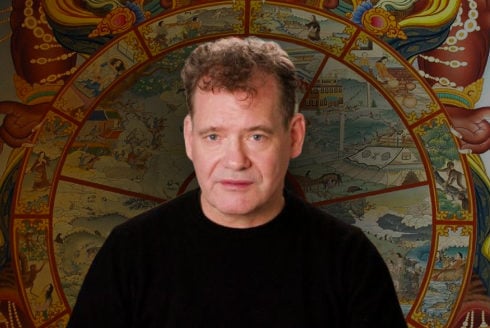
Lesson 4: Lessons from The Mind
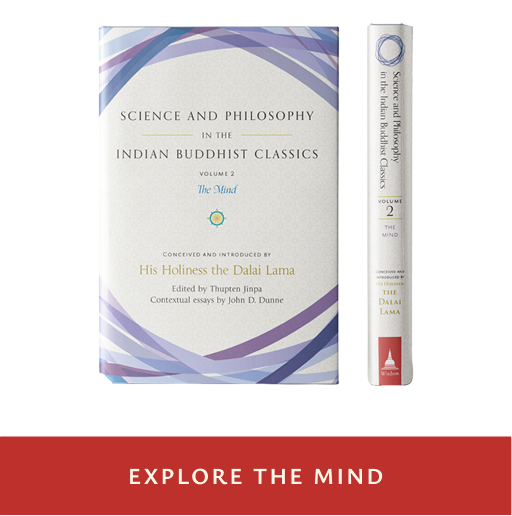
John Dunne, PhD, a scholar of Buddhist philosophy and contemplative science, guides us into Volume 2, The Mind. He introduces a Buddhist account of a “scientific” understanding of mind—one that explains experience without a fixed self, seeing the mind instead as a dynamic system of interacting processes. Drawing on analyses of attention, emotion, and knowledge, Dunne shows how these illuminate the Buddhist aims of reducing suffering and cultivating genuine flourishing. He also examines meditation practices that develop meta-awareness, revealing the mind’s capacity for wisdom and compassion.

Lesson 5: Exploring the Mind by Studying the Brain
Anthony Zanesco, PhD, a cognitive neuroscientist, introduces us to complementary perspectives on The Mind drawn from cognitive science and neuroscience. By discussing foundational and current research on the topics of attention, mind wandering, and the brain, Zanesco shares important perspectives that have shaped contemporary scientific thinking about our cognitive functions. He highlights surprising connections between cognitive neuroscience and classical Buddhist views, demonstrating that our understanding of the mind is enriched by considering ideas from different perspectives.

Lesson 6: The Nalanda Tradition
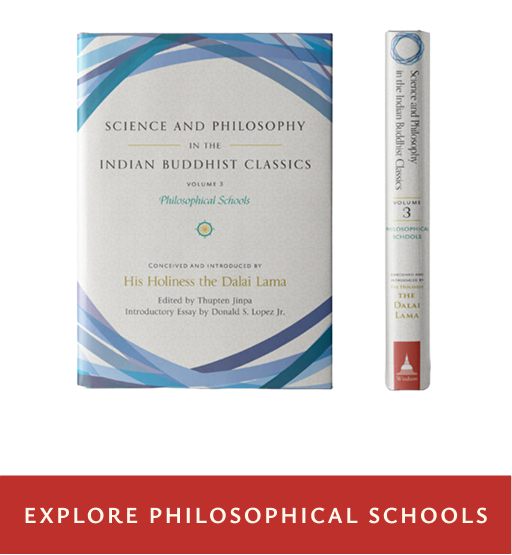
We enter volume 3 in the series, Philosophical Schools, with Donald Lopez, PhD, in a rich exploration of the Nalanda Tradition—the ancient Indian university system that shaped Tibetan Buddhism. Dr. Lopez explains why the Dalai Lama chose this term, recounts Nalanda’s history, and introduces the seventeen great masters celebrated in His Holiness’s poem. A captivating overview of how India’s culture of reason, debate, and insight continues to animate Buddhist learning today.

Lesson 7: Buddhist Siddhāntas (Schools) as Living Phenomenology
Sonam Thakchoe, PhD, enriches our exploration of volume 3 as he reimagines the study of Buddhist philosophy as a journey of lived experience rather than a set of abstract doctrines. Instead of treating the philosophical schools as separate systems, he presents them as progressive stages in a practitioner’s unfolding awareness—each emerging naturally from the insights of the previous. Through this phenomenological lens, Buddhist thought becomes a map of inner transformation, revealing how philosophy provides a path of realization.

Lesson 8: Using Philosophical Investigation to Uproot Suffering
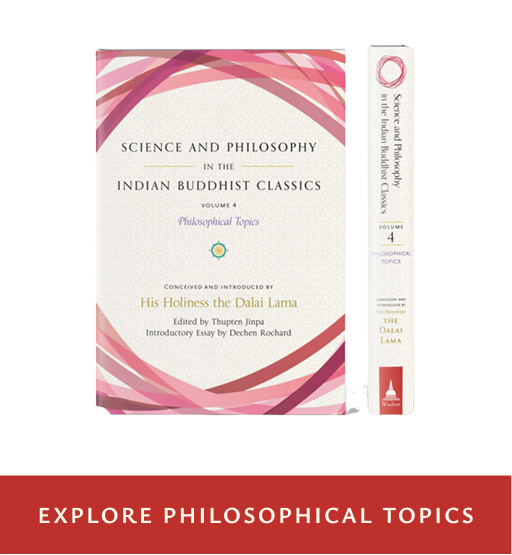
Bringing us into volume 4 of the series, Philosophical Topics, Tenzin Dechen Rochard, PhD, guides us through the major themes of Buddhist philosophy, from the two truths and selflessness to the rationale of emptiness and the nature of knowledge. Drawing on centuries of Indian and Tibetan insight, she shows how reasoning and meditation converge in the quest to see things as they truly are—transforming philosophy from an academic pursuit into a living path of understanding that leads to the removal of suffering.

Lesson 9: Subject, Object, and the Expanse of Emptiness
Jay Garfield, PhD, brings together the Madhyamaka and Yogācāra traditions to reveal a complete vision of emptiness—seen from both the object and the mind that perceives it. Building on the Dalai Lama’s insights, he explains how the illusion of subject and object gives rise to suffering, and how understanding interdependence transforms the mind.
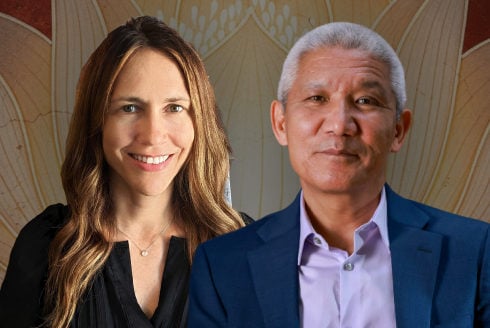
Lesson 10: Reason and Compassion: The Heart of the Nalanda Tradition
To close our course, series editor Geshe Thupten Jinpa, PhD is joined by Allison Aitken, PhD, for a conversation on reason, compassion, and the living legacy of Nalanda. Together they examine the role of philosophical analysis within Buddhist thought and practice, and explore possibilities for fruitful dialogue between Buddhist philosophy and contemporary Western traditions. The lesson provides a profound reflection on how knowledge becomes wisdom—and how philosophy, when joined with compassion, offers a complete path for both personal and collective transformation.

Your Course Includes
7 hours of fascinating video lectures
Illuminating readings to enhance your understanding
Live Q&A with Thupten Jinpa, taking place in early 2026 (date TBD)
Discussion forum
Lifetime access to course materials

- The first lesson of the course became available on December 19, 2025 at 9 a.m. US Eastern Time.
- Subsequent lessons are then released on a weekly basis, one lesson a week, always on Fridays at 9 a.m., until all lessons have been released.
- Enrolled students will have lifetime access to the course materials.
- The date of the Q&A with Thupten Jinpa will be posted here and sent to students when it has been set.
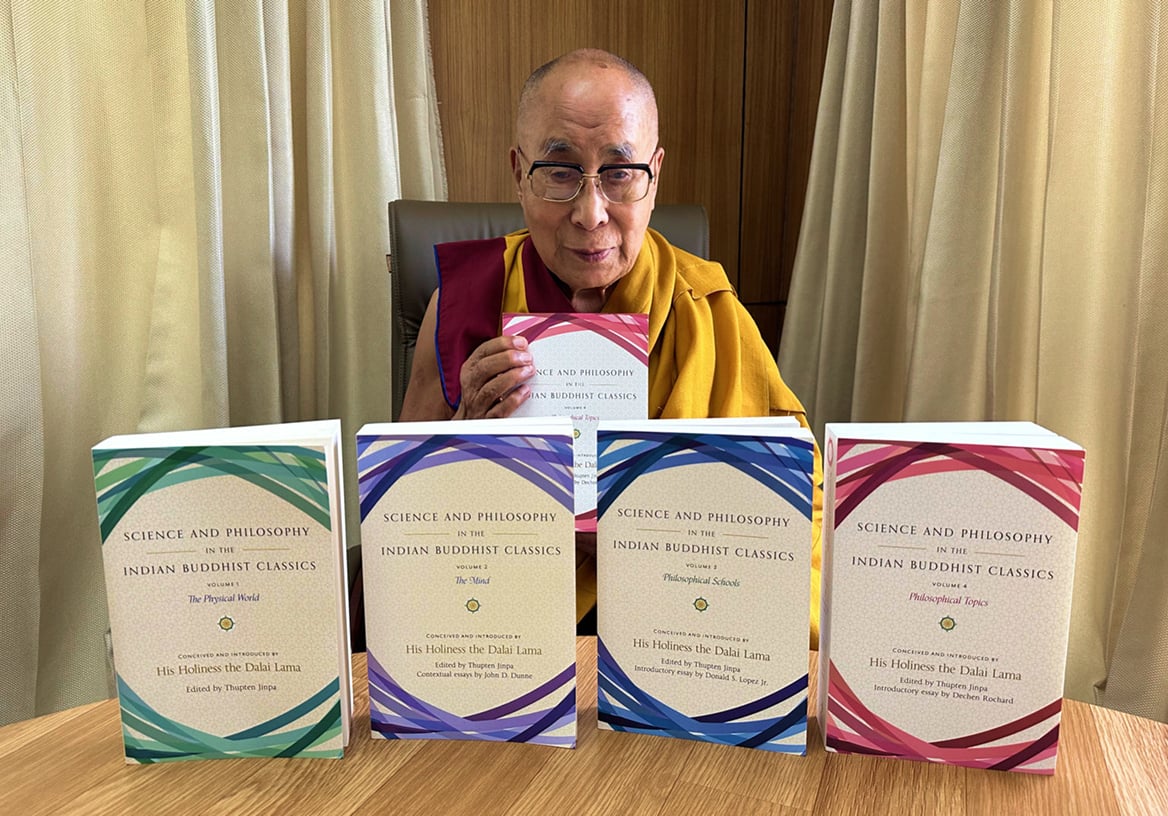
Science and Philosophy in the Indian Buddhist Classics compiles classical Buddhist explorations of the nature of our material world, the human mind, logic, and phenomenology and puts them into context for the modern reader. This ambitious four-volume series—a major resource for the history of ideas and especially the history of science and philosophy—has been conceived by and compiled under the visionary supervision of His Holiness the Dalai Lama himself. It is his view that the exploratory thinking of great Indian masters in the first millennium CE still has much that is of interest to us today, whether we are Buddhist or not. These volumes make those insights accessible.
Save 40% on the books in this series with code SPIBC25 when you purchase before January 1, 2026.
This is the perfect time to get access to these profoundly meaningful texts and join in His Holiness’s vision of honoring and celebrating the Nalanda Tradition. Explore the books and get your copies below.