THE DHARMA OF DRAGONS AND DAEMONS
Buddhist Themes in Modern Fantasy
Many books are called groundbreaking, but this one is truly unique and sure to appeal to anyone with an interest in fantasy literature. It employs a Buddhist perspective to appreciate some of the major works of modern fantasy—and uses modern fantasy fiction to elucidate Buddhist teachings. In the tradition of David Loy’s cutting-edge presentation of a Buddhist social theory in The Great Awakening, this pioneering work of Buddhist literary analysis, renown scholar David Loy and Linda Goodhew offer ways of reading modern fantasy-genre fiction that illuminate both the stories themselves, and the universal qualities of Buddhist teachings. Authors examined include J.R.R. Tolkien, Philip Pullman (of The Amber Spyglass trilogy, from whose works the word “daemon” is borrowed in the title), Ursula K. LeGuin, and the anime movie Princess Mononoke.
About the Author
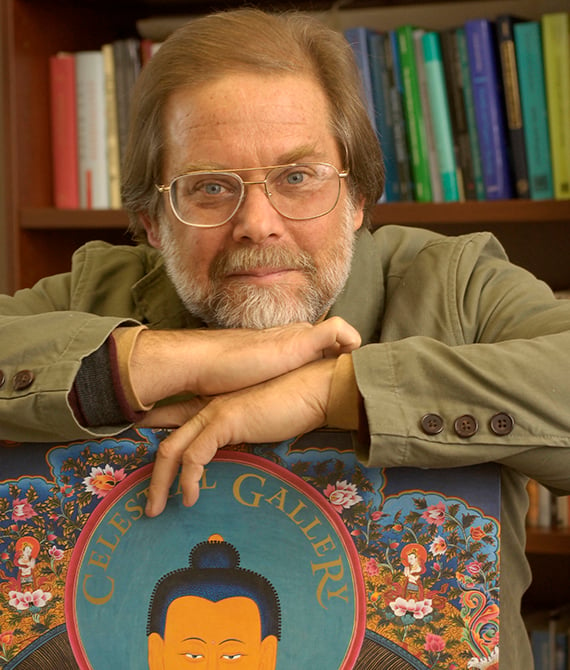
David R. Loy’s books include the acclaimed Money, Sex, War, Karma: Notes for a Buddhist Revolution; The Great Awakening: A Buddhist Social Theory; The World Is Made of Stories; A Buddhist Response to the Climate Emergency; and The Dharma of Dragons and Daemons, a finalist for the 2006 Mythopoeic Scholarship Award. He was the Besl Professor of Ethics/Religion and Society at Cincinnati’s Xavier University and is qualified as a teacher in the Sanbo Kyodan tradition of Japanese Buddhism.

Book Information
- Paperback
- 176 pages, 6.25 x 9.25 inches
- $14.95
- ISBN 9780861714766
- eBook
- 176 pages
- $9.99
- ISBN 9780861718276
Discover More

The Sound that Perceives the World
Musings and autobiographically informed commentary on the human condition through the lens of the Kannon-gyo—chapter 25 of the Lotus Sutra—connecting Zen and Pure Land Buddhism through the practice of venerating and chanting the names of buddhas and bodhisattvas.
The Kannon-gyo is chapter 25 of the Lotus Sutra, and its focus is the bodhisattva of compassion, Avalokiteshvara, known in China as Guanyin, and in Japan as Kannon or Kanzeon. The text describes the many ways in which calling out the bodhisattva’s name—Namu Kanzeon Bosatsu—can relieve suffering.
Most schools of Zen Buddhism, and especially the Soto school, eschew such practices as chanting the names of buddhas and bodhisattvas, along with venerating such figures.
The eminent Soto Zen master Kosho Uchiyama Roshi, however, while doing hard physical labor early in his career, could not practice zazen—that is, formal sitting meditation. He came to appreciate the Kannon-gyo and the practices related to it. In particular, he took to reciting Kannon’s name, as recommended in the text of the Kannon-gyo.
Later in life, Uchiyama Roshi suffered from illness that again prevented him from practicing formal Zen, so he returned to the Kannon-gyo and the practice of chanting. He went so far as to assert that chanting Kannon’s name is completely equivalent to zazen, that the two practices are simply two sides of the same coin—a revolutionary idea seemingly at odds with Zen.
Chanting practice is especially accessible, as it can be done while working, traveling, or suffering from illness, and other activities that would ordinarily get in the way of formal Zen practice.
With these practices, the Kannon-gyo, and Kannon herself as a backdrop, Uchiyama Roshi muses about the purposes of religion, the goals of religious practice, and the meaning of enlightenment—and their relation to suffering itself.
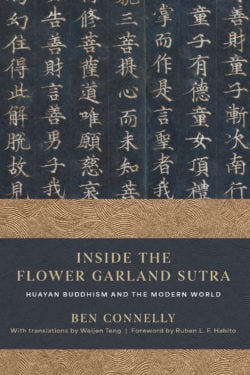
Inside the Flower Garland Sutra
A Soto Zen teacher explores the core teachings of the ancient Flower Garland school of Buddhism through an innovative and engaging narrative showing how to put these teachings into practice.
Huayan Buddhism arose in the sixth century in China rooted in the Mahayana Flower Garland Sutra. The teachings of Huayan and the sutra that inspired it had a profound influence on Chan and Zen. Huayan is relational, practical, and positive. Its emphasis on interdependence, celebration of the sensual world, and diversity of people and practices provides inspiration for what Thich Nhat Hanh called “engaged Buddhism”.
With Inside the Flower Garland Sutra Zen teacher Ben Connelly explains the significance of Huayan teachings for Buddhist practice. Each chapter is a commentary on one of the thirty lines of Uisang’s “Song of Dharma Nature”—a seminal Korean text that summarizes key aspects of Huayan thought—thus providing a broad overview of Huayan teachings and their practical implications for contemporary life, with a mix of testimonies from real-life situations and references to influential Buddhist texts.
Arising fifteen hundred years ago, Huayan has made a deep impact on East Asian Buddhism, and has much to offer during this era when many folks see ever-deepening divisions. Connelly explores how Huayan offers particular wisdom for those concerned about how to care for their own lives as they work to end harms such as ecological devastation, poverty, militarism, addiction, marginalization, and exploitation.
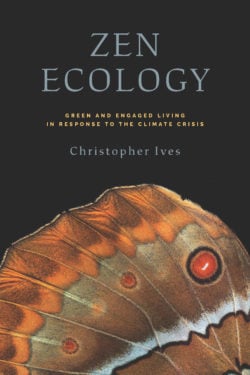
Zen Ecology
Discover a way of living that can help you slow down and stay grounded—and at the same time reduce your ecological impact and engage more fully with the climate crisis.
It may seem as though living ecologically and engaging in activism sacrifices our own enjoyment and happiness on the altar of doing the right thing. In this book, professor, naturalist, and Buddhist author Christopher Ives offers an alternative: a way of living that can actually be more fulfilling than the modern consumerist lifestyle. Rather than deprivation, it can bring us richness.
In Zen Ecology, Chris outlines his environmental ethic as a series of concentric circles, beginning with ourselves and then moving outward into our communities, all the while focusing on spaciousness, mindfulness, generosity, and contentment. At the individual level, we deal with distraction, clutter, and ecological harm. Here, Chris offers ways to help us pay attention, simplify our lives, and lower our impact. Then, we explore how to envision our home as a “place of the Way,” with Zen monastic life as a model for this—without having to be a monk! Next, we realize our embeddedness in nature and emplace ourselves in community with others, including other forms of life. Finally, we build on this basis to engage in activism to create a world that is more supportive of ecological health and spiritual fulfillment.
In this way, we avoid the two extremes of apathy and burnout, and uncover a way of living that is simple, joyful, embedded in nature, connected to others in community, and supportive of collective action.
You may also be interested in Chris’s other books, Zen on the Trail, which explores the broad question of how to be outside in a meditative way, and Meditations on the Trail, which offers do-anywhere meditations that will help you deepen your connection to nature and yourself.
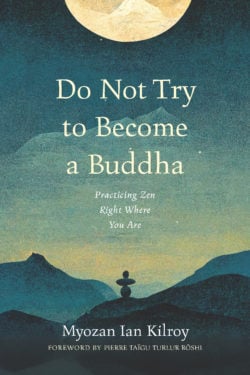
Do Not Try to Become a Buddha
A Zen Buddhist priest paints a picture of Zen in Ireland in this collection of short essays.
In this collection of short essays, Irish Soto Zen priest Myozan Ian Kilroy describes how he came to practice Zen, introduces some basics of Zen philosophy, and recalls the challenges of establishing a Zen Buddhist community in Catholic-dominated Ireland. Along the way, he explores the rituals and practices that Zen brings to everyday life, from holidays to weddings to birth ceremonies to funerals. A former journalist, Rev. Myozan’s clear yet entertaining storytelling style paints a clear picture of how Zen has adapted to the culture and traditions of Ireland.
The Poetry of Grief, Gratitude, and Reverence
Explorations on a journey through the darkest and brightest moments of our lives, the poems gathered here are explorations of loss, of thanksgiving, of transformation. Some show a path forward and others simply acknowledge and empathize with where we are, but all are celebrations of poetry’s ability to express what seemed otherwise inexpressible, to touch deep inside our hearts—and also pull ourselves out of our selves and into greater connection with the world around us.
Includes poems by
Rainer Maria Rilke, Robert Frost, Elizabeth Bishop, Czesław Miłosz, Seamus Heaney, Billy Collins, Joy Harjo, Danusha Laméris, Ada Limón, Kevin Young, Arthur Sze, Ellen Bass, Li-Young Lee, Natasha Trethewey, and many more, plus the editor’s essay on appreciative attention.
John had recorded guided poetry meditations to accompany several of the poems found in this anthology. To learn more and listen to these meditations, please click here.
Listen to a Wisdom Dharma Chat with John and host Daniel Aitken recorded in October 2023.
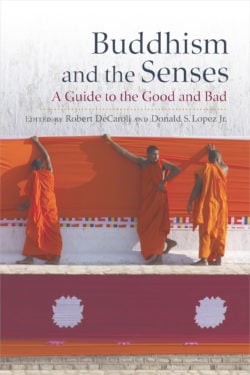
Buddhism and The Senses
Across Buddhist traditions, the five senses—sight, sound, smell, taste, and touch—are perceived both positively and negatively. Share eminent scholars’ fascination and deep insight into what makes a sensuous experience good or bad.
Following the exhibition Encountering the Buddha: Art and Practice across Asia at the National Museum of Asian art, ten eminent scholars present their insights into Buddhism’s fascinating relation with the five senses (sight, sound, smell, taste, and touch), which careens between delight and disgust, rarely finding a middle way. While much of Buddhist literature is devoted to overcoming the attachment that dooms us to rebirth in samsara, primarily by deprecating sense experience and showing that whatever brings us sensual pleasure leads only to all manner of physical and mental pain, in texts such as the Lotus Sutra, sensory powers do not offer sensory pleasure but rather knowledge, clear observation, and ability to preach the Dharma. Considering such religiously and historically contingent ambiguity, this volume presents each of the five senses in two instantiations, the good and the bad, opening up the discourse on the senses across Buddhist traditions.
Just as the museum departed from tradition to incorporate sensory experiences into the exhibition, this volume is a new direction in scholarship to humanize Buddhist studies by foregrounding sensory experience and practice, inviting the reader to think about the senses in a focused manner and shifting our understanding of Buddhism from the conceptual to the material or practical, from the idealized to the human, from the abstract to the grounded, from the mind to the body.
Includes essays by Bryan J. Cuevas, Debra Diamond, D. Max Moerman, Reiko Ohnuma, James Robson, Melody Rod-ari, Kurtis R. Schaeffer, John Strong, and Lina Verchery.
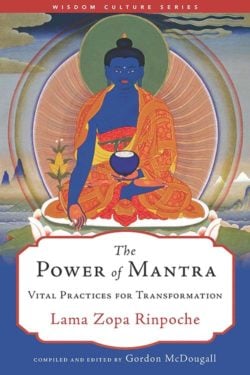
The Power of Mantra
Energize your practice with the potent energy of mantra.
In this book, beloved teacher Lama Zopa Rinpoche guides us through the most popular mantras in Tibetan Buddhism: Shakyamuni Buddha, Chenrezig, Manjushri, Tara, Medicine Buddha, Vajrasattva, and more.
A mantra—literally “that which protects the mind”—is a series of Sanskrit syllables that evoke the energy of a particular buddha or bodhisattva. It works as a sacred sound that brings blessings to ourself and others, and as a tool to transform our mind into one that is more compassionate and wise.
In clear and succinct teachings, Lama Zopa shows us why we need different mantras and how each mantra works. He also explains their importance and power, giving specific instructions for practicing them. The exquisite, full-color illustrations of the deities that accompany the text make this book a beautiful guide, one suitable for both beginners and experienced practitioners.
The Wisdom Culture Series, published under the guidance of Lama Zopa Rinpoche, provides English-language readers with key works for the study and cultivation of the Mahayana Buddhist path, especially works of masters within the lineage of Lama Tsongkhapa and the Geluk school of Tibetan Buddhism.
Bodhichitta
An accessible, inspiring book on one of the most important topics in Tibetan Buddhism, written by one of its renowned masters who has an international following of thousands.
Bodhichitta is a Sanskrit word meaning “the mind of enlightenment” or “the awakening mind”—the mind that wishes to achieve enlightenment in order to lead all other beings into that same state. It is the attitude of the bodhisattva, of the person who makes the compassionate vow to save others from suffering. In this book, the renowned teacher Lama Zopa Rinpoche shows us how to achieve it.
First, Lama Zopa gives a clear and comprehensive explanation of bodhichitta, its benefits, and its importance to the path. Then, he walks us through the two main methods for achieving bodhichitta: the seven points of cause and effect, and equalizing and exchanging self and others. Finally, the book closes with meditation instructions to guide and strengthen our practice.
Readers will find Bodhichitta to be a comprehensive guide to this core Buddhist principle, one rich in both accessible philosophical explanation and concrete advice for practitioners.
Patience
The sixth chapter of Shantideva’s classic A Guide to the Bodhisattva’s Way of Life is a beacon of inspiration that shows what patience—one of the essential actions of the bodhisattvas—can really mean, leading us to profound self-realization and a heightened determination for awakened action in the world.
Lama Zopa Rinpoche—a teacher whose very name means “patience”—explores Shantideva’s teachings verse by verse, unpacking their lessons for the modern reader, including:
- overcoming anger,
- accepting suffering,
- and respecting others and finding happiness in their happiness.
In explaining this quintessential quality of a bodhisattva, Rinpoche shows us ordinary beings the profundity of the practice of patience and the relevance it has in our everyday lives.
“Shantideva was like us, but he worked on his mind until he became completely free from delusions . . . A Guide to the Bodhisattva’s Way of Life has inspired countless people since it was written over thirteen hundred years ago. It tells us that we too can develop our mind to the levels of realizations that the great masters have attained—and it shows us how to do it.”—Lama Zopa Rinpoche
The Six Perfections
The six perfections are the actions of the bodhisattvas—holy beings who have transcended selfless concerns. But they’re also skills we can and should develop right now, in our messy, ordinary lives.
In this clear, comprehensive guide to the backbone of Mahayana Buddhist practice, Lama Zopa Rinpoche walks us through each of the six perfections:
- charity
- morality
- patience
- perseverance
- concentration
- wisdom
As he carefully describes each perfection, he not only reveals the depth of its meaning and how it intertwines with each other perfection, but he also explains how to practice it fully in our everyday lives—offering concrete ways for us to be more generous, more patient, more wise. With the guidance he gives us, we can progress in our practice of the perfections until we, like the bodhisattvas, learn to cherish others above ourselves.
“The perfections are the practices of bodhisattvas, holy beings who have completely renounced the self; they have transcended selfish concerns and cherish only others. Each perfection is perfect, flawless. Each arises from bodhichitta and is supported by the other perfections, including the wisdom of emptiness. Because of that, a bodhisattva generates infinite merit every moment, whether outwardly engaged in working for others or not. A bodhisattva’s bodhichitta never stops.”
—Lama Zopa Rinpoche
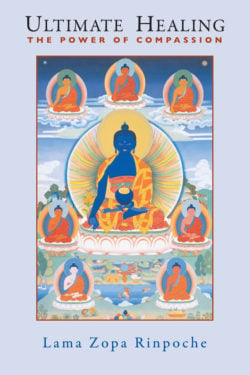
Ultimate Healing
We experience illness on a physical level, but in order to be healed, we must understand where true healing begins: within our hearts and minds. In Ultimate Healing, internationally renowned meditation master Lama Zopa Rinpoche helps us to recognize the root of illness and gives us the tools to create our future happiness. Beginning with stories of people who have recovered from disease through meditation, Rinpoche addresses the central role played by karma and by the mental habit of “labeling” in causing illness, and shows how meditation and other thought techniques for developing compassion and insight can eliminate the ultimate cause of all disease.
Ultimate Healing shows us that by transforming our minds, especially through the development of compassion, we can eliminate the ultimate cause of all disease. In addition to relating stories of people who have recovered from disease through meditation, Lama Zopa presents practical healing meditations, including white-light healing, compassion meditation, “taking and giving”, and techniques to cure depression.
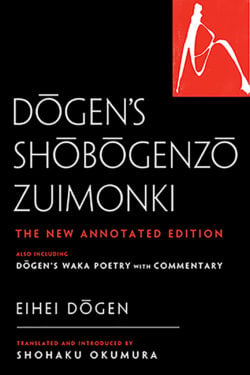
Dogen’s Shōbōgenzō Zuimonki
Discover the teachings of the preeminent Zen Master Dōgen in his own words, written down by his Dharma successor, Koun Ejō. This edition includes both the Shōbōgenzō Zuimonki and translations of and commentary on Dōgen’s luminously evocative waka poetry.
Distinct from Dōgen’s similarly titled magnum opus (simply called the Shōbōgenzō), the Shōbōgenzō Zuimonki can be read as a highly practical manual of Buddhist practice. Consisting of straightforward and accessible teachings and making more limited use of the allusion, wordplay, and metaphor that characterize the essays in the Shōbōgenzō, this work is an essential read for any student of Zen Buddhism. Among the many topics covered, Dōgen especially emphasizes the following points: seeing impermanence, departing from the ego-centered self, being free from greed, giving up self-attachment, following the guidance of a true teacher, and the practice of zazen, specifically shikantaza, or “just sitting.” Additionally, this translation of the Shōbōgenzō Zuimonki has extensive notes, which help to provide you with a new way of approaching the text.
The collection of waka poems included in this volume are a beautiful artistic expression of the Dharma. Rarely seen in this large of a collection or with commentary, this poetry offers unique insight into an important expression of Dōgen’s teachings.
By the spring wind
my words are blown and scattered
people may see them
the song of flowers
These teachings, which have informed teachers and practitioners alike throughout the centuries, will deepen your knowledge, understanding, and experience of the Sōtō Zen tradition.
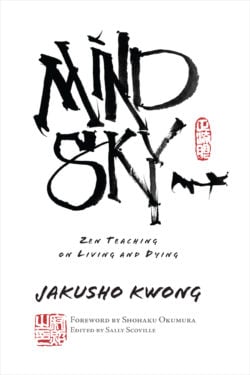
Mind Sky
“In Zen meditation, anything that comes in your mind will eventually leave, because nothing is permanent. A thought is like a cloud moving across the blue sky. Nothing can disturb that all-encompassing vastness. This is the Dharma.”
In a collection of talks and anecdotes, Jakusho Kwong-roshi, a Dharma successor of Shunryu Suzuki-roshi, presents his approach to Buddhist teaching. Containing photos of Kwong-roshi with his teachers, as well as a selection of his vibrant calligraphy, Mind Sky explores the profound beauty of Zen history and practice, nature, and the philosophy of the ancient Zen master Eihei Dōgen.
With an elegant simplicity, Kwong-roshi shows how Zen is experiential rather than intellectual. And with persistent practice, realization is already yours.
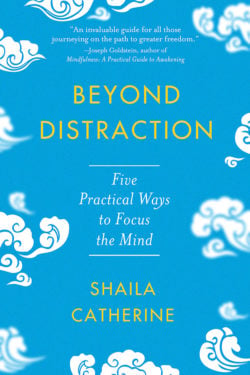
Beyond Distraction
The mind can be a potent tool, used to guide extraordinary achievements, inspire good works, and incline your spiritual path toward peace and awakening. But the mind can also produce thoughts that lead to suffering. For many people, thoughts run rampant and seem to oppress or control their lives. Even the Buddha tells us that before his enlightenment, he sometimes found his mind preoccupied by thoughts connected with sensual desire, ill will, and harm. But he figured out how to respond to thoughts skillfully and developed a step-by-step approach to calm the restless mind. Now, Insight Meditation teacher Shaila Catherine offers an accessible approach to training the mind that is guided by the Buddha’s pragmatic instructions on removing distracting thoughts. Drawing on two scriptures in the Middle Length Discourses of the Buddha, Shaila shows you how to overcome habitual modes of thinking, develop deeper concentration, and discover the insights into emptiness that are vital for a liberating spiritual path.
Following the Buddha’s pragmatic approach, Shaila guides you through five steps for overcoming distraction and focusing the mind:
- Replace unwholesome thoughts with wholesome thoughts.
- Examine the dangers of distracting thoughts.
- Avoid it, ignore it, forget it.
- Investigate the causes of distraction.
- Apply determination and resolve.
Each chapter includes exercises and reflections to help you cultivate the five steps to deeper concentration. You’ll learn about your mind and develop your ability to direct your attention more skillfully in meditation and daily activities. And ultimately, you’ll discover for yourself how these five steps boil down to one key realization: In the moment you recognize that a thought is just a thought, you will find yourself on the path to a life of remarkable freedom.
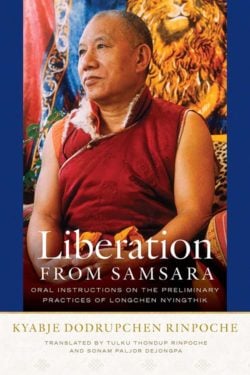
Liberation from Samsara
This rare teaching by Rinpoché is a uniquely concise volume of the teachings of the path to liberation that is authentic, authoritative, and complete.
In Liberation from Samsara, the Fourth Kyabjé Dodrupchen Rinpoché presents the Longchen Nyingthik preliminary teachings, with a special focus on guru yoga. These teachings, from the innermost secret instruction of Dzogchen, constitute a complete path to enlightenment.
After discussing the ways to turn our mind toward Dharma and the trainings, Rinpoché provides guru yoga instruction as he turns to the main tantric practice: meditations on unifying one’s mind with Guru Rinpoché’s wisdom mind. This rare teaching by Rinpoché, though intentionally succinct to accommodate the needs of contemporary Western practitioners, presents a complete path to enlightenment. It contrasts three different paths to liberation: Shravakayana (the way of the disciple), Pratyekabuddhayana (the way of the self-enlightened buddha), and Mahāyāna (the way of the bodhisattva), which is our way, our boundless intention to seek refuge in order to free all sentient beings from samsaric suffering.
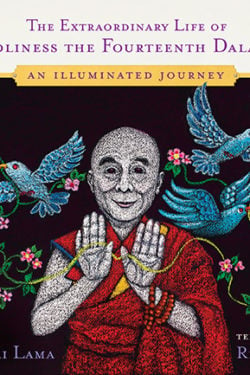
The Extraordinary Life of His Holiness the Fourteenth Dalai Lama
One of the most revered spiritual figures of our time—His Holiness the Fourteenth Dalai Lama—tells the story of his life in this intimate, timeless, and approachable book. Featuring luminous illustrations from world-renowned artist Rima Fujita and some never-before-shared details, it’s the perfect way to explore the life of the Dalai Lama. This simple yet powerful text combined with stunning artwork will captivate readers of all ages—and will take you on a mystical journey you won’t soon forget.
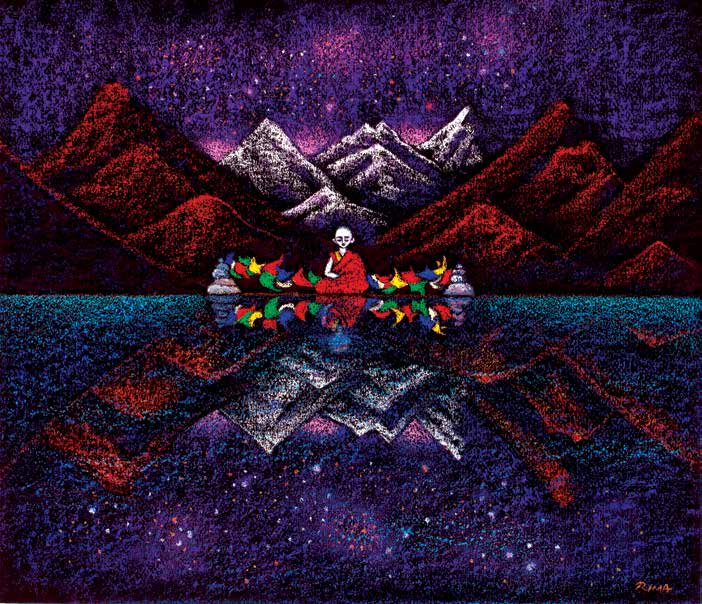
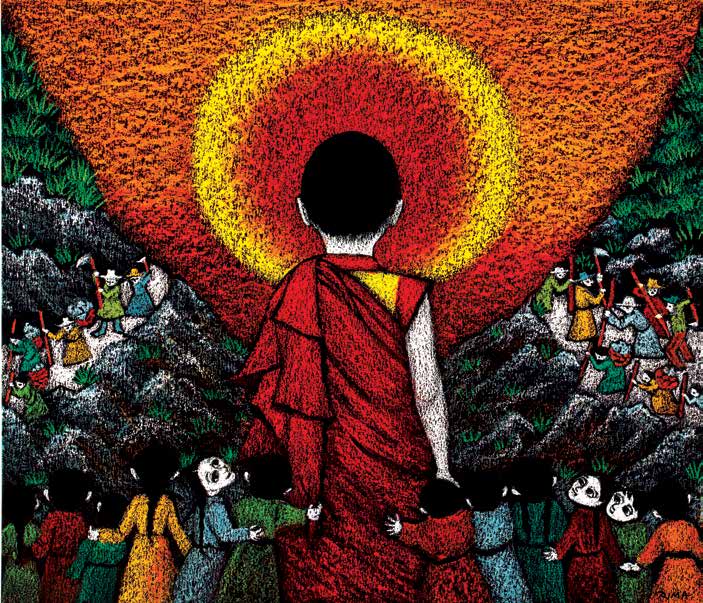
Also available in Tibetan.
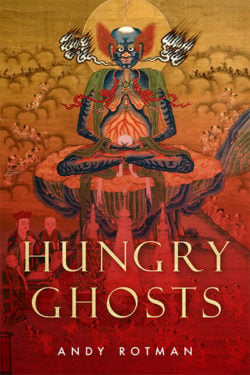
Hungry Ghosts
“In this wonderful gem of a book, Andy Rotman offers us a compelling translation of a set of ten Sanskrit Buddhist stories about ‘hungry ghosts’ (preta) taken from the Avadānaśataka (“One Hundred Stories”), an important early Indian anthology of Buddhist narratives. Rotman has brought them into the limelight and shown how important they are for Buddhists and for all of us. Hungry Ghosts will become a standard work on the subject.”
—John Strong, Charles A. Dana Emeritus Professor of Religious and Asian Studies, Bates College
The realm of hungry ghosts is one of the unfortunate realms of rebirth in the Buddhist cycle of existence, and those reborn there are said to have led lives consumed by greed and spite. In one of the earliest sources about hungry ghosts, translated here, hungry ghosts know the error of their ways, and they sometimes appear among humans, like the ghosts that haunt Ebenezer Scrooge, as augurs of what may await. Artistic depictions of the travails of hungry ghosts are found throughout the Buddhist world, and some of the best examples are reproduced and richly described here. Discover how an understanding of the meanness (matsārya) that afflicts hungry ghosts illuminates the human condition, offering insight and inspiring compassion for readers both in ancient times and today.
“Rotman brings new life to old stories about hungry ghosts, and he provides unique insight into their development and their importance even for modern Buddhism. A must-read for students of Buddhist thought and art.”
—Monika Zin, Saxon Academy of Sciences and Humanities, Leipzig University
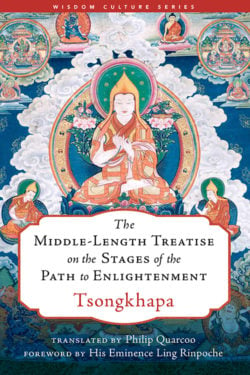
The Middle-Length Treatise on the Stages of the Path to Enlightenment
Tsongkhapa (1357–1419), author of the well-known Great Treatise on the Stages of the Path to Enlightenment and guru to the First Dalai Lama, is renowned as perhaps Tibet’s greatest scholar-saint. A dozen years after writing his Great Treatise, he wrote the Middle-Length Treatise on the Stages of the Path to Enlightenment, presented here in its first complete English translation.
Less than half the length of the Great Treatise, this work similarly presents a systematic overview of the Buddha’s teachings. Tsongkhapa begins by abridging the longer work, distilling its meditations for quicker integration. After recognizing the rarity of our human existence and the great opportunities it affords, he follows with reflections on impermanence, suffering, and the promise of liberation from our past actions, proceeding then to the path of bodhisattvas, whose universal compassion seeks to free every being from suffering. Tsongkhapa gives especially detailed instructions on śamatha, the deep meditative concentration that is a precondition for the highest insight into the nature of reality. The final and largest section, on that very insight, is unique to this work, particularly Tsongkhapa’s presentation of conventional truth and ultimate truth. Beginners and longtime practitioners alike will cherish the clear guidance from one of Tibet’s great luminaries.
The Wisdom Culture Series, published under the guidance of Lama Zopa Rinpoche, provides English-language readers with key works for the study and cultivation of the Mahayana Buddhist path, especially works of masters within the lineage of Lama Tsongkhapa and the Geluk school of Tibetan Buddhism.