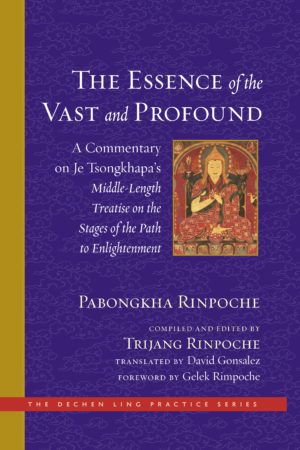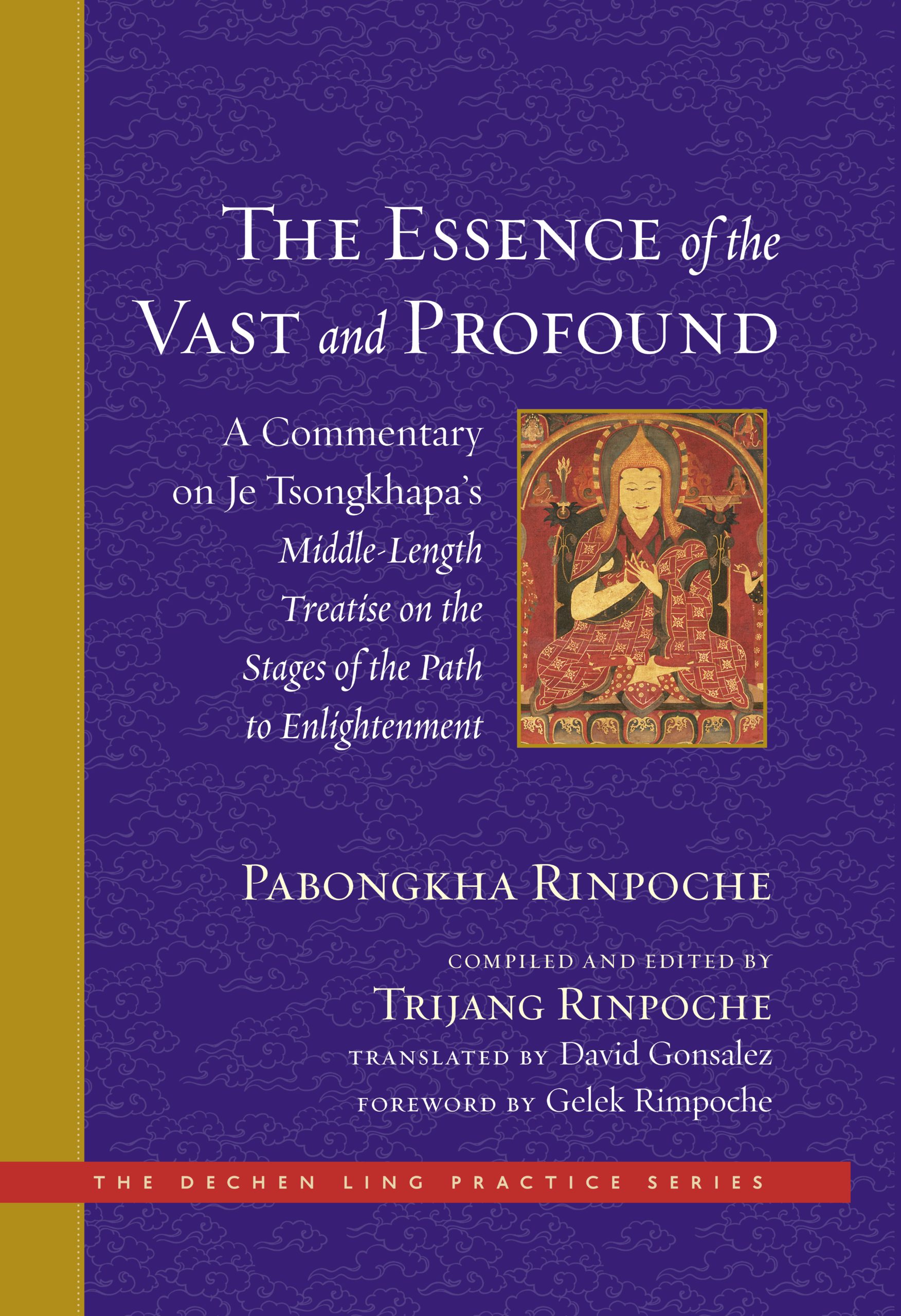
THE ESSENCE OF THE VAST AND PROFOUND
A Commentary on Je Tsongkhapa's Middle-Length Treatise on the Stages of the Path to Enlightenment
The Essence of the Vast and Profound will soon find its place as one of the greatest lamrim commentaries ever given.
Drawn from teachings by Pabongkha Rinpoche, which were given over the course of thirty-six days in 1934 in Tibet’s capital city of Lhasa, The Essence of the Vast and Profound masterfully weaves together Tsongkhapa’s Middle-Length Treatise on the Stages of the Path to Enlightenment, the Second Panchen Lama’s Swift Path, and the Third Dalai Lama’s Essence of Refined Gold. Rinpoche offers wise and compassionate guidance on such crucial subjects as how to rely on a spiritual teacher, how to develop certainty on the path, what it means to take refuge, how to understand karma, and the importance of compassion—explaining the entire spectrum of the Buddhist path, and also inspiring the reader to follow it.
The Dechen Ling Practice Series from Wisdom Publications is committed to furthering the vision of David Gonsalez (Venerable Losang Tsering) and the Dechen Ling Press of bringing the sacred literature of Tibet to the West by making available many never-before-translated texts.
About the Author
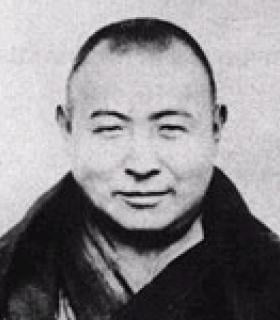
Pabongkha Rinpoche (1878–1941) was one of the great lamas of the twentieth century. He was the root lama of both tutors of the present Dalai Lama and the teacher of many of the other Tibetan lamas who have been bringing the Dharma to the West.

David Gonsalez was the translator of numerous sadhanas and texts and served for many years as the personal translator and attendant for Gen Lobsang Chophel. He was the president of Dechen Ling, a nonprofit organization that works with the Tibetan community in exile to establish their monasteries and traditions.
Book Information
- Hardcover
- 738 pages, 6 x 9 inches
- $69.95
- ISBN 9781614295419
- eBook
- 738 pages
- $47.95
- ISBN 9781614295594
Discover More
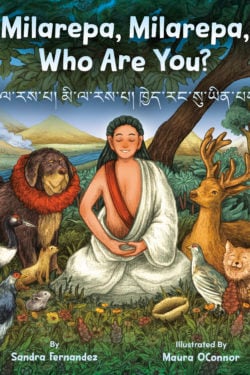
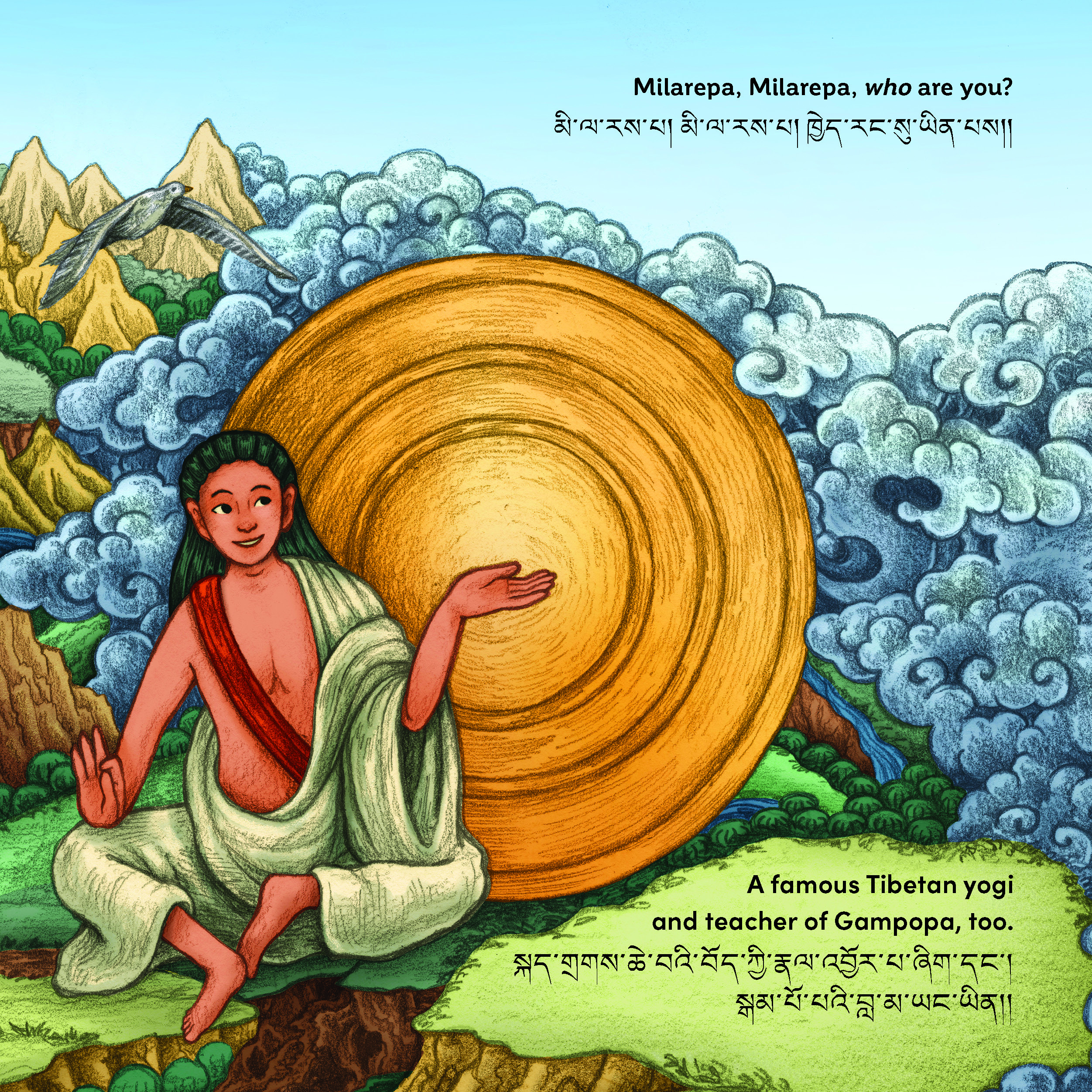
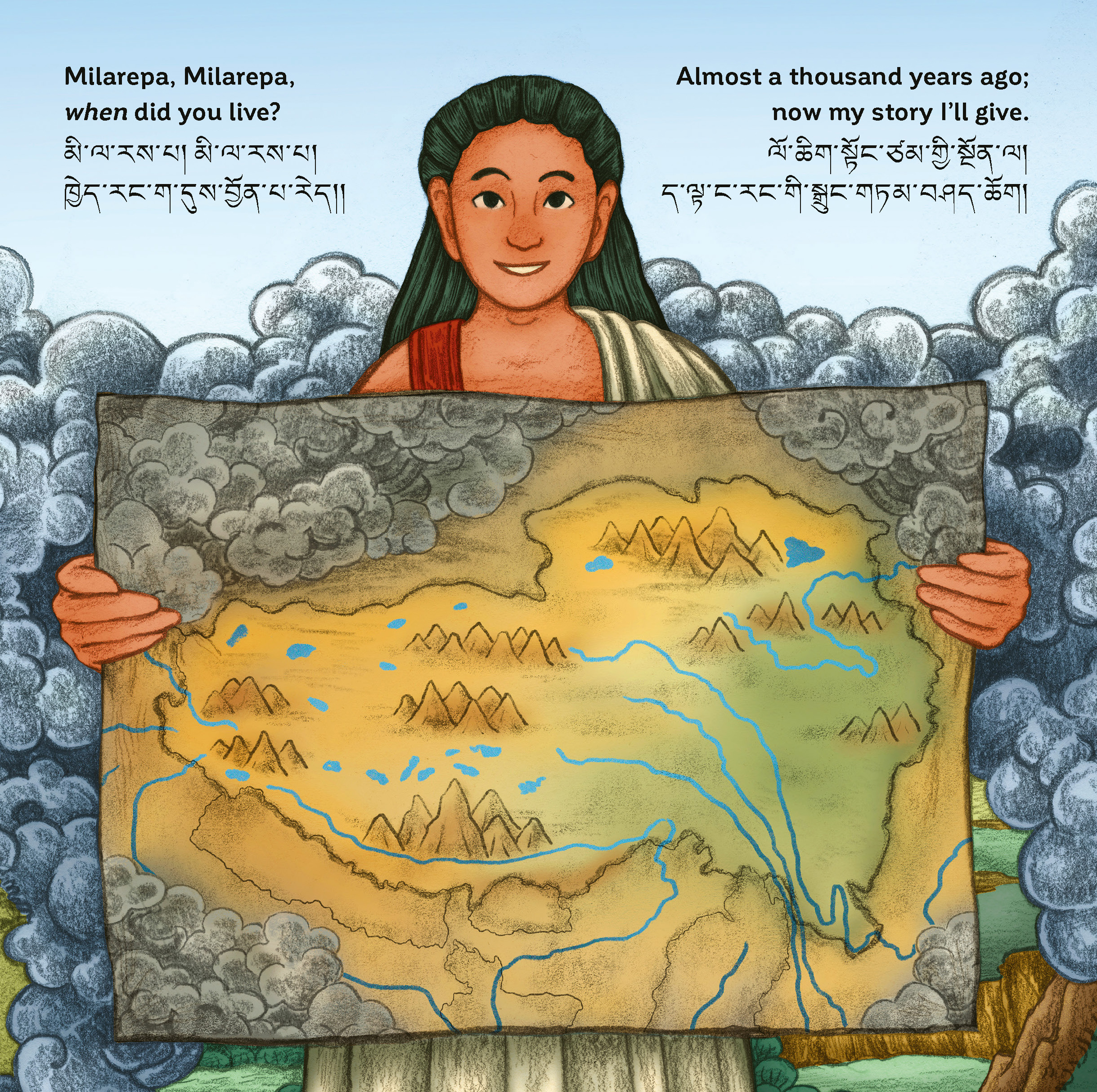
Milarepa, Milarepa, Who Are You?
*This volume is not included in our 2025 holiday sale.*
A charming, beautifully illustrated, bilingual book about one of Tibet’s greatest spiritual teachers—sure to inspire awareness, compassion, and wisdom in children and adults alike that includes an online guide for parents and teachers.
Milarepa is celebrated throughout the Himalayas as one of the most inspiring Buddhist figures from Tibetan history. This beautifully illustrated telling of his life and teachings, with Tibetan translation, lets children explore his extraordinary story. Milarepa went through an incredible transformation, overcoming suffering and his own misdeeds with the help of a wise teacher to become a great spiritual teacher in his own right.
Through the story and teachings of Milarepa, we can see that it is always possible to let our inner goodness shine, no matter what we’ve done in the past. Every moment creates a new opportunity to settle the mind and open the heart. Milarepa’s resilience, fearlessness, mental clarity, and compassion have been beacons of inspiration for a thousand years and resonate as deeply today as they have through the centuries.
To honor Milarepa’s spontaneous songs—classically known as dohas in Sanskrit, which communicated his experiences to others—this book is written in poetic form. It explores the wisdom of his teachings in the form of a rhythmic, call-and-response duet.
Click here to receive an online guide for parents and teachers that further expands on the themes of the book by providing lesson ideas, meditation activities, and guidance for learning about language, history, and art.
6 Myths We Live By
*This volume is not included in our 2025 holiday sale.*
Buddhist wisdom for everyday problems rooted in Buddhist psychology and meditation, 6 Myths We Live By shows us how to uncover our misperceptions and leads us on a path to self-development.
The truth is you probably believe all sorts of myths, but you don’t even know it. To escape any hardship, any suffering or discomfort, we all believe myths about how the world works and how we live in that world. In 6 Myths We Live By, therapist and long-time Buddhist practitioner Karuna Cayton guides us through six common myths that may give us comfort, but actually only perpetuate our problems:
the myth of reality,
the myth of identity,
the myth of permanence,
the myth of randomness,
the myth of happiness, and
the myth of only living once.
Cayton takes us through each of these myths using real-world examples and draws upon Buddhist principles, psychology, and meditation practices to show how we can wake up to reality. By planting a seed of doubt about the beliefs that we’ve always thought were true, we can open our eyes and deepen our relationship with the way we see our life, our potential, and the nature of our struggles and achievements.
The Guru Yoga of Jé Tsongkhapa
Explore the guru yoga practice of Jé Tsongkhapa with a legendary meditation master.
The Hundreds of Deities of Tuṣita is an inspiring and well-loved guru yoga practice that originated from Jé Tsongkhapa himself and was disseminated by the First Dalai Lama. In this book, Chöden Rinpoché—a celebrated scholar who was chosen as a debate partner for His Holiness the Dalai Lama, as well as an accomplished yogi who spent nineteen years in solitary retreat—offers two different commentaries to guide the reader’s understanding.
Rinpoché’s first commentary is based on the tantric oral tradition as presented by the great lama and scholar Pabongkha Dechen Nyingpo in his own inspired commentary on The Hundreds of Deities of Tuṣita, called A Treasury of Precious Jewels, which is presented here in full. Rinpoché adds clarifying instruction to Jé Pabongkha’s work, bringing out the deeper meaning of the text and revealing how ordinary practitioners may understand and apply Pabongkha’s instruction. The second commentary from Rinpoché is a condensed commentary based on the sūtra tradition. Thus, the reader is treated to two different perspectives of the guru yoga practice of Jé Tsongkhapa.
Previously published as Opening the Door of Blessings, this edition has been revised and updated, and is an essential edition to any practitioner’s library.
How to Live and Die
What death is, how we die, what minds we need at death and what happens after death—only by knowing about death and rebirth can we actually fully understand what life is and so learn how to live fully.
—Lama Zopa Rinpoche
There is arguably no truth more foundational to Buddhism than this: everything is impermanent. We can see this in the world all around us; old systems break down, relationships change. Death comes for those we love and, inevitably, for us.
In this book, the late, beloved teacher Lama Zopa Rinpoche walks us through the traditional, revelatory practices of meditating on the fact of impermanence and even—especially—on death itself. Rather than shy away from this reality, we look straight at it, and thus we learn not only how to not fear death, but how to live.
How to Meditate on the Stages of the Path
Deepen your meditation by diving into the practices of the lamrim—the stages of the path to enlightenment.
Buddhist tradition tells us that enlightenment is possible for each and every one of us. It’s actually the best thing we can do for others and for the world, but also the best thing we can do for ourselves, because it means being free from all misery, pain, depression, dissatisfaction, and negative emotions, and abiding forever in peace, joy, love, and compassion. What could be more wonderful than that?
Kathleen McDonald (Sangye Khadro), a Western nun with decades of experience and author of the bestselling book How to Meditate, guides us through the next step in our meditation practice: the transformative meditations on the Tibetan lamrim stages to enlightenment. She helps us see that the whole purpose of meditation is to transform our mind in a constructive way. For this to happen, we need to become so thoroughly familiar with the lamrim topics that they become our natural way of thinking and living our life. This warm and encouraging guide takes us through meditations on these lamrim topics, such as:
- impermanence
- refuge
- karma
- the four noble truths
- bodhichitta
- the six perfections: giving, ethics, patience, joyous effort, concentration, and wisdom
How to Meditate on the Stages of the Path offers practical advice, support, and step-by-step guidance on how to meditate on the stages of the path to enlightenment that will transform the practice of new meditators and seasoned practitioners alike.
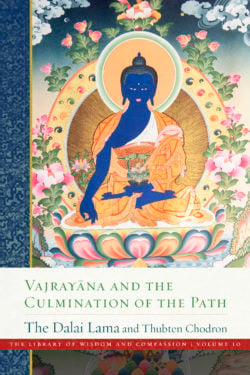
Vajrayāna and the Culmination of the Path
The final volume of the Library of Wisdom and Compassion by His Holiness the Dalai Lama takes us to the uncommon practices and realizations of Vajrayāna and the culmination of the path to the full awakening of a buddha.
His Holiness the Dalai Lama skillfully illuminates the unique qualities and complexities of Vajrayāna, as practiced in Tibet, and clarifies the method to eradicate the subtlest obscurations preventing the full awakening of a buddha. Speaking to newcomers and advanced students alike, he explains the similarities and differences of the Sūtra and Tantra paths. Having gathered many of the doubts and difficult points concerning the tantric path, he clarifies the purpose of receiving proper empowerment by qualified gurus and the ethical restraints and commitments required to enter the path of secret mantra. The paths and stages of the four tantric classes are explained, as are the generation-stage and completion-stage practices of Highest Yoga Tantra. You are introduced to the practices of clear appearance and divine identity common to all tantric sādhanas, as well as the unique practices of illusory body and actual clear light that overcome the subtlest defilements on the mind and eliminate all obscurations quickly.
The understanding of emptiness in Sūtra and Tantra is the same, but the consciousness perceiving emptiness differs. In Highest Yoga Tantra that consciousness is great bliss, which arises from knowing the methods to manipulate the channels, winds, and drops of the subtle body. In short, in Vajrayāna and the Culmination of the Path the Dalai Lama sets out the path that leads to blissful awakening and enables us to be of great benefit to all sentient beings.
Learn more about the Library of Wisdom and Compassion series.
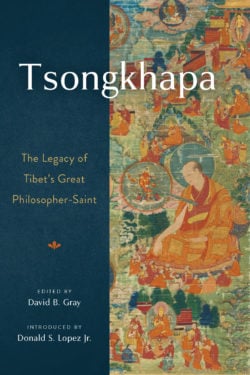
Tsongkhapa
Tsongkhapa’s seminal contributions to Buddhist thought and practice, and to the course of history, are illuminated and celebrated by some of his foremost modern interpreters.
Few figures have impacted the trajectory of Buddhism as much as the great philosopher and meditator, scholar and reformer, Tsongkhapa Losang Drakpa (1357–1419), the founder of the Geluk school of Tibetan Buddhism and teacher of the First Dalai Lama. His Ganden tradition spread throughout Central Asia and Mongolia, and today, through figures such as the Dalai Lama, who calls Tsongkhapa a second Nagarjuna, his teachings are shaping intellectual conversations and ethical practice globally. To commemorate the 600th anniversary of Tsongkhapa’s passing, a special conference was held at Ganden Monastery in India in 2019, featuring some of the best translators and interpreters of his teachings today. Highlights of those incisive summations of Tsongkhapa’s special contributions are gathered in this volume. Here we discover Tsongkhapa the philosopher, Tsongkhapa the master of the Buddhist canon, Tsongkhapa the tantric adept, and Tsongkhapa as the visionary who united wisdom to compassion.
Each of the authors featured looks at a distinct facet of Tsongkhapa’s legacy. Donald Lopez provides a global context, Guy Newland distills Tsongkhapa’s Middle Way, Dechen Rochard uncovers the identity view, Jay Garfield examines the conceptualized ultimate, Thupten Jinpa highlights the seminal importance Tsongkhapa placed on ascertainment, David Gray looks at his approach to Cakrasamvara tantra, Gavin Kilty surveys his Guhyasamaja tantra commentary, Roger Jackson surmises his views on Zen and mahamudra, Geshé Ngawang Samten examines his provisional-definitive distinction, Gareth Sparham highlights his scholastic prowess, Mishig-Ish Bataa illuminates his impact in Mongolia, and Bhiksuni Thubten Chodron presents his instructions on how to cultivate compassion.
Whether you are well acquainted with Tsongkhapa’s life and thought or you are encountering him here for the first time, you will find The Legacy of Tsongkhapa an illuminating survey of his unique explorations of the highest aspirations of humanity.
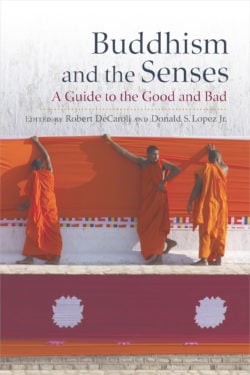
Buddhism and The Senses
Across Buddhist traditions, the five senses—sight, sound, smell, taste, and touch—are perceived both positively and negatively. Share eminent scholars’ fascination and deep insight into what makes a sensuous experience good or bad.
Following the exhibition Encountering the Buddha: Art and Practice across Asia at the National Museum of Asian art, ten eminent scholars present their insights into Buddhism’s fascinating relation with the five senses (sight, sound, smell, taste, and touch), which careens between delight and disgust, rarely finding a middle way. While much of Buddhist literature is devoted to overcoming the attachment that dooms us to rebirth in samsara, primarily by deprecating sense experience and showing that whatever brings us sensual pleasure leads only to all manner of physical and mental pain, in texts such as the Lotus Sutra, sensory powers do not offer sensory pleasure but rather knowledge, clear observation, and ability to preach the Dharma. Considering such religiously and historically contingent ambiguity, this volume presents each of the five senses in two instantiations, the good and the bad, opening up the discourse on the senses across Buddhist traditions.
Just as the museum departed from tradition to incorporate sensory experiences into the exhibition, this volume is a new direction in scholarship to humanize Buddhist studies by foregrounding sensory experience and practice, inviting the reader to think about the senses in a focused manner and shifting our understanding of Buddhism from the conceptual to the material or practical, from the idealized to the human, from the abstract to the grounded, from the mind to the body.
Includes essays by Bryan J. Cuevas, Debra Diamond, D. Max Moerman, Reiko Ohnuma, James Robson, Melody Rod-ari, Kurtis R. Schaeffer, John Strong, and Lina Verchery.
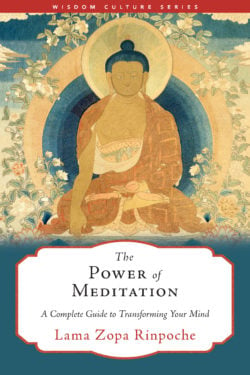
The Power of Meditation
What is meditation, and how do we practice it?
In The Power of Meditation, Lama Zopa Rinpoche, beloved teacher and co-founder of the Foundation for the Preservation of the Mahayana Tradition, offers clear explanations and instructions for the life-changing practice of meditation.
From preparatory procedures, such as selecting a space and adopting the proper motivation, to the details of posture and how to focus the mind, Rinpoche offers step-by-step instruction that serves as both a starting point for beginners and a new vantage on familiar techniques for more experienced sitters. In his own direct and plain-spoken style, Rinpoche offers concise explanations for different kinds of meditation, such as shamatha, or calm abiding meditation, and vipashyana, or insight meditation, delineating their specific techniques and applications. And finally, Rinpoche presents tips for bringing our newfound clarity off of the cushion and into our daily lives, making each moment meaningful.
The Wisdom Culture Series, published under the guidance of Lama Zopa Rinpoche, provides English-language readers with key works for the study and cultivation of the Mahayana Buddhist path, especially works of masters within the lineage of Lama Tsongkhapa and the Geluk school of Tibetan Buddhism.
A Monk’s Guide to Finding Joy
A profound and practical guide to uncovering your own wise mind and kind heart.
We all want to find happiness. But how do we go about it? In this easygoing and clear-sighted guide, celebrated Buddhist meditation and philosophy master His Eminence Khangser Rinpoche provides us with down-to-earth advice on how to train our minds and find our own innate wisdom and kindness along the way. He helps us see the profound insight that is open to us all, and how it can awaken us to the truth of the way things are. This insight into the truth, and the practices that help you cultivate this awareness, transform suffering into wisdom and compassion—and ultimately joy.
A Monk’s Guide to Finding Joy brings the ancient Tibetan mind-training tradition into our twenty-first-century lives. Through stories, real-life examples, reflections, and meditation practices—all told with warmth and humor—H.E. Khangser Rinpoche shows us how we can transform the suffering of our life into happiness. When we train the mind from within the context of our difficult emotions, we can find true joy, just as the oyster transforms sand into a pearl.
Sounds of Innate Freedom, Vol. 2
The second volume in a historic six-volume series containing many of the first English translations of the classic mahāmudrā literature compiled by the Seventh Karmapa.
Sounds of Innate Freedom: The Indian Texts of Mahāmudrā are historic volumes containing many of the first English translations of the classic mahāmudrā literature. The texts and songs in these volumes constitute the large compendium called The Indian Texts of the Mahāmudrā of Definitive Meaning, compiled by the Seventh Karmapa Chötra Gyatso (1456–1539). Translated, introduced, and annotated by Karl Brunnhölzl, acclaimed senior teacher at the Nalandabodhi community of Dzogchen Ponlop Rinpoche, the collection offers a brilliant window into the richness of the vast ocean of Indian mahāmudrā texts cherished in all Tibetan lineages, particularly in the Kagyü tradition, giving us a clear view of the sources of one of the world’s great contemplative traditions.
This volume 2 (thirty-four texts) contains two long-established sets of Mahāmudrā works: “The Sixfold Pith Cycle” and short texts of Maitrīpa’s “Twenty-Five Dharmas of Mental Nonengagement,” which present a blend of Madhyamaka, Mahāmudrā, and certain tantric principles, as well as two commentaries by Maitrīpa’s students. The vital focus of this volume is the accomplishment of true reality.
Click here to explore other volumes available in The Sounds of Innate Freedom series.
The Blazing Inner Fire of Bliss and Emptiness
The Blazing Inner Fire of Bliss and Emptiness presents lucid translations of a pair of detailed commentaries by the famed Tibetan tantric master Ngulchu Dharmabhadra (1772–1851), illuminating a set of extremely secret and restricted tantric practices of highest yoga tantra.
The first of these commentaries details the practices of the Six Yogas of Naropa, one of the most celebrated and revered systems of completion-stage practice in Tibet. Dharmabhadra presents the Six Yogas by elaborating upon Lama Tsongkhapa ’s (1357–1419) masterpiece on the subject entitled Endowed with the Three Inspirations, which served as the basis for nearly all subsequent commentaries on the Six Yogas within the Gelug tradition. Ngulchu Dharmabhadra’s commentary is unique in that it presents the Six Yogas within the context of Vajrayogini practice, making this book a perfect companion piece to The Extremely Secret Dakini of Naropa (Wisdom Publications, 2020).
Also contained in this book is Ngulchu Dharmabhadra’s lucid and concise commentary on the First Panchen Lama’s (1570–1662) famous Supplication for Liberation from [Fear of] the Perilous Journey of the Intermediate State. The prayer—a beautiful literary contribution from the First Panchen Lama in its own right—invokes the immediacy of death and the potential to use the process of dying as an opportunity for liberation. The prayer extols the efficacy of the “nine mixings” of the completion stage as direct means of transforming our ordinary death process by using advanced yogas presented in the first commentary on the Six Yogas.
Together, these works present the reader with a vast and profound vision of spiritual transformation—one in which every aspect of human experience can be used as an opportunity for transcendence and spiritual liberation.
The Dechen Ling Practice Series from Wisdom Publications is committed to furthering the vision of David Gonsalez (Venerable Losang Tsering) and the Dechen Ling Press of bringing the sacred literature of Tibet to the West by making available many never-before-translated texts.
Ocean of Attainments
This commentary on Guhyasamāja tantra is the seminal guide to deity yoga and tantric visualization for the Geluk school of Tibetan Buddhism.
The Guhyasamāja Tantra, called the king of all tantras, is revered in Tibet, especially by the Geluk school. Ocean of Attainments, a commentary on Guhyasamāja practice, was composed by Khedrup Jé Gelek Palsang (1385–1438), a key disciple of the Geluk school founder, Tsongkhapa Losang Drakpa. It explores the creation stage, a quintessential Buddhist tantric meditation that together with the completion stage comprises the path of unexcelled tantra.
In the creation stage, meditators visualize themselves as buddhas at the center of the celestial maṇḍala, surrounded in all directions by male and female buddhas, bodhisattvas, and other enlightened beings. Yet creation-stage practice is not merely visualization but deity yoga—indivisibly uniting the meditation on emptiness with the visualization of the maṇḍala. The creation stage uses the conceptualization in visualization to overcome conceptualization, thereby creating a nonconceptual and nonerroneous direct perception. Such a mind, profound and vast, can bring about a transformation that stops saṃsāric suffering. How can visions generated as mental constructs not be erroneous? To the awakened eye, the buddhas and other beings who dwell in the maṇḍala are “reality,” and in a sense they are more than real.
While the previously published Essence of the Ocean of Attainments is a concise exposition on the practice of the Guhyasamaja sadhana, Ocean of Attainments is far more detailed, providing extensive scriptural citations, clear explanation of the body maṇḍala, arguments on points of contention, reference to other tantric systems, and critiques of misinterpretations. With its extensive and clear introduction, this volume is a vital contribution to the growing body of scholarship on Guhyasamāja and on Buddhist tantra in general.
Learn more about the Studies in Indian and Tibetan Buddhism series.
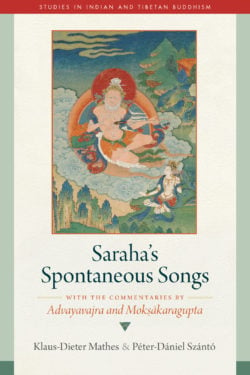
Saraha’s Spontaneous Songs
“Completely abandon thought and no-thought, and abide in the natural way of a small child.” —Saraha
To find liberation and realize the true nature of reality, the Indian Buddhist master Saraha says we must leave behind any conceptual assessment of reality, since no model of it has ever been known to withstand critical analysis. Saraha’s spontaneous songs, or dohās, represent the Buddhist art of expressing the inexpressible. The most important collection of Saraha’s songs is the Dohākoṣa, the Treasury of Spontaneous Songs, better known in Tibet as the Songs for the People, and the Tibetan mahāmudrā tradition, especially within the Kagyü school, has done the most to preserve the lineage of Saraha’s instructions to the present day.
But Saraha was also widely cited in Indian sources starting around the eleventh century, and one Indic commentary, by the Newar scholar Advayavajra, still exists in Sanskrit. In addition, we have independent root texts of Saraha’s songs in the vernacular Apabhraṃśa in which they were recorded. These Indian texts, together with their Tibetan translations, are here presented in masterful new critical editions, along with the Tibetan translation of the commentary no longer extant in Sanskrit by Mokṣākaragupta. Finally, both commentaries are rendered in elegant English, and the authors offer a brisk but comprehensive introduction.
Saraha’s Spontaneous Songs provides the reader with everything needed for a serious study of one of the most important works in the Indian Buddhist canon.
Learn more about the Studies in Indian and Tibetan Buddhism series.
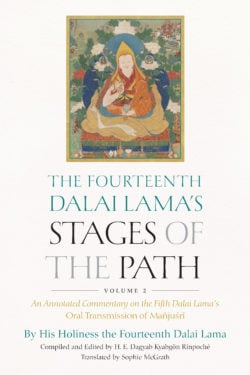
The Fourteenth Dalai Lama’s Stages of the Path, Volume 2
Central to Buddhism is knowing our own minds. Until we do, we are driven by unconscious, often destructive desire and aversion. We couldn’t have a better guide for inner transformation than the Dalai Lama.
The Fourteenth Dalai Lama’s Stages of the Path, Volume 2: An Annotated Commentary on the Fifth Dalai Lama’s Words of Mañjuśrī is the second volume of the Dalai Lama’s outline of Buddhist theory and practice. Having introduced Buddhist ideas in the context of modern society in volume 1, the Dalai Lama turns here to a traditional presentation of the complete path to enlightenment, from developing faith in the Dharma to attaining the highest wisdom. This book, compiled by the revered Tibetan lama Dagyab Rinpoché, comments on the Fifth Dalai Lama’s stages of the path titled Oral Transmission of Mañjuśrī. The volume will appeal to all readers interested in the Dalai Lama’s works, both those new to Buddhism and those looking to deepen their understanding of the Tibetan presentation of the Buddhist path.
Click here to read about His Holiness the Fourteenth Dalai Lama’s achievements.
The Fourteenth Dalai Lama’s Stages of the Path: Volume 1: Guidance for Modern Practitioners is available here.
Reality and Wisdom
Written in a warm and accessible style by one of today’s most respected Tibetan Buddhist masters, Reality and Wisdom leads the reader on a journey of discovery beginning with the very first teachings of the Buddha and into the profound experience of emptiness.
The first section of the book explores the bedrock Buddhist teachings of the four noble truths—insights into freedom from suffering from craving—which underpin all schools of Buddhism. Lama Migmar presents and explores these foundational Buddhist truths with humor and insight, explaining how, from a Mahayana Buddhist perspective, these truths serve as crucial supports for cultivating the transformative wisdom of emptiness.
In the book’s second half, Lama Migmar illuminates the terse and enigmatic lines of the Heart Sutra, perhaps the most studied and revered of all Mahayana Buddhist scriptures. The Heart Sutra presents the reader with a vision of reality as it is perceived by a buddha, a vision underpinned by and infused with the radical flexibility and possibility of emptiness and the engagement and responsiveness of profound compassion.
The clarity, warmth, and vibrancy of Lama Migmar’s writing combined with the comprehensiveness and detail of his presentations of key Buddhist teachings make this book a valuable resource for a range of readers, from beginners to more advanced practitioners seeking to deepen their practice.
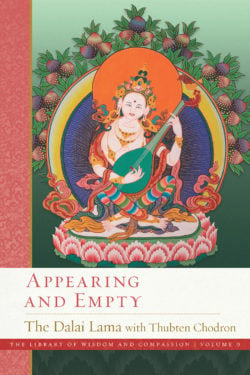
Appearing and Empty
In Appearing and Empty the Dalai Lama skillfully reveals the Prāsaṅgikas’ view of the ultimate nature of reality so that we will gain the correct view of emptiness, the selflessness of both persons and phenomena, and have the means to eliminate our own and others’ duḥkha.
In this last of three volumes on emptiness, the Dalai Lama takes us through the Sautrāntika, Yogācāra, and Svātantrika views on the ultimate nature of reality and the Prāsaṅgikas’ thorough responses to these, so that we gain the correct view of emptiness—the selflessness of both persons and phenomena. This view entails negating inherent existence while also being able to establish conventional existence: emptiness does not mean nothingness. We then learn how to meditate on the correct view by cultivating pristine wisdom that is the union of serenity and insight as taught in the Pāli, Chinese, and Tibetan traditions. Such meditation, when combined with the altruistic intention of bodhicitta, leads to the complete eradication of all defilements that obscure our minds. This volume also introduces us to the tathāgatagarbha—the buddha essence—and how it is understood in both Tibet and China. Is it permanent? Does everyone have it? In addition, the discussion of sudden and gradual awakening in Zen (Chan) Buddhism and in Tibetan Buddhism is fascinating.
Learn more about the Library of Wisdom and Compassion series.
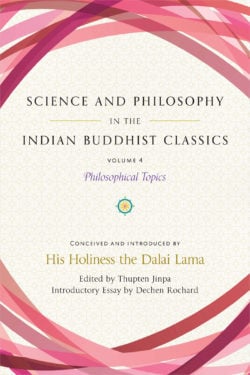
Science and Philosophy in the Indian Buddhist Classics, Vol. 4
This fourth and final Science and Philosophy in the Indian Buddhist Classics volume provides, through extensive passages, a window into the works of the great thinkers from the flowering of philosophy in classical India.
This is the second philosophy volume in the Science and Philosophy series. Whereas the first philosophy volume presented the views of the non-Buddhist and Buddhist schools in sequence, the present works selects specific topics for consideration, including the nature of the two truths, the analysis of self, the Yogacara explanation of reality, emptiness in the Madhyamaka tradition, a survey of logic and epistemology, and the Buddhist explanation of language and meaning. Like earlier volumes, it provides, through extensive extracts, a window into the works of the masters of the Nalanda tradition. The final section on language is particularly unique and largely crafted by Thupten Jinpa.
Explore the entire series here.