
Would you like to step onto a path that can take you completely beyond fear and confusion?
This is the path of Mahāmudrā—direct realization of the nature of mind.
Many of our most profound meditative experiences go far beyond the limits of language.
This is what you’ll explore in Mahāmudrā practice:
the power of abandoning language and discursive thought
for a direct encounter with mind itself.
It is an ancient, potent method for recognizing the nonduality and emptiness that have always been present.
If you’ve struggled in your practice—
perhaps with overwhelming mental activity or a sense of being stuck—
Mahāmudrā may be the key to breaking through.
Embark on your journey beyond fear and confusion. Join Ven. Robina Courtin in this step-by-step journey through Lama Yeshe’s transformative Mahāmudrā teachings.
This course is in self-study mode, so you can take it at your own pace. Enrolled students have lifetime access.
Tuition: $247
Includes lifetime access for enrolled students!

After enrolling, check your email for a welcome email with instructions on how to take the course. When you enroll in any Wisdom Academy course, you agree to our terms of use. Enrolled students have lifetime access to course materials. Wisdom is a 501(c)(3) nonprofit. Your tuition supports the creation of more courses like this one. Thank you! For more about our terms, please see the Wisdom Academy FAQ. This course is not included in special sales.

This is more than an online course.
It’s a rare exploration of a profound, transformative teaching—one that cuts through complexity with Lama Yeshe’s fierce clarity and Ven. Robina’s living embodiment.
This isn’t a workshop—it’s a direct path for practitioners ready for a vivid encounter with their true nature.
For less than the cost of a weekend retreat, you’ll receive lifetime access to teachings designed to
• dismantle confusion,
• deepen your meditation,
• and offer a direct path to liberation.
Step into the power and expansiveness of Mahāmudrā. Click the button above to save your seat today.
When you finish this course, we believe you’ll possess a sense of confidence that you understand the core of shamatha theory, and you’ll have experienced a taste of shamatha.
In the course, you’ll deeply explore shamatha practice and the theme of balance, or the middle way. This includes both balancing structure and fluidity, and balancing attention. You’ll also discover how to cultivate an existence of ease, relaxation, and concentration even in the midst of modern life’s sometimes hectic pace.
As you take this course, you’ll learn how to cultivate three key qualities of attention:
1) Relaxation
2) Stillness and stability of body and mind
3) Clarity
The course also will delve into what it means to live a “marvelously meaningful life,” as Lama Alan says. You’ll learn about the role that shamatha has to play in experiencing the kind of deeper, more meaningful happiness that is truly transformative.
Join this course to discover how to escape the cycle of tension and exhaustion, and instead cultivate a practice that can support you all the way from daily life to liberation.
In-Depth Member?
Email us now at support[@]wisdompubs.org to select
this course as one of your four for the year.

All-Access Member or Already Selected It?
Start studying with Lama Alan now.

When you finish this course, we believe you’ll possess a sense of confidence that you understand the core of shamatha theory, and you’ll have experienced a taste of shamatha.
In the course, you’ll deeply explore shamatha practice and the theme of balance, or the middle way. This includes both balancing structure and fluidity, and balancing attention. You’ll also discover how to cultivate an existence of ease, relaxation, and concentration even in the midst of modern life’s sometimes hectic pace.
As you take this course, you’ll learn how to cultivate three key qualities of attention:
1) Relaxation
2) Stillness and stability of body and mind
3) Clarity
The course also will delve into what it means to live a “marvelously meaningful life,” as Lama Alan says. You’ll learn about the role that shamatha has to play in experiencing the kind of deeper, more meaningful happiness that is truly transformative.
Join this course to discover how to escape the cycle of tension and exhaustion, and instead cultivate a practice that can support you all the way from daily life to liberation.
Full Tuition: $247

After enrolling, check your email for a welcome email with instructions on how to take the course. When you enroll in any Wisdom Academy course, you agree to our terms of use. Enrolled students have lifetime access to course materials. Wisdom is a 501(c)(3) nonprofit. Your tuition supports the creation of more courses like this one. Thank you! For more about our terms, please see the Wisdom Academy FAQ.
Dive into the heart of Buddhist philosophy with Mark Siderits and explore profound teachings on nonself, suffering, and perception.
What is the self? How do we understand suffering? What is the nature of reality? Buddhism As Philosophy: Nonself and Reality invites you to tackle these profound questions with Mark Siderits, a philosopher known for his groundbreaking work in Buddhist thought.
The course is based on Mark’s book Buddhism As Philosophy, the most popular book for undergraduate courses on Buddhist philosophy.
In this course, you will
• gain a vivid new understanding of the sense of self as the origin of suffering,
• receive incisive guidance for examining and exploring your subjective sense of self,
• explore how the twelvefold chain of dependent origination explains the cycle of samsara and the perpetuation of suffering,
• and much more!
Sign up now and learn at your own pace. Enrolled students have lifetime access.
Tuition: $247
Includes lifetime access for enrolled students!
This course is not included in the Spring Sale. After enrolling, check your email for a welcome email with instructions on how to take the course. When you enroll in any Wisdom Academy course, you agree to our terms of use. Enrolled students have lifetime access to course materials. Wisdom is a 501(c)(3) nonprofit. Your tuition supports the creation of more courses like this one. Thank you! For more about our terms, please see the Wisdom Academy FAQ.
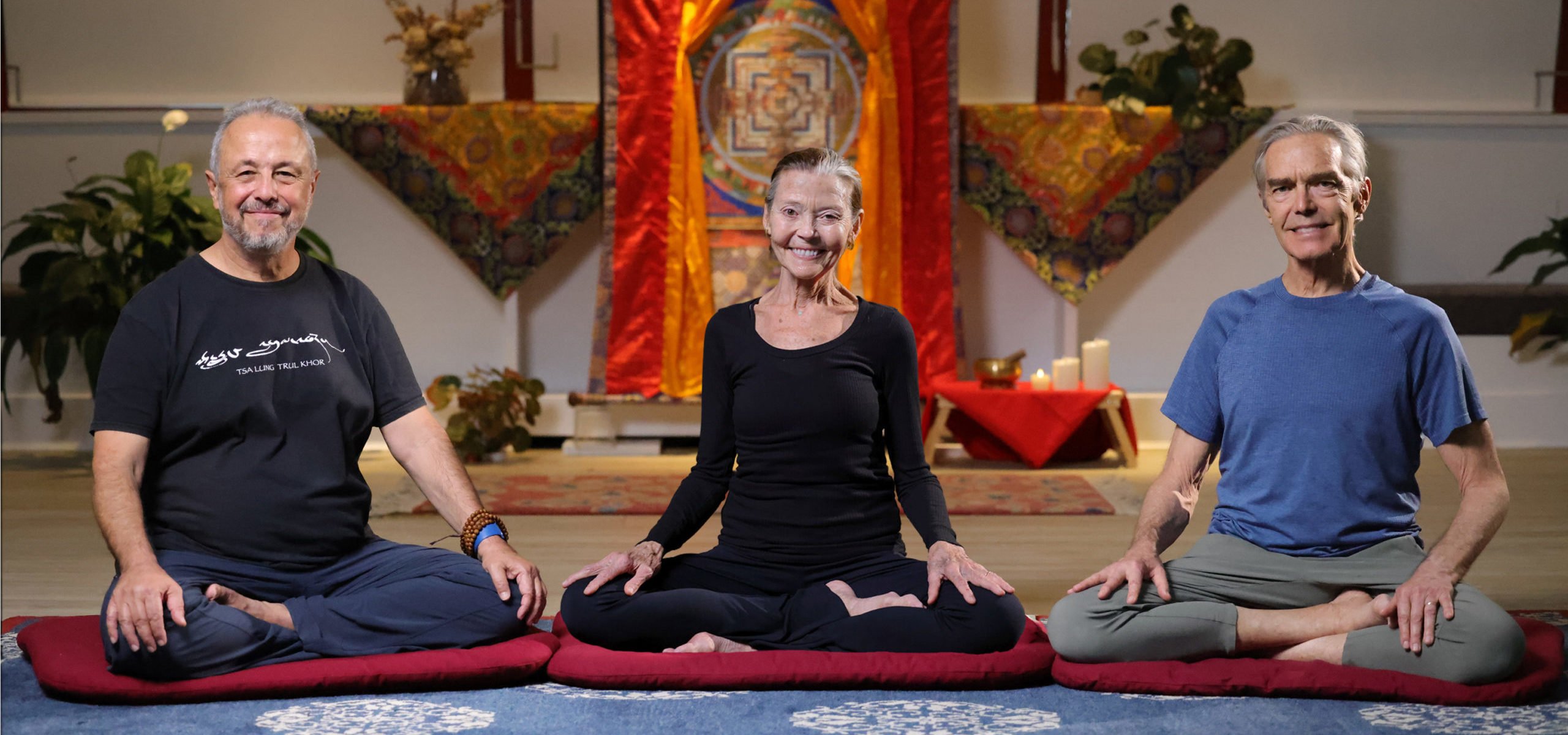
Going deeper in our practice isn’t always about spending more time on the cushion. For centuries, the great practitioners and masters have known that there are specific ways of working with body and breath which are essential to profound practice.
Through movement and breath practices drawn from these traditions, this new online course reveals the physical keys to deeper meditation.
Learn from three teachers who’ve spent decades bridging these ancient wisdom streams—discovering not just how to sit longer, but how to access the profound stillness that is the ground of awakening.
Save your seat now and experience how these practices can take your meditation practice to profound new depths.
This course is in self-study mode, so you can take it at your own pace. Enrolled students have lifetime access.
Tuition: $297
Includes lifetime access for enrolled students!
After enrolling, check your email for a welcome email with instructions on how to take the course. When you enroll in any Wisdom Academy course, you agree to our terms of use. Enrolled students have lifetime access to course materials. Wisdom is a 501(c)(3) nonprofit. Your tuition supports the creation of more courses like this one. Thank you! For more about our terms, please see the Wisdom Academy FAQ.
In this course we enter the visionary world of nineteenth-century Dzogchen master Düdjom Lingpa to explore the nature and origins of the mind, the ground of consciousness itself.
Scroll down to learn more, or click the button to begin now!
In-Depth Member?
Email us now at support[@]wisdompubs.org to select
this course as one of your four for the year.
All-Access Member or Already Selected It?
Start studying with Lama Alan now.
In this course we enter the visionary world of nineteenth-century Dzogchen master Düdjom Lingpa to explore the nature and origins of the mind, the ground of consciousness itself.
Scroll down to learn more, or click the button to begin now!
Full Tuition: $247
After enrolling, check your email for a welcome email with instructions on how to take the course. When you enroll in any Wisdom Academy course, you agree to our terms of use. Enrolled students have lifetime access to course materials. Wisdom is a 501(c)(3) nonprofit. Your tuition supports the creation of more courses like this one. Thank you! For more about our terms, please see the Wisdom Academy FAQ.
In this new online course from beloved Bön teacher Geshe YongDong Losar, find out how your breath can be a guide on your journey from suffering to profound well-being.
In the course, Geshe-la guides you through a deep exploration of the breath. Rooted in the Tibetan Bön tradition, the breath and movement practices you’ll learn will help you rediscover your breath as a calming and liberating vehicle for your journey from suffering and stress to freedom and ease.
Tuition: $297
Includes lifetime access for enrolled students!
After enrolling, check your email for a welcome email with instructions on how to take the course. When you enroll in any Wisdom Academy course, you agree to our terms of use. Enrolled students have lifetime access to course materials. Wisdom is a 501(c)(3) nonprofit. Your tuition supports the creation of more courses like this one. Thank you! For more about our terms, please see the Wisdom Academy FAQ.
In the second course from beloved Tibetan yoga teacher Dr. Alejandro Chaoul, explore the magical movements of the Aural Transmission of Zhang Zhung at a profound level. You’ll learn important breathing practices and unlock the power of the pervasive breath.
This course will focus specifically on the pervasive breath (khyab lung) which Shardza Rinpoche, a 19th-century Bon Dzogchen master who composed an essential commentary on the root text for this course, calls the “principal breath.” While other breath practices are related to specific parts of the body, this breath pervades throughout as a “mandalic breath.”

Tibetan Yoga, Part 2 takes your Tibetan yoga journey deeper as it guides you through exercises involving the pervasive breath to help you in your meditation practice and daily life.
Tuition: $297
 After enrolling, check your email for a welcome email with instructions on how to take the course. When you enroll in any Wisdom Academy course, you agree to our terms of use. Enrolled students have lifetime access to course materials. Wisdom is a 501(c)(3) nonprofit. Your tuition supports the creation of more courses like this one. Thank you! For more about our terms, please see the Wisdom Academy FAQ.
Journey into mindfulness with the master: Bhante Gunaratana (known affectionately as Bhante G), author of Mindfulness in Plain English, a bestseller and #1 on The New York Times’s list of recommended meditation books.
This course provides a comprehensive exploration of mindfulness, including topics such as how we can motivate ourselves to meditate, how to understand suffering, how to see impermanence, how mindfulness leads to true happiness, and much more.
Students will learn how to move from distraction to presence, and from suffering to ease, as they develop their practice under Bhante G’s guidance. We hope you’ll join us for this truly historic offering.
In-Depth Member?
Email us now at support[@]wisdompubs.org to select
this course as one of your four for the year.
All-Access Member or Already Selected It?
Start studying with Bhante G. now.
Journey into mindfulness with the master: Bhante Gunaratana (known affectionately as Bhante G), author of Mindfulness in Plain English, a bestseller and #1 on The New York Times’s list of recommended meditation books.
This course provides a comprehensive exploration of mindfulness, including topics such as how we can motivate ourselves to meditate, how to understand suffering, how to see impermanence, how mindfulness leads to true happiness, and much more.
Students will learn how to move from distraction to presence, and from suffering to ease, as they develop their practice under Bhante G’s guidance. We hope you’ll join us for this truly historic offering.
Tuition: $297 USD
This course is in self-study mode, so you can take it at your own pace. After enrolling, check your email for a welcome email with instructions on how to take the course. When you enroll in any Wisdom Academy course, you agree to our terms of use. Enrolled students have lifetime access to course materials. Wisdom is a 501(c)(3) nonprofit. Your tuition supports the creation of more courses like this one. Thank you! For more about our terms, please see the Wisdom Academy FAQ.
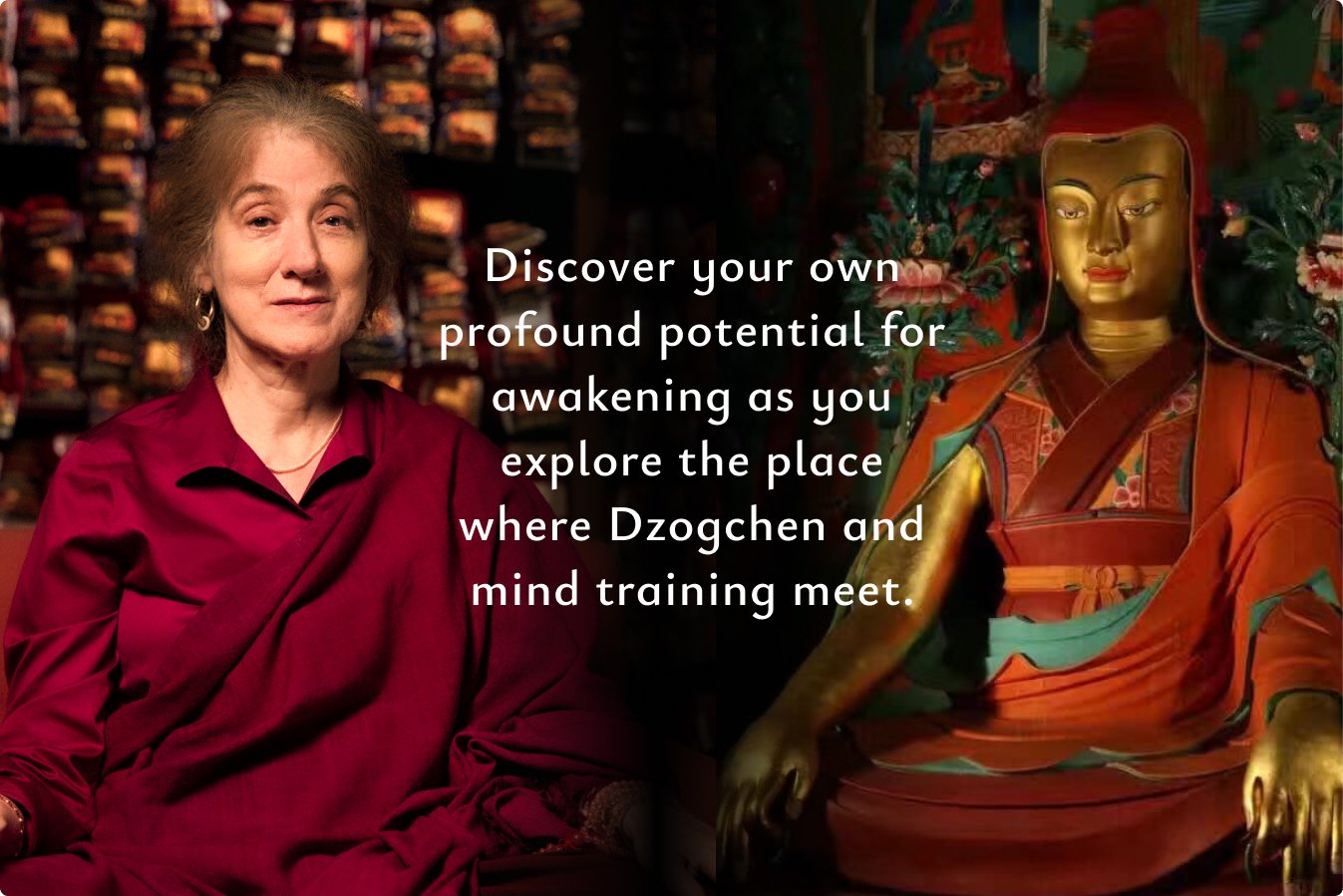
Dzogchen is famous for its direct unmasking of ordinary mind.
Are we humans practicing to be buddhas? Are we buddhas masquerading as humans? And as we explore these questions, we may start to ask ourselves an even deeper question: Can I awaken?
In this course, you’ll have a precious opportunity to ask these questions, and to reveal the answers, for yourself. And in the process, you’ll start to see more clearly the possibility of awakening in this very moment.
Click the button below to save your seat now.
Tuition: $247 USD

Self-study course: you can take this course at your own pace. Materials remain accessible to enrolled students so you can return to them again and again! Wisdom is a 501(c)(3) nonprofit. Your tuition supports the creation of more courses like this one. Thank you! For more about our terms, please see the Wisdom Academy FAQ.
JOIN US FOR A SPECIAL LIVE EVENT
SAKYA PAṆḌITA: A SYMPOSIUM ON HIS LIFE AND WORKS
TUESDAY, MAY 27, 2025 at 2:00 P.M. EDT
A Joint Presentation of Wisdom Publications and Tsechen Kunchab Ling
The amazing life and timeless wisdom of one of Tibet’s greatest masters will be showcased in a combination of live and pre-recorded talks by His Holiness the 41st Sakya Trichen, His Holiness the 42nd Sakya Trizin Ratna Vajra Rinpoche, and translators of five books by or about Sakya Paṇḍita. Hosted by Daniel Aitken, CEO and Publisher of Wisdom Publications, this live symposium will explore Sakya Paṇḍita’s life and work through discussion of several books by or about him: Wisdom’s just-released Sakya Paṇḍita, conceived and introduced by His Holiness the Sakya Trichen; Poetic Wisdom by Christopher Wilkinson; Ordinary Wisdom, translated by John Davenport; Clarifying the Sage’s Intent, translated by David Jackson; and A Clear Differentiation of the Three Codes, translated by Jared Douglas Rhoton.
Join us and our special guests for an inspiring afternoon live from Tsechen Kunchab Ling Temple in Walden, New York, on Tuesday, May 27 from 2:00 PM to 6:00 PM EDT.
Register below to watch SAKYA PAṆḌITA: A SYMPOSIUM ON HIS LIFE AND WORKS live over Zoom.
Meet Our Guests:
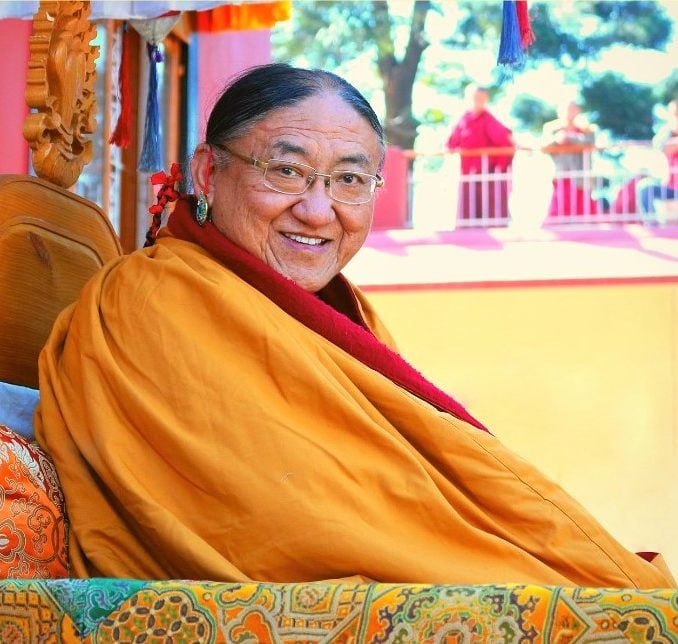 HIS HOLINESS THE SAKYA TRICHEN is the revered forty-first throne holder of the Sakya school of Tibetan Buddhism, which dates back to 1073. A brilliant master, he manifests profound wisdom and compassion, and his command of English renders his teachings particularly beneficial to students in the West. He has guided the establishment of over thirty monasteries in India and Nepal and has helped found Sakya centers around the world. His seat in North America is Tsechen Kunchab Ling in Walden, New York.
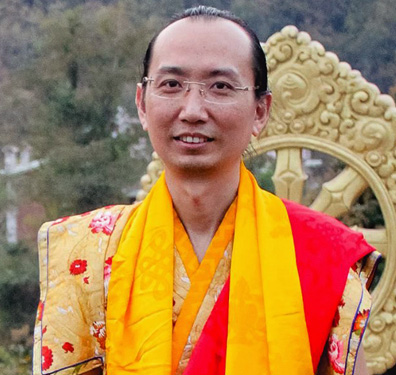 HIS HOLINESS THE 42ND SAKYA TRIZIN, Ratna Vajra Rinpoche, holds the esteemed position of the forty-second Sakya throne holder within the Sakya school of Tibetan Buddhism. He is renowned for his profound knowledge and the clarity of his teachings, making him one of the most well-regarded lineage holders in the Tibetan Buddhist tradition. Embarking on meditation retreats from the age of twelve, including the Hevajra retreat, a key tantric practice within the Sakya school, with great humility he travels extensively to offer teachings and empowerments to students worldwide upon their request.
CHODRUNGMA DR. KUNGA CHODRON received a doctorate in Comparative Human Development and a master’s degree in Human Development from Harvard Graduate School of Education. She has been a Buddhist nun for over twenty years and has received many teachings from eminent Sakya lineage holders, including His Holiness the Sakya Trizin, His Eminence Luding Khen Chen Rinpoche, and the Very Venerable Dezhung Rinpoche. In 2001, Kunga Chodron assisted in the founding of and has since continuously served as Secretary/Treasurer of Tsechen Kunchab Ling Temple.
KHENPO KALSANG GYALTSEN is Abbot and Vice President of Tsechen Kunchab Ling. He established the temple in 2001 at the advice of His Holiness the Sakya Trizin as His Holiness’ Temple Seat in the United States. He is also spiritual director of Sakya Phuntsok Ling Centers for Tibetan Buddhist Study and Meditation in Silver Spring, Maryland and several other branches of Tsechen Kunchab Ling throughout the country and he is a widely recognized and accomplished teacher and translator of Buddhism.
JONATHAN C. GOLD is a professor in the department of religion and director of the Center for Culture, Society and Religion. A scholar of Indian and Tibetan Buddhist philosophy, he is especially interested in Buddhist approaches to meaning, ethics, language and learning. He is the author of The Dharma’s Gatekeepers: Sakya Paṇḍita on Buddhist Scholarship in Tibet.
CHRISTOPHER WILKINSON started his career in the Dharma at the age of 15, taking refuge vows from his root teacher Dezhung Rinpoche. Pursuing a formal education in Tibetan and Sanskrit Languages, he graduated in 1980 with a BA in Asian Languages and Literature and another BA in Comparative Religion from the University of Washington. He has released many translations of Tibetan Literature, including thirty volumes of Great Perfection Tantras and the seven volumes of the Sakya Kongma Series, including Poetic Wisdom.
KHENPO NGAWANG JORDEN studied Buddhist Philosophy with the late Khenpo Lodro Zangpo. He attended Sakya College, Dehradun, India, where he studied the five branches of Buddhist philosophy under the late Khenchen Appey Rinpoche and he later taught at Sakya College before attending Harvard University where he completed his M.A. and then Ph.D. in Buddhist Studies. His Holiness the Sakya Trizin and Khenchen Appey Rinpoche invited Khenpo Jorden to take up the position of Principal of IBA in Kathmandu in 2009.
ELISABETH BENARD is professor emerita at University of Puget Sound and She is the author of several books, including The Sakya Jetsunmas. She is a longtime student of His Holiness the 41st Sakya Trizin (now Trichen) and H.E. Jetsun Kushok.
KHENPO KHENROB WOSER is a graduate of Sakya College and the International Buddhist Academy and has served as a professor at Sakya College and a teacher at Rikon Institute in Switzerland. He is known for his expertise in the tradition and his ability to explain complex concepts clearly and for his traditional sutra readings.
The Nikāya Collection
Currently only the Majjhima Nikāya (Middle Length Discourses) is available. The Dīgha Nikāya (Long Discourses), Saṃyutta Nikāya (Connected Discourses)Aṅguttara Nikāya (Numerical Discourses), and Suttanipāta (Group of Discourses) are still in development.
Majjhima Nikāya (Middle Length Discourses of the Buddha)
Section on The Root of All Things (Mūlapariyāyavagga):
MN 1. Mūlapariyāya Sutta (The Root of All Things) – English | Pāli
MN 2. Sabbāsava Sutta (All the Taints) – English | Pāli
MN 3. Dhammadāyāda Sutta (Heirs in Dhamma) – English | Pāli
MN 4. Bhayabherava Sutta (Fear and Dread) – English | Pāli
MN 5. Anangaṇa Sutta (Without Blemishes) – English | Pāli
MN 6. Ākankheyya Sutta (If a Bhikkhu Should Wish) – English | Pāli
MN 7. Vatthūpama Sutta (The Simile of the Cloth) – English | Pāli
MN 8. Sallekha Sutta (Effacement) – English | Pāli
MN 9. Sammādiṭṭhi Sutta (Right View) – English | Pāli
MN 10. Satipaṭṭhāna Sutta (The Foundations of Mindfulness) – English | Pāli
Section of the Lion’s Roar (Sīhanādavagga):
MN 11. Cūḷasīhanāda Sutta (Shorter Discourse on the Lion’s Roar) – English | Pāli
MN 12. Mahāsīhanāda Sutta (Greater Discourse on the Lion’s Roar) – English | Pāli
MN 13. Mahādukkhakkhandha Sutta (Greater Discourse on the Mass of Suffering) – English | Pāli
MN 14. Cūḷadukkhakkhandha Sutta (Shorter Discourse on the Mass of Suffering) – English | Pāli
MN 15. Anumāna Sutta (Inference) – English | Pāli
MN 16. Cetokhila Sutta (The Wilderness in the Heart) – English | Pāli
MN 17. Vanapattha Sutta (The Jungle Thickets) – English | Pāli
MN 18. Madhupiṇḍika Sutta (The Honeyball) – English | Pāli
MN 19. Dvedhāvitakka Sutta (Two Kinds of Thought) – English | Pāli
Section of Similes (Opammavagga)
MN 20. Vitakkasaṇṭhāna Sutta (The Removal of Distracting Thoughts) – English | Pāli
MN 21. Kakacūpama Sutta (The Simile of the Saw) – English | Pāli
MN 22. Alagaddūpama Sutta (The Simile of the Snake) – English | Pāli
MN 23. Vammika Sutta (The Ant-hill) – English | Pāli
MN 24. Rathavinita Sutta (The Relay Chariots) – English | Pāli
MN 25. Nivāpa Sutta (Bait) – English | Pāli
MN 26. Ariyapariyesana Sutta (The Noble Search) – English | Pāli
MN 27. Cūḷahatthipadopama Sutta (Shorter Discourse on the Simile of the Elephant’s Footprint) – English | Pāli
MN 28. Mahāhatthipadopama Sutta (Greater Discourse on the Simile of the Elephant’s Footprint) – English | Pāli
MN 29. Mahāsāropama Sutta (Greater Discourse on the Simile of the Heartwood) – English | Pāli
MN 30. Cūḷasāropama Sutta (Shorter Discourse on the Simile of the Heartwood) – English | Pāli
Great Section of Pairs (Mahāyamakavagga)
MN 31. Cūḷagosinga Sutta (Shorter Discourse in Gosinga) – English | Pāli
MN 32. Mahāgosinga Sutta (Greater Discourse in Gosinga) – English | Pāli
MN 33. Mahāgopālaka Sutta (Greater Discourse on the Cowherd) – English | Pāli
MN 34. Cūḷagopālaka Sutta (Shorter Discourse on the Cowherd) – English | Pāli
MN 35. Cūḷasaccaka Sutta (Shorter Discourse to Saccaka) – English | Pāli
MN 36. Mahāsaccaka Sutta (Greater Discourse to Saccaka) – English | Pāli
MN 37. Cūḷataṇhāsankhaya Sutta (Shorter Discourse on the Destruction of Craving) – English | Pāli
MN 38. Mahātaṇhāsankhaya Sutta (Greater Discourse on the Destruction of Craving) – English | Pāli
MN 39. Mahā Assapura Sutta (Greater Discourse at Assapura) – English | Pāli
MN 40. Cūḷa Assapura Sutta (Shorter Discourse at Assapura) – English | Pāli
Shorter Section of Pairs (Cūḷayamakavagga)
MN 41. Sāleyyaka Sutta (Discourse to the Brahmins of Sālā) – English | Pāli
MN 42. Verañjaka Sutta (Discourse to the Brahmins of Verañja) – English | Pāli
MN 43. Mahāvedalla Sutta (Discourse on the Greater Series of Questions and Answers) – English | Pāli
MN 44. Cūḷavedalla Sutta (Discourse on the Shorter Series of Questions and Answers) – English | Pāli | Tibetan
MN 45. Cūḷadhammasamādāna Sutta (Shorter Discourse on Ways of Undertaking Things) – English | Pāli
MN 46. Mahādhammasamādāna Sutta (Greater Discourse on Ways of Undertaking Things) – English | Pāli
MN 47. Vīmaṁsaka Sutta (Discourse on the Inquirer) – English | Pāli
MN 48. Kosambiya Sutta (Discourse to the Kosambians) – English | Pāli
MN 49. Brahmanimantanika Sutta (Discourse on the Invitation of a Brahmā) – English | Pāli
MN 50. Māratajjanīya Sutta (Discourse on the Rebuke to Māra) – English | Pāli
Section on Householders (Gahapativagga)
MN 51. Kandaraka Sutta (To Kandaraka) – English | Pāli
MN 52. Aṭṭhakanāgara Sutta (To the One from Aṭṭhakanāgara) – English | Pāli
MN 53. Sekha Sutta (The Disciple in Higher Training) – English | Pāli
MN 54. Potaliya Sutta (To Potaliya) – English | Pāli
MN 55. Jīvaka Sutta (To Jīvaka) – English | Pāli
MN 56. Upāli Sutta (About Upāli) – English | Pāli
MN 57. Kukkuravatika Sutta (The Dog-Duty Ascetic) – English | Pāli
MN 58. Abhayarājakumāra Sutta (To Prince Abhaya) – English | Pāli
MN 59. Bahuvedanīya Sutta (The Many Kinds of Feeling) – English | Pāli
MN 60 Apaṇṇaka Sutta (The Incontrovertible Teaching) – English | Pāli
Section on Monks (Bhikkhuvagga)
MN 61. Ambalaṭṭhikārāhulovāda Sutta (Advice to Rāhula at Ambalaṭṭhikā) – English | Pāli
MN 62. Mahārāhulovāda Sutta (Greater Discourse of Advice to Rāhula) – English | Pāli
MN 63. Cūḷamālunkya Sutta (Shorter Discourse to Mālunkyāputta) – English | Pāli
MN 64. Mahāmālunkya Sutta (Greater Discourse to Mālunkyāputta) – English | Pāli
MN 65. Bhaddāli Sutta (To Bhaddāli) – English | Pāli
MN 66. Laṭukikopama Sutta (The Simile of the Quail) – English | Pāli
MN 67. Cātumā Sutta (At Cātumā) – English | Pāli
MN 68. Naḷakapāna Sutta (At Naḷakapāna) – English | Pāli
MN 69. Gulissāni Sutta (To Gulissāni) – English | Pāli
MN 70. Kīṭāgiri Sutta (At Kīṭāgiri) – English | Pāli
Section on Wanderers (Paribbājakavagga)
MN 71. Tevijjavacchagotta Sutta (To Vacchagotta on the Threefold True Knowledge) – English | Pāli
MN 72. Aggivacchagotta Sutta (To Vacchagotta on Fire) – English | Pāli
MN 73. Mahāvacchagotta Sutta (Greater Discourse to Vacchagotta) – English | Pāli
MN 74. Dīghanakha Sutta (To Dīghanakha) – English | Pāli
MN 75. Māgandiya Sutta (To Māgandiya) – English | Pāli
MN 76. Sandaka Sutta (To Sandaka) – English | Pāli
MN 77. Mahāsakuludāyi Sutta (Greater Discourse to Sakuludāyin) – English | Pāli
MN 78. Samaṇamaṇḍikā Sutta (To Samaṇamaṇḍikāputta) – English | Pāli
MN 79. Cūḷasakuludāyi Sutta (Shorter Discourse to Sakuludāyin) – English | Pāli
MN 80. Vekhanassa Sutta (To Vekhanassa) – English | Pāli
Section on Kings (Rājavagga)
MN 81. Ghaṭīkāra Sutta (To Ghaṭīkāra the Potter) – English | Pāli
MN 82. Raṭṭhapāla Sutta (On Raṭṭhapāla) – English | Pāli
MN 83. Makhādeva Sutta (To King Makhādeva) – English | Pāli
MN 84. Madhurā Sutta (At Madhurā) – English | Pāli
MN 85. Bodhirājakumāra Sutta (To Prince Bodhi) – English | Pāli
MN 86. Angulimāla Sutta (On Angulimāla) – English | Pāli
MN 87. Piyajātika Sutta (The Dear Departed Son) – English | Pāli
MN 88. Bāhitika Sutta (The Cloak) – English | Pāli
MN 89. Dhammacetiya Sutta (The Monuments to the Dhamma) – English | Pāli
MN 90. Kaṇṇakatthala Sutta (At Kaṇṇakatthala) – English | Pāli
Section on Brahmins (Brāhmaṇavagga)
MN 91. Brahmāyu Sutta (Brahmāyu) – English
MN 92. Sela Sutta (To Sela) – English
MN 93. Assalāyana Sutta (To Assalāyana) – English
MN 94. Ghoṭamukha Sutta (To Ghoṭamukha) – English
MN 95. Cankī Sutta (With Cankī) – English
MN 96. Esukārī Sutta (To Esukārī) – English
MN 97. Dhānañjāni Sutta (To Dhānañjāni) – English
MN 98. Vāseṭṭha Sutta (To Vāseṭṭha) – English
MN 99. Subha Sutta (To Subha) – English
MN 100. Sangārava Sutta (To Sangārava) – English
Section at Devadaha (Devadahavagga)
MN 101. Devadaha Sutta (At Devadaha) – English
MN 102. Pañcattaya Sutta (The Five and Three) – English
MN 103. Kinti Sutta (What Do You Think About Me?) – English
MN 104. Sāmagāma Sutta (At Sāmagāma) – English
MN 105. Sunakkhatta Sutta (To Sunakkhatta) – English
MN 106. Āneñjasappāya Sutta (The Way to the Imperturbable) – English
MN 107. Gaṇakamoggallāna Sutta (To Gaṇaka Moggallāna) – English
MN 108. Gopakamoggallāna Sutta (With Gopaka Moggallāna) – English
MN 109. Mahāpuṇṇama Sutta (The Greater Discourse on the Full-Moon Night) – English
MN 110. Cūḷapuṇṇama Sutta (The Shorter Discourse on the Full-Moon Night) – English
Section of One by One (Anupadavagga)
MN 111. Anupada Sutta (One by One As They Occurred) – English
MN 112. Chabbisodhana Sutta (The Sixfold Purity) – English
MN 113. Sappurisa Sutta (The True Man) – English
MN 114. Sevitabbāsevitabba Sutta (To Be Cultivated and Not to Be Cultivated) – English
MN 115. Bahudhātuka Sutta (The Many Kinds of Elements) – English
MN 116. Isigili Sutta (Isigili: The Gullet of the Seers) – English
MN 117. Mahācattārīsaka Sutta (The Great Forty) – English
MN 118. Ānāpānasati Sutta (Mindfulness of Breathing) – English
MN 119. Kāyagatāsati Sutta (Mindfulness of the Body) – English
MN 120. Sankhārupapatti Sutta (Reappearance by Aspiration) – English
Section on Voidness (Suññatavagga)
MN 121. Cūḷasuññata Sutta (The Shorter Discourse on Voidness) – English
MN 122. Mahāsuññata Sutta (The Greater Discourse on Voidness) – English
MN 123. Acchariya-abbhūta Sutta (Wonderful and Marvellous) – English
MN 124. Bakkula Sutta (Bakkula) – English
MN 125. Dantabhūmi Sutta (The Grade of the Tamed) – English
MN 126. Bhūmija Sutta (Bhūmija) – English
MN 127. Anuruddha Sutta (Anuruddha) – English
MN 128. Upakkilesa Sutta (Imperfections) – English
MN 129. Bālapaṇḍita Sutta (Fools and Wise Men) – English
MN 130. Devadūta Sutta (The Divine Messengers) – English
Section of Expositions (Vibhangavagga)
MN 131. Bhaddekaratta Sutta (A Single Excellent Night) – English
MN 132. Ānandabhaddekaratta Sutta (Ānanda and A Single Excellent Night) – English
MN 133. Mahākaccānabhaddekaratta Sutta (Mahā Kaccāna and A Single Excellent Night) – English
MN 134. Lomasakangiyabhaddekaratta Sutta (Lomasakangiya and A Single Excellent Night) – English
MN 135. Cūḷakammavibhanga Sutta (The Shorter Exposition of Action) – English
MN 136. Mahākammavibhanga Sutta (The Greater Exposition of Action) – English
MN 137. Saḷāyatanavibhanga Sutta (The Exposition of the Sixfold Base) – English
MN 138. Uddesavibhanga Sutta (The Exposition of a Summary) – English
MN 139. Araṇavibhanga Sutta (The Exposition of Non-Conflict) – English
MN 140. Dhātuvibhanga Sutta (The Exposition of the Elements) – English
MN 141. Saccavibhanga Sutta (The Exposition of the Truths) – English
MN 142. Dakkhiṇāvibhanga Sutta (The Exposition of Offerings) – English
Section of the Sixfold Base (Saḷāyatanavagga)
MN 143. Anāthapiṇḍikovāda Sutta (Advice to Anāthapiṇḍika) – English
MN 144. Channovāda Sutta (Advice to Channa) – English
MN 145. Puṇṇovāda Sutta (Advice to Puṇṇa) – English
MN 146. Nandakovāda Sutta (Advice from Nandaka) – English
MN 147. Cūḷarāhulovāda Sutta (The Shorter Discourse of Advice to Rāhula) – English
MN 148. Chachakka Sutta (The Six Sets of Six) – English
MN 149. Mahāsaḷāyatanika Sutta (The Great Sixfold Base) – English
MN 150. Nagaravindeyya Sutta (To the Nagaravindans) – English
MN 151. Piṇḍapātapārisuddhi Sutta (The Purification of Almsfood) – English
MN 152. Indriyabhāvanā Sutta (The Development of the Faculties) – English