
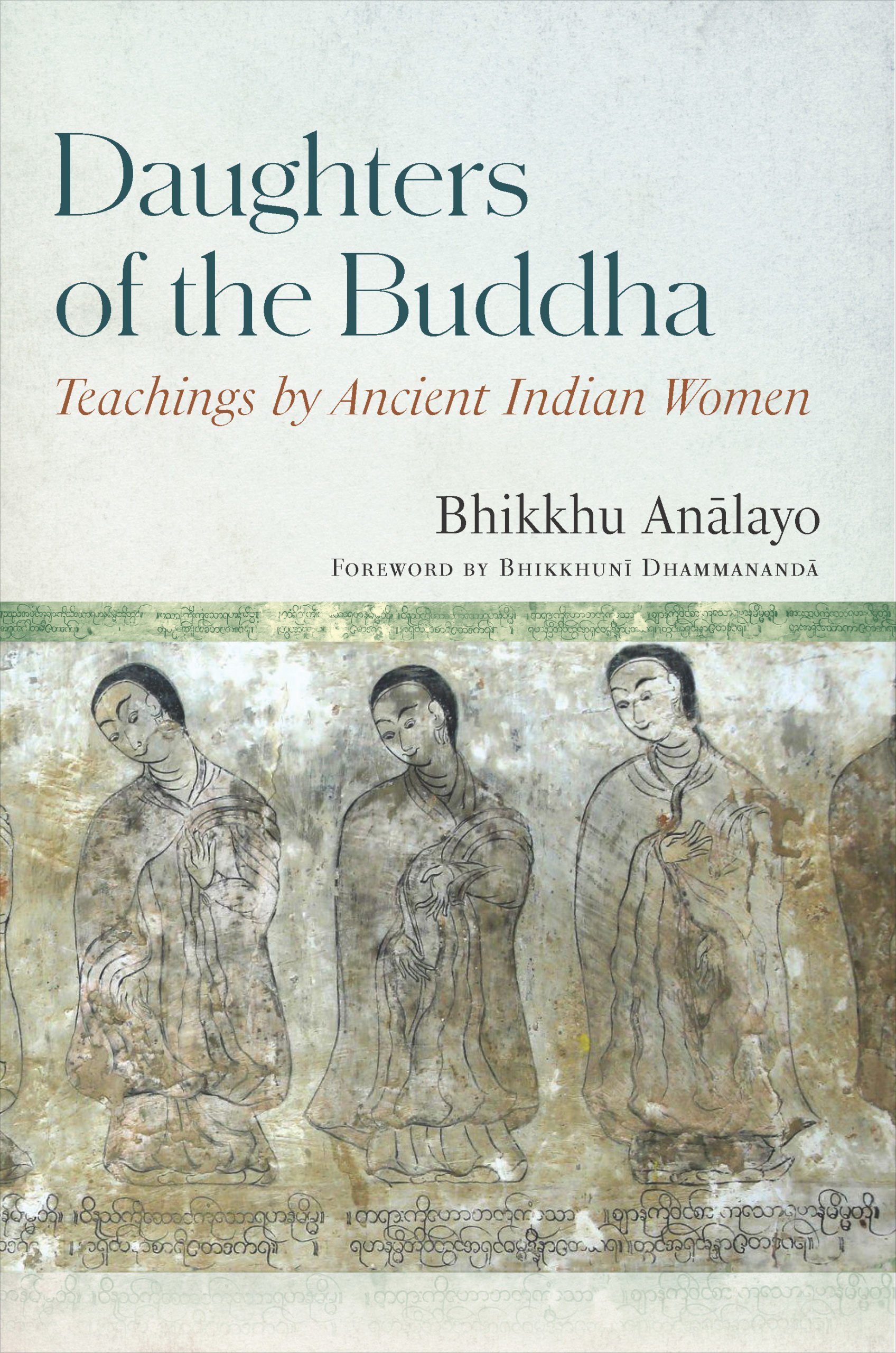
DAUGHTERS OF THE BUDDHA
Teachings by Ancient Indian Women
A testimony to the invaluable contributions made by the women who were direct disciples of the Buddha—and a source of inspiration to Buddhist women today.
It’s a common perception that the earliest textual records don’t contain many, if any, teachings by the Buddha’s female disciples; yet, this is not the case. In fact, the earliest discourses record a range of teachings from Buddhist women, lay and monastic. Unfortunately their important contributions have so far not received the attention they deserve.
In Daughters of the Buddha, esteemed scholar-monk Bhikkhu Anālayo examines the accounts of the first female disciples in the canonical scripture, taking the reader back to the earliest period in the history of Buddhism that can still be accessed today. He dedicates each of the twenty-one chapters in the volume to an individual and remarkable woman, sharing her particular insights and teachings with the reader. Both nuns and laywomen are featured in these pages, and their diversity of voices and richness of thought will serve as instruction and encouragement for modern scholars and practitioners alike.
About the Author

Bhikkhu Anālayo is a scholar of early Buddhism and a meditation teacher. He completed his PhD research on the Satipaṭṭhānasutta at the University of Peradeniya, Sri Lanka, in 2000 and his habilitation research with a comparative study of the Majjhimanikāya in light of its Chinese, Sanskrit, and Tibetan parallels at the University of Marburg, Germany, in 2007. His over five hundred publications are for the most part based on comparative studies, with a special interest in topics related to meditation and the role of women in Buddhism.
Book Information
- Hardcover
- 296 pages, 6 x 9 inches
- $34.95
- ISBN 9781614298410
- eBook
- 296 pages
- $22.99
- ISBN 9781614298625
Discover More

The Source of Supreme Bliss
The Source of Supreme Bliss contains the first English translations of important commentaries on the Highest Yoga Tantra system of the Heruka Chakrasamvara five deity practice.
Included is a lucid, practical, and deeply profound explanation of the generation stage by Ngulchu Dharmabhadra. This is followed by an extremely rare and profound commentary by the First Panchen Lama Losang Chökyi Gyaltsen on the completion stage, along with a commentary on how to perform a proper Chakrasamvara retreat. The second half of the book comprises translations of the ritual texts associated with the commentaries.
Indispensable for anyone who undertakes this practice, The Source of Supreme Bliss will also provide rich and profound insights for those interested in Highest Yoga Tantra.
The Dechen Ling Practice Series from Wisdom Publications is committed to furthering the vision of David Gonsalez (Venerable Losang Tsering) and the Dechen Ling Press of bringing the sacred literature of Tibet to the West by making available many never-before-translated texts.
Sounds of Innate Freedom, Vol. 4
Sounds of Innate Freedom: The Indian Texts of Mahāmudrā are historic volumes containing many of the first English translations of classic mahamudra literature. The texts and songs in these volumes constitute the large compendium called The Indian Texts of the Mahāmudrā of Definitive Meaning, compiled by the Seventh Karmapa, Chötra Gyatso (1456–1539). The collection offers a brilliant window into the richness of the vast ocean of Indian mahamudra texts cherished in all Tibetan lineages, particularly in the Kagyü tradition, giving us a clear view of the sources of one of the world’s great contemplative traditions.
Besides the individual dohās (couplets), vajragītis (vajra songs), and caryāgītis (conduct songs) in this second volume in publication, the three extensive commentaries it contains brilliantly unravel enigmas and bring clarity not only to the specific songs they comment on but to many other, often cryptic, songs of realization in this collection. These expressive songs of the inexpressible offer readers a feast of profound and powerful pith instructions uttered by numerous male and female mahāsiddhas, yogis, and ḍākinīs, often in the context of ritual gaṇacakras and initially kept in their secret treasury. Displaying a vast range of themes, styles, and metaphors, they all point to the single true nature of the mind—mahāmudrā—in inspiring ways and from different angles, using a dazzling array of skillful means to penetrate the sole vital point of buddhahood being found nowhere but within our own mind. Reading and singing these songs of mystical wonder, bliss, and ecstatic freedom, and contemplating their meaning, will open doors to spiritual experience for us today just as it has for countless practitioners in the past.
Click here to explore other volumes available in The Sounds of Innate Freedom series.
Questioning the Buddha
In the forty-five years the Buddha spent traversing northern India, he shared his wisdom with everyone from beggar women to kings. Hundreds of his discourses, or sutras, were preserved by his followers, first orally and later in written form. Around thirteen hundred years after the Buddha’s enlightenment, the sutras were translated into the Tibetan language, where they have been preserved ever since. To date, only a fraction of these have been made available in English. Questioning the Buddha brings the reader directly into the literary treasure of the Tibetan canon with thoroughly annotated translations of twenty-five different sutras. Often these texts, many translated here in full for the first time, begin with an encounter in which someone poses a question to the Buddha.
Peter Skilling, an authority on early Buddhist epigraphy, archaeology, and textual traditions, has been immersed in the Buddhist scriptures of diverse traditions for nearly half a century. In this volume, he draws on his deep and extensive research to render these ancient teachings in a fresh and precise language. His introduction is a fascinating history of the Buddhist sutras, including the transition from oral to written form, the rise of Mahayana literature, the transmission to Tibet, the development of canons, and a look at some of the pioneers of sutra study in the West.
Sutras included in this volume are: Four Dharmas Not to Be Taken for Granted; The Benefits of Giving; The Exposition of Four Dharmas; The Merit of the Three Refuges; Four Dharmas Never to Be Abandoned; Advice for Bodhisatva Dharmaketu; Advice for Bodhisatva Jayamati; Sūtra Comparing Bodhicitta to Gold; Bodhisatva Maitreya’s Question about the Gift of the Dharma; Four Summaries of the Dharma Spoken to the Nāga King Sāgara; The Stanza of Dependent Arising; The Heart Formula of Dependent Arising; Prediction of the Boy Brahmaśrī’s Future Buddhahood; Kṣemavatī’s Prediction to Future Buddhahood; The City Beggar Woman; An Old Woman’s Questions about Birth and Death; The Questions of Śrīmatī the Brahman Woman; The Questions of the Laywoman Gaṅgottarā; Brahmā Sahāṃpati’s Question; Advice to King Prasenajit; Passage to the Next Life; Instructions for King Bimbisāra; Instructions for King Udayana; Buddhas as Rare as a Grain of Golden Sand; and Predictions on the Eve of the Great Final Nirvāṇa.
Learn more about the Classics of Indian Buddhism series.
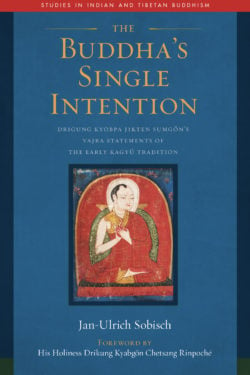
The Buddha’s Single Intention
This book presents an influential and extraordinary teaching of the Kagyü tradition of Tibetan Buddhism known as the Single Intention by the master Drigung Kyobpa Jikten Sumgön (1143–1217), along with its chief commentaries, principally the Light of the Sun by Rikzin Chökyi Drakpa (1595–1659).
Early in the history of the Kagyü school, the teachings of Jikten Sumgön were condensed into 150 core formulations called vajra statements. These pithy, revelatory statements comprise the Single Intention (Dgongs gcig), which presents the thought of the Buddha and the nature of the ineffable (brjod du med pa) in concise and direct expression. The Single Intention weaves the thread of ineffable mahāmudrā through the entire fabric of Buddhism. It presents mahāmudrā as pervading disciplined conduct, meditative concentration, and discriminative knowledge; ground, path, and result; view, practice, and conduct; and the “three vows” of prātimokṣa, of the bodhisattvas, and of mantra. Jikten Sumgön teaches how the fundamental values and insights revealed by the Buddha are woven into reality and therefore accessible to all.
Jan-Ulrich Sobisch manages to convey the unity of the Buddha’s message both in its particulars and in its scope. His deep and authoritative skill makes this the definitive presentation of one of the most unique and compelling works of classical Tibetan literature.
Learn more about the Studies in Indian and Tibetan Buddhism series.
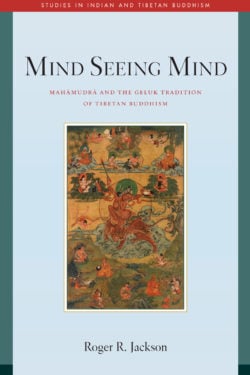
Mind Seeing Mind
Winner of the 2020 Toshihide Numata Book Award in Buddhism.
A definitive study of one of the most important practice lineages in Tibetan Buddhism, with translations of its key texts.
Mahāmudrā, the “great seal,” refers to the ultimate nature of mind and reality, to a meditative practice for realizing that ultimate reality, and to the final fruition of buddhahood. It is especially prominent in the Kagyü tradition of Tibetan Buddhism, so it sometimes comes as a surprise that mahāmudrā has played an important role in the Geluk school, where it is part of a special transmission received in a vision by the tradition’s founder, Tsongkhapa. Mahāmudrā is a significant component of Geluk ritual and meditative life, widely studied and taught by contemporary masters such as the Dalai Lama.
Roger Jackson’s Mind Seeing Mind offers us both a definitive scholarly study of the history, texts, and doctrines of Geluk mahāmudrā and masterful translations of its seminal texts. It provides a skillful survey of the Indian sources of the teaching, illuminates the place of mahāmudrā among Tibetan Buddhist schools, and details the history and major textual sources of Geluk mahāmudrā. Jackson also addresses critical questions, such as the relation between Geluk and Kagyü mahāmudrā, and places mahāmudrā in the context of contemporary religious studies. The translation portion of Mind Seeing Mind includes ten texts on mahāmudrā history, ritual, and practice.
Mind Seeing Mind adds considerably to our understanding of Tibetan Buddhist spirituality and shows how mahāmudrā came to be woven throughout the fabric of the Geluk tradition.
Learn more about the Studies in Indian and Tibetan Buddhism series.
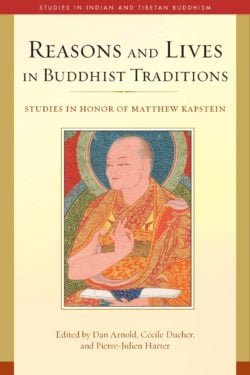
Reasons and Lives in Buddhist Traditions
Particularly known for his groundbreaking and influential work in Tibetan studies, Matthew Kapstein is a true polymath in Buddhist and Asian studies more generally; possessing unsurpassed knowledge of Tibetan culture and civilization, he is also deeply grounded in Sanskrit and Indology, and his highly accomplished work in these cultural and civilizational areas has exemplified a whole range of disciplinary perspectives.
Reflecting something of the astonishing range of Matthew Kapstein’s work and interests, this collection of essays pays tribute to a luminary in the field by exemplifying some of the diverse work in Buddhist and Asian studies that has been impacted by his scholarship and teaching. Engaging matters as diverse as the legal foundations of Tibetan religious thought, the teaching careers of modern Chinese Buddhists, the history of Bhutan, and the hermeneutical insights of Vasubandhu, these essays by students and colleagues of Matthew Kapstein are offered as testament to a singular scholar and teacher whose wide-ranging work is unified by a rare intellectual selflessness.
Learn more about the Studies in Indian and Tibetan Buddhism series.
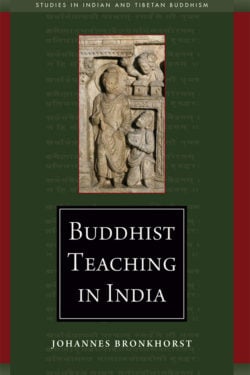
Buddhist Teaching in India
The earliest records we have today of what the Buddha said were written down several centuries after his death, and the body of teachings attributed to him continued to evolve in India for centuries afterward across a shifting cultural and political landscape. As one tradition within a diverse religious milieu that included even the Greek kingdoms of northwestern India, Buddhism had many opportunities to both influence and be influenced by competing schools of thought. Even within Buddhism, a proliferation of interpretive traditions produced a dynamic intellectual climate. Johannes Bronkhorst here tracks the development of Buddhist teachings both within the larger Indian context and among Buddhism’s many schools, shedding light on the sources and trajectory of such ideas as dharma theory, emptiness, the bodhisattva ideal, buddha nature, formal logic, and idealism. In these pages, we discover the roots of the doctrinal debates that have animated the Buddhist tradition up until the present day.
Learn more about the Studies in Indian and Tibetan Buddhism series.
The Buddhist Philosophy of the Middle
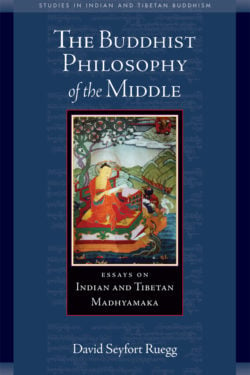
Madhyamaka, the “philosophy of the middle,” systematized the Buddha’s fundamental teaching on no-self with its profound non-essentialist reading of reality. Founded in India by Nāgārjuna in about the second century CE, Madhyamaka philosophy went on to become the dominant strain of Buddhist thought in Tibet and exerted a profound influence on all the cultures of East Asia. Within the extensive Western scholarship inspired by this school of thought, David Seyfort Ruegg’s work is unparalleled in its incisiveness, diligence, and scope. The Buddhist Philosophy of the Middle brings together Ruegg’s greatest essays on Madhyamaka, expert writings which have and will continue to contribute to our progressing understanding of this rich tradition.
Learn more about the Studies in Indian and Tibetan Buddhism series.
Read the biographies of the following masters at the Treasury of Lives:
Buddhism Between Tibet and China
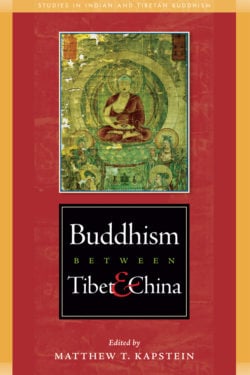
Exploring the long history of cultural exchange between ‘the Roof of the World’ and ‘the Middle Kingdom,’ Buddhism Between Tibet and China features a collection of noteworthy essays that probe the nature of their relationship, spanning from the Tang Dynasty (618–907 CE) to the present day. Annotated and contextualized by noted scholar Matthew Kapstein and others, the historical accounts that comprise this volume display the rich dialogue between Tibet and China in the areas of scholarship, the fine arts, politics, philosophy, and religion. This thoughtful book provides insight into the surprisingly complex history behind the relationship from a variety of geographical regions.
Includes contributions from Rob Linrothe, Karl Debreczeny, Elliot Sperling, Paul Nietupski, Carmen Meinert, Gray Tuttle, Zhihua Yao, Ester Bianchi, Fabienne Jagou, Abraham Zablocki, and Matthew Kapstein.
Learn more about the Studies in Indian and Tibetan Buddhism series.
Learn more about the thirteenth Dalai Lama and the Ninth Gangkar Lama, Karma Shedrub Chokyi Sengge at the Treasury of Lives.
Approaching the Great Perfection
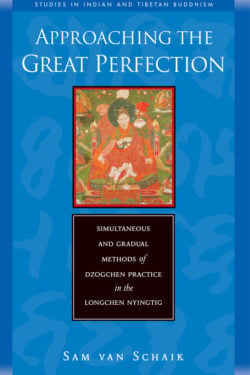
Dzogchen, the Great Perfection, is the highest meditative practice of the Nyingma School of Tibetan Buddhism. Approaching the Great Perfection looks at a seminal figure of this lineage, Jigme Lingpa, an eighteenth-century scholar and meditation master whose cycle of teachings, the Longchen Nyingtig, has been handed down through generations as a complete path to enlightenment. Ten of Jigme Lingpa’s texts are presented here, along with extensive analysis by van Schaik of a core tension within Buddhism: Does enlightenment develop gradually, or does it come all at once? Though these two positions are often portrayed by modern scholars as entrenched polemical views, van Schaik explains that both tendencies are present within each of the Tibetan Buddhist schools. He demonstrates how Jigme Lingpa is a great illustration of this balancing act, using the rhetoric of both sides to propel his students along the path of the Great Perfection.
Learn more about the Studies in Indian and Tibetan Buddhism series.
Read Jigme Lingpa’s biography at the Treasury of Lives.
A Direct Path to the Buddha Within
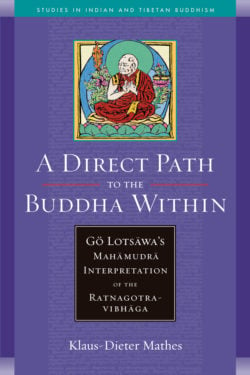
Maitreya’s Ratnagotravibhāga, also known as the Uttaratantra, is the main Indian treatise on buddha nature, a concept that is heavily debated in Tibetan Buddhist philosophy. In A Direct Path to the Buddha Within, Klaus-Dieter Mathes looks at a pivotal Tibetan commentary on this text by Gö Lotsāwa Zhönu Pal, best known as the author of the Blue Annals. Gö Lotsāwa, whose teachers spanned the spectrum of Tibetan schools, developed a highly nuanced understanding of buddha nature, tying it in with mainstream Mahāyāna thought while avoiding contested aspects of the so-called empty-of-other (zhentong) approach. In addition to translating key portions of Gö Lotsāwa’s commentary, Mathes provides an in-depth historical context, evaluating Gö’s position against those of other Kagyü, Nyingma, and Jonang masters and examining how Gö Lotsāwa’s view affects his understanding of the buddha qualities, the concept of emptiness, and the practice of mahāmudrā.
Learn more about the Studies in Indian and Tibetan Buddhism series.
Read Go Lotsawa’s biography at the Treasury of Lives.
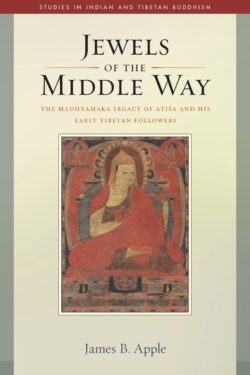
Jewels of the Middle Way
This book presents a detailed contextualization of the Madhyamaka (Middle Way) school in India and Tibet, along with translations of several texts in the Bka’ gdams gsung ’bum (Collected Works of the Kadampas), recently recovered Tibetan manuscripts that are attributed to Atiśa and Kadampa commentators. These translations cohere around Atiśa’s Madhyamaka view of the two realities and his understanding of the practice and the nature of the awakening mind.
The book is organized in three parts based on the chronology of Atiśa’s teaching of Madhyamaka in India and Tibet: (1) Lineage Masters, the Mind of Awakening, and the Middle Way; (2) Articulating the Two Realities; and (3) How Mādhyamikas Meditate. Each part focuses on a specific text, or set of texts, specifically related to Atiśa’s Middle Way. The authorship and date of composition for each work is discussed along with an outline of the work’s textual sources followed by an analysis of the content.
Learn more about the Studies in Indian and Tibetan Buddhism series.
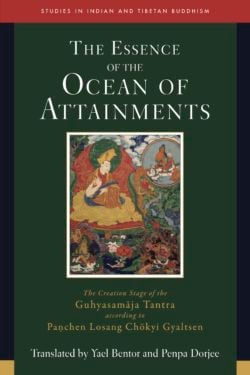
The Essence of the Ocean of Attainments
A comprehensive guide to the creation stage of the Guhyasamāja.
The Essence of the Ocean of Attainments (Dngos grub rgya mtsho’i snying po) is a commentary on the creation stage of the Guhyasamaja Tantra written by the illustrious Panchen Lama, Losang Chökyi Gyaltsen (1570–1662). The practice of Guhyasamaja, one of the earliest and most influential of the highest Tantras, along with its remarkable hermeneutic system, created a framework that was applied to other so-called unexcelled Tantras. Still very much a living tradition, in our time the Fourteenth Dalai Lama confers its empowerment every year. In this work, the Panchen Lama not only clarifies each step of the sadhana meditation ritual, but he also offers general insights into the practice and its workings. It is an Essence because it distills the much longer Ocean of Attainments commentary on the practice composed by Khedrup Jé (1385–1438), one of two key disciples of Tsongkhapa, the founder of Tibetan Buddhism’s Geluk school. The Panchen Lama identifies core elements of sadhana and with unparalleled precision clarifies many seminal points.
In her introduction, Yael Bentor surveys the creation stage of unexcelled Tantra as presented by the founding fathers of the Geluk school and unpacks the contents of The Essence of the Ocean of Attainments for readers. The translation features both explanatory annotations for practitioners and ample references for scholars.
Learn more about the Studies in Indian and Tibetan Buddhism series.
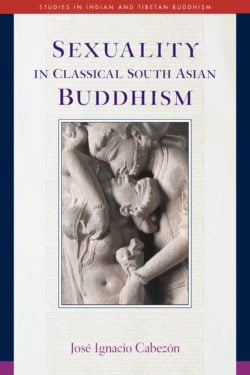
Sexuality in Classical South Asian Buddhism
In this extremely readable book, Jose Cabezon, the XIVth Dalai Lama Professor at the University of California Santa Barbara, takes us on a tour-de-force journey through Buddhist literature. More than twenty-five years in the making, this detailed sourcebook on the depiction of sexual identity, desire, restriction, and deviance in the classical South Asian traditions is filled with both engaging translations and original and provocative analysis. Cabezón speaks not as a distant observer but from within the tradition as a Buddhist “theologian,” keeping the material relevant to the modern reader, but he does so with a steady and unsentimental gaze. His knowledge is so broad that he is able to marshal an incredible array of scriptures, legal texts, and philosophical treatises that will be of immense interest not only to scholars of both Buddhism and gender studies but also to lay readers who want to learn more about traditional Buddhist attitudes toward sex. This singular book will stand as a landmark in the field for many years to come.
Learn more about the Studies in Indian and Tibetan Buddhism series.
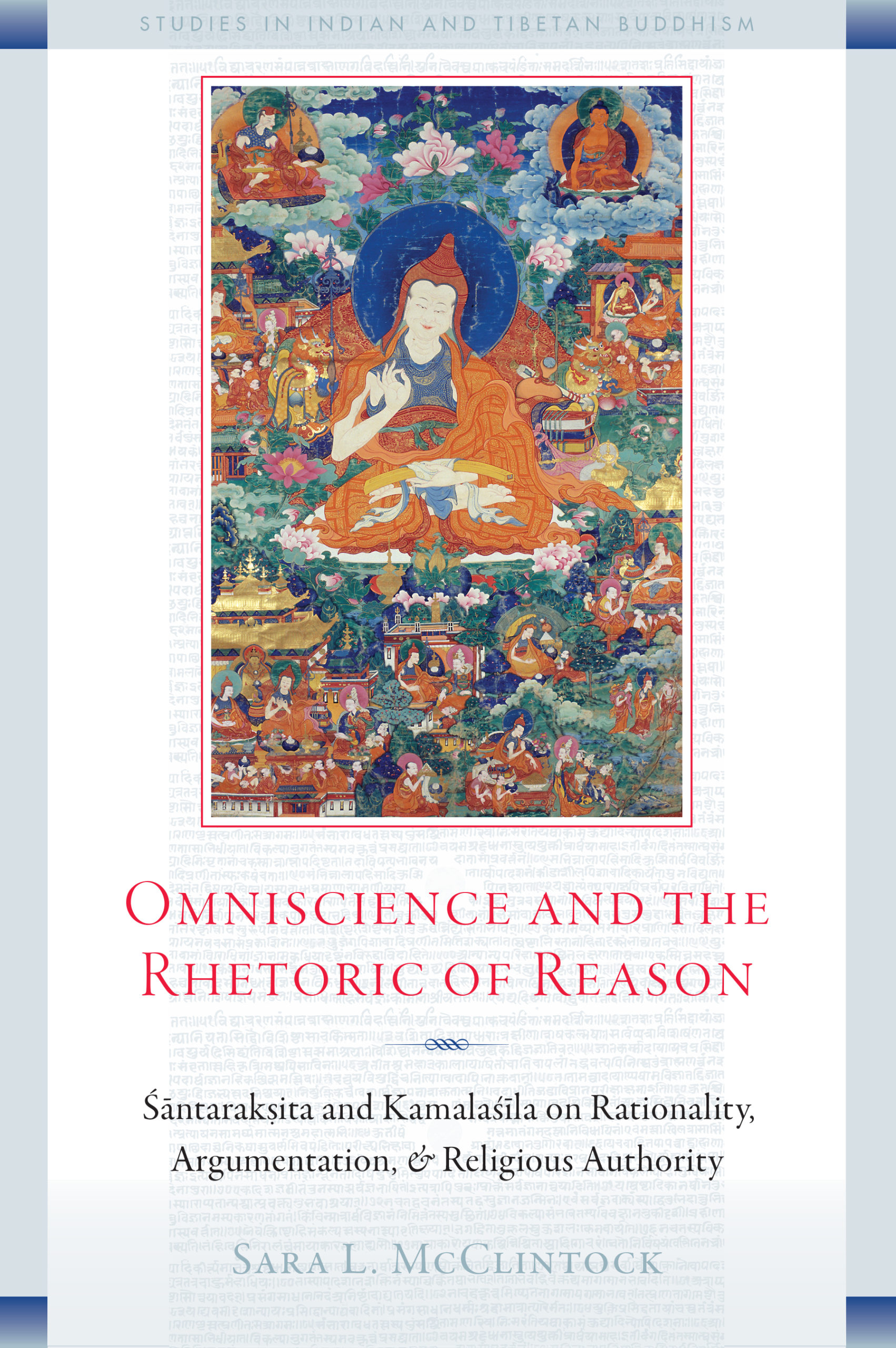
Omniscience and the Rhetoric of Reason
The great Buddhist scholars Śāntarakṣita (725–88 CE.) and his disciple Kamalaśīla were among the most influential thinkers in classical India. They debated ideas not only within the Buddhist tradition but also with exegetes of other Indian religions, and they both traveled to Tibet during Buddhism’s infancy there. Their views, however, have been notoriously hard to classify. The present volume examines Śāntarakṣita’s Tattvasaṃgraha and Kamalaśīla’s extensive commentary on it, works that cover all conceivable problems in Buddhist thought and portray Buddhism as a supremely rational faith.
One hotly debated topic of their time was omniscience—whether it is possible and whether a rational person may justifiably claim it as a quality of the Buddha. Śāntarakṣita and Kamalaśīla affirm both claims, but in their argumentation they employ divergent rhetorical strategies in different passages, advancing what appear to be contradictory positions. McClintock’s investigation of the complex strategies these authors use in defense of omniscience sheds light on the rhetorical nature of their enterprise, one that shadows their own personal views as they advance the arguments they deem most effective to convince the audiences at hand.
Learn more about the Studies in Indian and Tibetan Buddhism series.
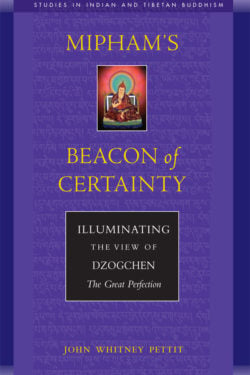
Mipham’s Beacon of Certainty
For centuries, Dzogchen—a special meditative practice to achieve spontaneous enlightenment—has been misinterpreted by both critics and malinformed meditators as being purely mystical and anti-rational. In the grand spirit of Buddhist debate, 19th century Buddhist philosopher Mipham wrote Beacon of Certainty, a compelling defense of Dzogchen philosophy that employs the very logic it was criticized as lacking. Through lucid and accessible textural translation and penetrating analysis, Pettit presents Mipham as one of Tibet’s greatest thinkers.
Learn more about the Studies in Indian and Tibetan Buddhism series.
Read Mipham Gyatso’s biography at the Treasury of Lives.
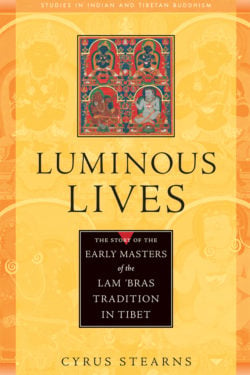
Luminous Lives
The tantric Buddhist tradition of the Lam ’bras, the “Path with the Result,” has been practiced in Tibet for almost a thousand years, most prominently within the Sakya lineage. Luminous Lives is the first in-depth study of the literature and history of the Lam ’bras in Tibet. The central focus of the work is a rare Tibetan history that brings alive the story of the earliest men and women practitioners of the Lam ’bras. This text, recording the words of the great Sakya Pandita (1182–1251), was a major source for all later histories of the tradition. Recently rediscovered, it has been reproduced here along with Cyrus Stearns’ excellent translation, introduction, and annotations. Luminous Lives opens a window into the world of one of the great traditions of tantric Buddhism in Tibet.
Click here to return to the Studies in Indian and Tibetan Buddhism series.
Read the biographies of Sakya Pandita and Sachen Kunga Nyingpo at the Treasury of Lives.
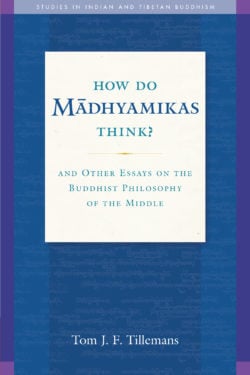
How Do Mādhyamikas Think?
Tom Tillemans, who has studied Buddhist philosophy since the 1970s, excels in bringing analytic and continental philosophy into conversation with thinkers in the Sanskrit and Tibetan traditions. This volume collects his writings on the most rarefied of Buddhist philosophical traditions, the Madhyamaka, and its radical insights into the nature of reality. Tillemans’ approach ranges from retelling the history of ideas, to considering implications of those ideas for practice, to formal appraisal of their proofs. The 12 essays (four of which are being published for the first time) are products of rich and sophisticated debates and dialogues with colleagues in the field.
Learn more about the Studies in Indian and Tibetan Buddhism series.