
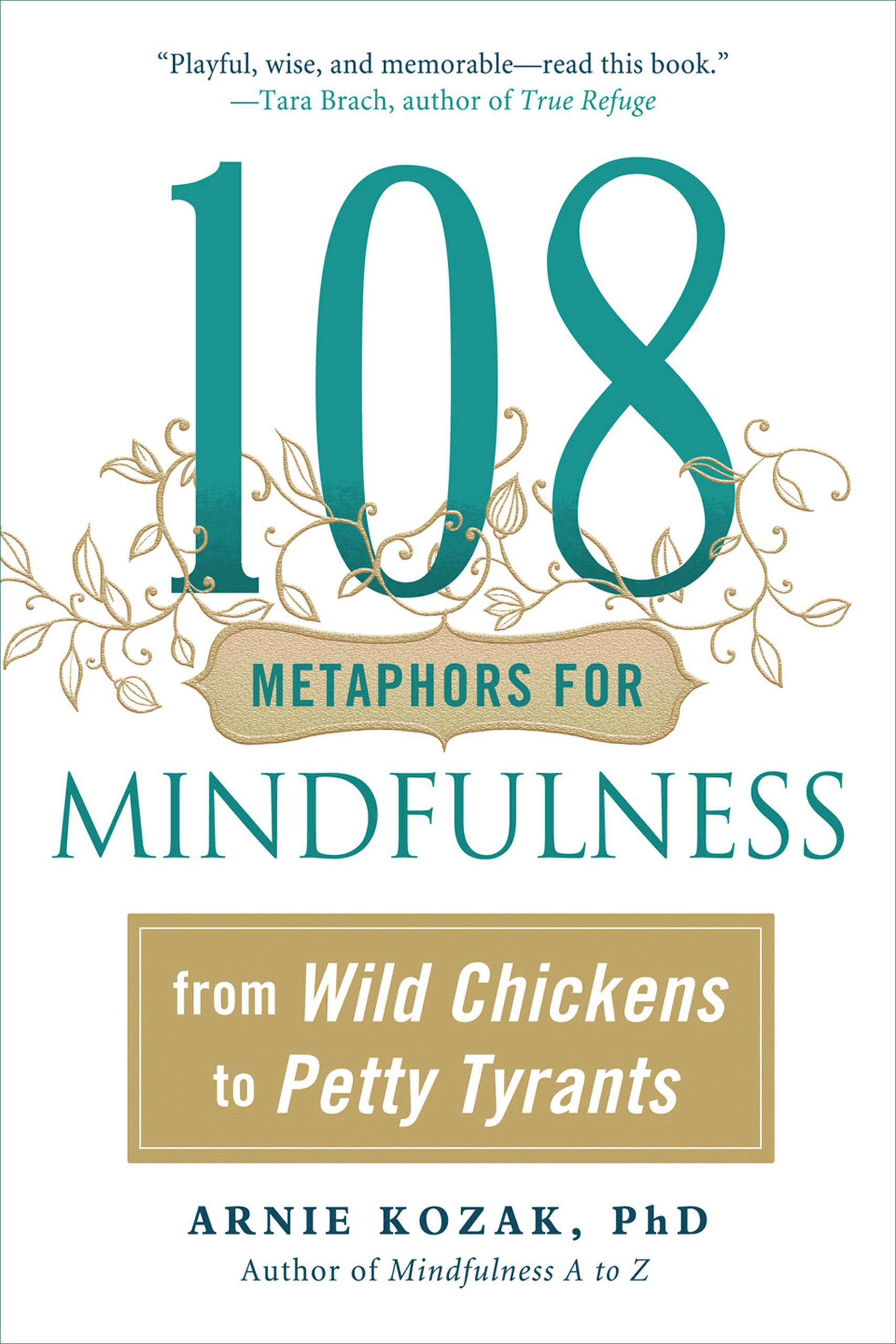
108 METAPHORS FOR MINDFULNESS
From Wild Chickens to Petty Tyrants
This engaging and accessible little book is filled with both humor and profound teaching. It presents 108 metaphors for mindfulness, meditation practice, the nature of the self, change, deep acceptance, and other related concepts that Dr. Kozak has cultivated over twenty-five years of meditating, practicing yoga, and working as a clinical psychologist.
Metaphors are indispensable to understanding mindfulness, and to help deeply internalize it and make it a part of everyday life. These mentally catchy images can motivate us to practice, show us how and where to bring mindfulness to life in our personal experience, and help us employ powerful methods for transformation.
This book was previously published under the title Wild Chicken and Petty Tyrants.
About the Author

Book Information
- Paperback
- 240 pages, 5.00 x 8.00 inches
- $16.95
- ISBN 9781614293835
- eBook
- 240 pages
- $9.99
- ISBN 9781614293996
Praise
“If you want to receive mindfulness teachings in a way that is playful, wise and memorable, read this book. Arnie uses the most ancient of teaching devices—metaphorical stories and images—to convey the possibility and blessings of living a life of presence.”—Tara Brach, author of Radical Acceptance
Discover More



Becoming the Master on the Course and In Life
Now available! Save 20% with code BTM20 until February 3.
On the course or in your mind—golf is a game of balance. Here, timeless Buddhist teachings meet golf-pro expertise to elevate every part of your game.
Ever feel like you’ve invested in the best equipment, taken countless lessons, and put in endless practice—yet your game just isn’t improving? Or that your shots look flawless on the range but fall apart the moment you’re in a real match? Maybe you’ve walked off the course frustrated—with yourself, your swing, or even the game itself—forgetting that golf is actually meant to be enjoyable.
Enter a Buddhist master from Tibet, Geshe YongDong Losar, and a golf pro, Jesse Moussa. Drawing on decades of golf experience and centuries of Buddhist wisdom, they team up to reveal the mental side of the sport: how to eliminate distraction, maintain focus and equilibrium, and let your skills grow naturally—like the grass.
This book is your opportunity to learn from two masters how to meet the game with presence, balance, and joy—and to step up to the ball with confidence every time.
Learn about Geshe YongDong’s previous book Calm Breath, Calm Mind.
6 Myths We Live By
Buddhist wisdom for everyday problems rooted in Buddhist psychology and meditation, 6 Myths We Live By shows us how to uncover our misperceptions and leads us on a path to self-development.
The truth is you probably believe all sorts of myths, but you don’t even know it. To escape any hardship, any suffering or discomfort, we all believe myths about how the world works and how we live in that world. In 6 Myths We Live By, therapist and long-time Buddhist practitioner Karuna Cayton guides us through six common myths that may give us comfort, but actually only perpetuate our problems:
the myth of reality,
the myth of identity,
the myth of permanence,
the myth of randomness,
the myth of happiness, and
the myth of only living once.
Cayton takes us through each of these myths using real-world examples and draws upon Buddhist principles, psychology, and meditation practices to show how we can wake up to reality. By planting a seed of doubt about the beliefs that we’ve always thought were true, we can open our eyes and deepen our relationship with the way we see our life, our potential, and the nature of our struggles and achievements.
The Guru Yoga of Jé Tsongkhapa
Explore the guru yoga practice of Jé Tsongkhapa with a legendary meditation master.
The Hundreds of Deities of Tuṣita is an inspiring and well-loved guru yoga practice that originated from Jé Tsongkhapa himself and was disseminated by the First Dalai Lama. In this book, Chöden Rinpoché—a celebrated scholar who was chosen as a debate partner for His Holiness the Dalai Lama, as well as an accomplished yogi who spent nineteen years in solitary retreat—offers two different commentaries to guide the reader’s understanding.
Rinpoché’s first commentary is based on the tantric oral tradition as presented by the great lama and scholar Pabongkha Dechen Nyingpo in his own inspired commentary on The Hundreds of Deities of Tuṣita, called A Treasury of Precious Jewels, which is presented here in full. Rinpoché adds clarifying instruction to Jé Pabongkha’s work, bringing out the deeper meaning of the text and revealing how ordinary practitioners may understand and apply Pabongkha’s instruction. The second commentary from Rinpoché is a condensed commentary based on the sūtra tradition. Thus, the reader is treated to two different perspectives of the guru yoga practice of Jé Tsongkhapa.
Previously published as Opening the Door of Blessings, this edition has been revised and updated, and is an essential edition to any practitioner’s library.
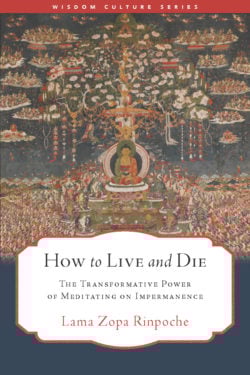
How to Live and Die
What death is, how we die, what minds we need at death and what happens after death—only by knowing about death and rebirth can we actually fully understand what life is and so learn how to live fully.
—Lama Zopa Rinpoche
There is arguably no truth more foundational to Buddhism than this: everything is impermanent. We can see this in the world all around us; old systems break down, relationships change. Death comes for those we love and, inevitably, for us.
In this book, the late, beloved teacher Lama Zopa Rinpoche walks us through the traditional, revelatory practices of meditating on the fact of impermanence and even—especially—on death itself. Rather than shy away from this reality, we look straight at it, and thus we learn not only how to not fear death, but how to live.
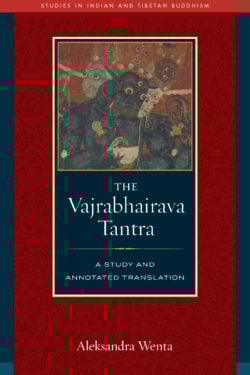
The Vajrabhairava Tantra
A groundbreaking work on the little-studied Indian origins of an influential tantric Buddhist practice along with a fresh English translation.
The deity Vajrabhairava, or Yamantaka, is well known as the central figure of tantric practice in multiple lineages of Tibetan Buddhism and is also found in Chinese and Japanese Buddhism. Less is known about its foundational Indian context. The Vajrabhairava Tantra, dedicated to the buffalo-headed deity Vajrabhairava, arose around the eighth century and had a considerable impact on the formation of religious praxis in the medieval Indian Buddhist world. This book contains a translation of the Vajrabhairava Tantra from the recently discovered Sanskrit text and a comprehensive study of its elements, of its origins and Indian commentators, and of the history of its transmission to Tibet. The annotation to the translation excerpts all six Indian commentaries on the tantra found in the Tibetan canon.
One highly innovative contribution this work makes to the fields of tantric Buddhist studies and, more generally, to South Asian religions is the way it breaks down traditional disciplinary boundaries between tantra and magic. It shows that the genesis of tantric traditions cannot be reduced to a one-way influence of Hindu Shaivism on Buddhism or vice versa, but indicates a widespread “culture of magic,” a common “ritual syntax,” that crossed sectarian, linguistic, and socio-cultural boundaries, one that came to be significantly diminished in later Shaiva and Buddhist tantras.
The study comprises the first half of the book, and the second half is the translation, which explains the construction of the mandala, the magical applications of the practice, the extraction of the mantra, the visualization, and the preparation of the pata painting and the homa fire ritual. A dozen color plates illustrate Vajrabhairava in his Solitary Hero and other forms along with mandalas of five different lineages, keys for which are provided in the appendix.
The only previous study of the Vajrabhairava Tantra relied solely on Tibetan and Mongolian sources. By relying on the newly discovered Sanskrit manuscript, this new translation is able to correct numerous inaccuracies. Moreover, the earlier study included only three of six canonical commentaries on the root text incorporated here, passing over the key commentaries by Akṣobhya and Kṛṣṇācārya.
Learn more about the Studies in Indian and Tibetan Buddhism series.
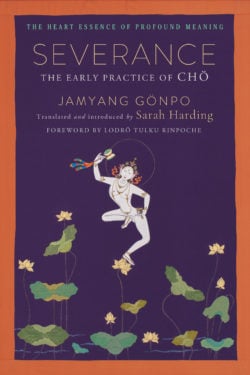
Severance
An ancient Buddhist guide to confronting difficult circumstances and letting go of clinging to the ego.
Severance, or Cho, is the Tibetan Buddhist practice of facing one’s fears. In three remarkable texts lucidly translated and introduced by Sarah Harding, the thirteenth-century Severance master Jamyang Gönpo shares advice that goes straight to the heart of both understanding and experiencing the practice. For hundreds of years, Severance has remained essentially an instruction on coping with stressful situations that provoke fear and, beyond that, a way to actively seek out such circumstances in order to test one’s realization of perfect wisdom.
The single overall directive of the first two texts in this volume—the Heart Essence of Profound Meaning root verses and their commentary, The Big General Guide to Severance—is to seek out and directly confront difficult circumstances. Here, these difficulties are often anxieties related to spirits in the dark of night in haunted places. This practice acts as a means to recognize emptiness—the lack of intrinsic existence of all phenomena—as well as a testing ground of one’s former realizations and studies of that emptiness from the Perfection of Wisdom. The texts are notable for their lack of instruction on ritualized Severance involving body sacrifice, which later works emphasize; in these texts, the heart of Severance is letting go of clinging to the self and reification of existence. And as Jamyang Gonpo was just a generation removed from Machik Labdron, the main progenitor of Severance, his methods seem to be closest to her actual teachings.
The third translation in this volume, The Seven-Day Severance Retreat Experiential Guide, is a very concise and precise instruction on putting the main intentions of the teachings into practice in the setting of a one-week retreat. The instructions are striking in that they contain no rituals, visualizations, deities, instruments, or liturgies. Jamyang Gönpo shows us how to turn our attention to the very mind of this person who is experiencing fear and the object of that fear—whether fear about demons or sickness or suffering—to see them for what they are. In doing so, we find that joys and sorrows, highs and lows, powers of gods and demons, and demonic obstacles are all mind made.
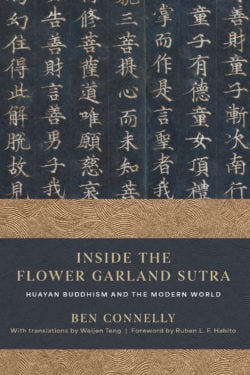
Inside the Flower Garland Sutra
A Soto Zen teacher explores the core teachings of the ancient Flower Garland school of Buddhism through an innovative and engaging narrative showing how to put these teachings into practice.
Huayan Buddhism arose in the sixth century in China rooted in the Mahayana Flower Garland Sutra. The teachings of Huayan and the sutra that inspired it had a profound influence on Chan and Zen. Huayan is relational, practical, and positive. Its emphasis on interdependence, celebration of the sensual world, and diversity of people and practices provides inspiration for what Thich Nhat Hanh called “engaged Buddhism”.
With Inside the Flower Garland Sutra Zen teacher Ben Connelly explains the significance of Huayan teachings for Buddhist practice. Each chapter is a commentary on one of the thirty lines of Uisang’s “Song of Dharma Nature”—a seminal Korean text that summarizes key aspects of Huayan thought—thus providing a broad overview of Huayan teachings and their practical implications for contemporary life, with a mix of testimonies from real-life situations and references to influential Buddhist texts.
Arising fifteen hundred years ago, Huayan has made a deep impact on East Asian Buddhism, and has much to offer during this era when many folks see ever-deepening divisions. Connelly explores how Huayan offers particular wisdom for those concerned about how to care for their own lives as they work to end harms such as ecological devastation, poverty, militarism, addiction, marginalization, and exploitation.
Minding the Buddha’s Business
Colleagues and former students of Gregory Schopen honor his path-breaking contributions to Buddhist studies with these articles on the early Mahayana, the monastic codes, and Buddhism’s art-historical and epigraphical remains.
This volume honors the profoundly transformative influence of Gregory Schopen’s many contributions to Buddhist studies. Eighteen articles by former students and colleagues focus on the areas of Schopen’s most noteworthy influence: the study of the Mahayana, particularly of its early sutra literature; the study of Vinaya, especially the narratives accompanying the rules for monks and nuns; and the study of Buddhist epigraphy and art history. Contributors demonstrate the ongoing significance of Schopen’s scholarship, including his very first article, on the cult of the book in the early Mahayana, published fifty years ago.
Schopen has repeatedly shown how the study of Buddhism has too often focused on scriptures and normative doctrines and not enough on the practical ideas and contexts that significantly impacted the lives of actual Buddhists. He sought to reveal these lived concerns in the massive trove of Buddhist inscriptions, which often expose the habits and ideas of the tradition’s most prominent donors (many of whom were monastics), as well as the everyday concerns of monks and nuns, whose views did not always dovetail with canonical sources. Even in his treatment of canonical sources, Schopen has shown that the standard portrait of a Buddhist monk or nun fails to match a careful reading of their law codes—his work on the Mulasarvastivada-vinaya has required scholars to substantially reimagine the legal and ritual obligations, as well as the economic concerns, that preoccupied the minds of Buddhist jurists.
Schopen has, in essence, brought the Buddha down to earth, revealing that this is precisely where most Indian Buddhists encountered him. The contributions in this celebratory volume reflect this legacy and Schopen’s considerable impact on our understanding of Buddhists in India.
Click here to see the table of contents.
The Yoga of Niguma
Immerse yourself in the extraordinarily transcendent practice of the yoga of Niguma.
The yoga of Niguma comes to us from a secret tradition passed down over hundreds of years by Buddhist yogis in Tibet. The practice originated with the eleventh-century female yogini Niguma, who mastered and transmitted a tradition of remarkable practices that culminate in physical, spiritual, and emotional wellness. In this book, His Eminence Kalu Rinpoche, a Tibetan master who holds this lineage for today’s generation, is now opening up the practice to make its extraordinary benefits accessible to the modern yogi.
The yoga of Niguma consists of twenty-five sets of yogic exercises. Some are physically challenging while others are quite subtle in nature; all are grounded in meditation on the breath. Kalu Rinpoche illuminates the practice by sharing his own personal journey with the yoga of Niguma and how the lineage came to be. He also teaches us how we can prepare the mind for this practice with meditation and how to balance our emotions. Then, Rinpoche takes us step-by-step through the twenty-five illustrated sequences of Niguma yoga. Coauthor Michele Loew, an international yoga teacher, shares supportive Hatha yoga techniques that will bolster your Niguma yoga practice.
The yoga of Niguma is a revered method that integrates body, mind, and breath. Dive in to discover for yourself a gradual, profound groundswell of subtle awakening.
Rinpoche and Michele have recorded two full-length videos that demonstrate Niguma yoga sequences and supportive hatha yoga postures and supplement the instructions in the book. To learn more and watch the videos simply purchase the book and scan the QR code on the Additional Resources page in your copy.
You may also be interested in Rinpoche’s courses from Wisdom, Niguma’s Dream Yoga and The Illusory Body and Mind.
Sacred Places, Sacred Teachings
A guide to following the footsteps of the Buddha—for the pilgrim in India and at home.
The holy sites of India—Bodh Gaya, Sarnath, Shravasti, and others— became holy because the Buddha blessed them by performing his enlightened activities there. When we become holy through our practice of the Buddha’s instructions, then the places we go will be made holy, too. Through meditation practice, we can realize and capture what the Buddha described as the profundity of the mind, which is completely peaceful, free from elaboration, luminous, and uncompounded.
In this wise, heartfelt, and indispensable guide, Khenchen Konchog Gyaltshen takes us on a journey through the major holy sites for Buddhist pilgrimage by offering profound teachings related to each of the sacred places. In Bodh Gaya, the site of the Bodhi tree and the Buddha’s enlightenment, we learn of how the Buddha became enlightened and what it means to take refuge in him; we uncover the profundity of emptiness at the site where the Buddha expounded the Heart Sutra; at the place of the Buddha’s passing, we learn that the legacy of his vast teachings came about through his perfection of bodhicitta—a core quality we can master, too. In chapters based on these and other sacred places, we find that the wisdom the Buddha uncovered is available to us all.
The Buddha discovered total satisfaction, the ultimate achievement, and left instructions on how we, too, can achieve the same. We already have this great path; we just have to follow it. In that way, we experience the joy of following the footsteps of the Buddha.
You can read the introduction to Sacred Places, Sacred Teachings here.
How to Meditate on the Stages of the Path
Deepen your meditation by diving into the practices of the lamrim—the stages of the path to enlightenment.
Buddhist tradition tells us that enlightenment is possible for each and every one of us. It’s actually the best thing we can do for others and for the world, but also the best thing we can do for ourselves, because it means being free from all misery, pain, depression, dissatisfaction, and negative emotions, and abiding forever in peace, joy, love, and compassion. What could be more wonderful than that?
Kathleen McDonald (Sangye Khadro), a Western nun with decades of experience and author of the bestselling book How to Meditate, guides us through the next step in our meditation practice: the transformative meditations on the Tibetan lamrim stages to enlightenment. She helps us see that the whole purpose of meditation is to transform our mind in a constructive way. For this to happen, we need to become so thoroughly familiar with the lamrim topics that they become our natural way of thinking and living our life. This warm and encouraging guide takes us through meditations on these lamrim topics, such as:
- impermanence
- refuge
- karma
- the four noble truths
- bodhichitta
- the six perfections: giving, ethics, patience, joyous effort, concentration, and wisdom
How to Meditate on the Stages of the Path offers practical advice, support, and step-by-step guidance on how to meditate on the stages of the path to enlightenment that will transform the practice of new meditators and seasoned practitioners alike.
The Poetry of Grief, Gratitude, and Reverence
Explorations on a journey through the darkest and brightest moments of our lives, the poems gathered here are explorations of loss, of thanksgiving, of transformation. Some show a path forward and others simply acknowledge and empathize with where we are, but all are celebrations of poetry’s ability to express what seemed otherwise inexpressible, to touch deep inside our hearts—and also pull ourselves out of our selves and into greater connection with the world around us.
Includes poems by
Rainer Maria Rilke, Robert Frost, Elizabeth Bishop, Czesław Miłosz, Seamus Heaney, Billy Collins, Joy Harjo, Danusha Laméris, Ada Limón, Kevin Young, Arthur Sze, Ellen Bass, Li-Young Lee, Natasha Trethewey, and many more, plus the editor’s essay on appreciative attention.
John had recorded guided poetry meditations to accompany several of the poems found in this anthology. To learn more and listen to these meditations, please click here.
Listen to a Wisdom Dharma Chat with John and host Daniel Aitken recorded in October 2023.
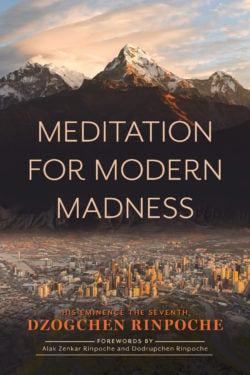
Meditation for Modern Madness
Dzogchen is an ancient Tibetan tradition that is perfect for countering the stress of our modern lives. A simple and quick method, Dzogchen is practical and direct, and open to us all—you simply need to recognize the great potential that is naturally born within everyone.
In his highly anticipated first book, His Eminence the Seventh Dzogchen Rinpoche, Jigme Losel Wangpo, shows us how our everyday lives can be turned into spiritual practice—not only to ease our stress, but to allow the true nature of our mind to reveal itself, right now, on the spot. The Dzogchen view is the highest view, the view from the top of the mountain. We need to build a platform that will hold the view, and Dzogchen Rinpoche provides the meditations and advice for living that will help you do just that. In turn, you’ll find true peace in a mind at rest.
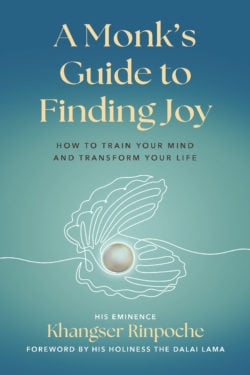
A Monk’s Guide to Finding Joy
A profound and practical guide to uncovering your own wise mind and kind heart.
We all want to find happiness. But how do we go about it? In this easygoing and clear-sighted guide, celebrated Buddhist meditation and philosophy master His Eminence Khangser Rinpoche provides us with down-to-earth advice on how to train our minds and find our own innate wisdom and kindness along the way. He helps us see the profound insight that is open to us all, and how it can awaken us to the truth of the way things are. This insight into the truth, and the practices that help you cultivate this awareness, transform suffering into wisdom and compassion—and ultimately joy.
A Monk’s Guide to Finding Joy brings the ancient Tibetan mind-training tradition into our twenty-first-century lives. Through stories, real-life examples, reflections, and meditation practices—all told with warmth and humor—H.E. Khangser Rinpoche shows us how we can transform the suffering of our life into happiness. When we train the mind from within the context of our difficult emotions, we can find true joy, just as the oyster transforms sand into a pearl.
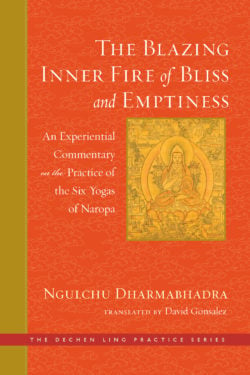
The Blazing Inner Fire of Bliss and Emptiness
The Blazing Inner Fire of Bliss and Emptiness presents lucid translations of a pair of detailed commentaries by the famed Tibetan tantric master Ngulchu Dharmabhadra (1772–1851), illuminating a set of extremely secret and restricted tantric practices of highest yoga tantra.
The first of these commentaries details the practices of the Six Yogas of Naropa, one of the most celebrated and revered systems of completion-stage practice in Tibet. Dharmabhadra presents the Six Yogas by elaborating upon Lama Tsongkhapa ’s (1357–1419) masterpiece on the subject entitled Endowed with the Three Inspirations, which served as the basis for nearly all subsequent commentaries on the Six Yogas within the Gelug tradition. Ngulchu Dharmabhadra’s commentary is unique in that it presents the Six Yogas within the context of Vajrayogini practice, making this book a perfect companion piece to The Extremely Secret Dakini of Naropa (Wisdom Publications, 2020).
Also contained in this book is Ngulchu Dharmabhadra’s lucid and concise commentary on the First Panchen Lama’s (1570–1662) famous Supplication for Liberation from [Fear of] the Perilous Journey of the Intermediate State. The prayer—a beautiful literary contribution from the First Panchen Lama in its own right—invokes the immediacy of death and the potential to use the process of dying as an opportunity for liberation. The prayer extols the efficacy of the “nine mixings” of the completion stage as direct means of transforming our ordinary death process by using advanced yogas presented in the first commentary on the Six Yogas.
Together, these works present the reader with a vast and profound vision of spiritual transformation—one in which every aspect of human experience can be used as an opportunity for transcendence and spiritual liberation.
The Dechen Ling Practice Series from Wisdom Publications is committed to furthering the vision of David Gonsalez (Venerable Losang Tsering) and the Dechen Ling Press of bringing the sacred literature of Tibet to the West by making available many never-before-translated texts.
Bearing the Unbearable
In this journaling book, grief expert Joanne Cacciatore provides support and guidance, as writing prompts, for anyone experiencing traumatic loss and grief. This beautifully designed book offers 52 writing prompts for exploring grief and journaling about those whom we’ve lost. Writing about those we’ve lost can be part of a contemplative practice, alone or with therapists, family, friends, or with a grief support group. However you use this journal and its writing prompts, please take the time to write from the heart, really be with each prompt, dive deeply—and do so with a spirit of love and compassion for all beings, including yourself.
A Note from Dr. Jo:
This journal is an invitation. A passage. An open heart. Use the prompts throughout for deep contemplation. Write your experiences, feelings, memories of your beloved. Know that, wherever you are, you are not alone in this. We grievers, we rememberers, walk the same road, some ahead and some behind. But we walk together. Let this journal be the invisible thread that weaves together our hearts and souls and minds as we endure one more day—together, never alone. Let this journal be a space in which you remember and grieve and explore.
You can also explore Dr. Jo’s books, Bearing the Unbearable and Grieving is Loving, her Cards for Bearing the Unbearable, as well her Wisdom Academy course, Bearing the Unbearable.
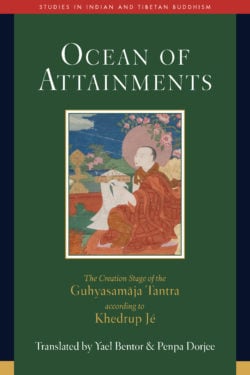
Ocean of Attainments
This commentary on Guhyasamāja tantra is the seminal guide to deity yoga and tantric visualization for the Geluk school of Tibetan Buddhism.
The Guhyasamāja Tantra, called the king of all tantras, is revered in Tibet, especially by the Geluk school. Ocean of Attainments, a commentary on Guhyasamāja practice, was composed by Khedrup Jé Gelek Palsang (1385–1438), a key disciple of the Geluk school founder, Tsongkhapa Losang Drakpa. It explores the creation stage, a quintessential Buddhist tantric meditation that together with the completion stage comprises the path of unexcelled tantra.
In the creation stage, meditators visualize themselves as buddhas at the center of the celestial maṇḍala, surrounded in all directions by male and female buddhas, bodhisattvas, and other enlightened beings. Yet creation-stage practice is not merely visualization but deity yoga—indivisibly uniting the meditation on emptiness with the visualization of the maṇḍala. The creation stage uses the conceptualization in visualization to overcome conceptualization, thereby creating a nonconceptual and nonerroneous direct perception. Such a mind, profound and vast, can bring about a transformation that stops saṃsāric suffering. How can visions generated as mental constructs not be erroneous? To the awakened eye, the buddhas and other beings who dwell in the maṇḍala are “reality,” and in a sense they are more than real.
While the previously published Essence of the Ocean of Attainments is a concise exposition on the practice of the Guhyasamaja sadhana, Ocean of Attainments is far more detailed, providing extensive scriptural citations, clear explanation of the body maṇḍala, arguments on points of contention, reference to other tantric systems, and critiques of misinterpretations. With its extensive and clear introduction, this volume is a vital contribution to the growing body of scholarship on Guhyasamāja and on Buddhist tantra in general.
Learn more about the Studies in Indian and Tibetan Buddhism series.
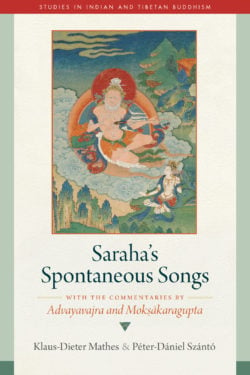
Saraha’s Spontaneous Songs
“Completely abandon thought and no-thought, and abide in the natural way of a small child.” —Saraha
To find liberation and realize the true nature of reality, the Indian Buddhist master Saraha says we must leave behind any conceptual assessment of reality, since no model of it has ever been known to withstand critical analysis. Saraha’s spontaneous songs, or dohās, represent the Buddhist art of expressing the inexpressible. The most important collection of Saraha’s songs is the Dohākoṣa, the Treasury of Spontaneous Songs, better known in Tibet as the Songs for the People, and the Tibetan mahāmudrā tradition, especially within the Kagyü school, has done the most to preserve the lineage of Saraha’s instructions to the present day.
But Saraha was also widely cited in Indian sources starting around the eleventh century, and one Indic commentary, by the Newar scholar Advayavajra, still exists in Sanskrit. In addition, we have independent root texts of Saraha’s songs in the vernacular Apabhraṃśa in which they were recorded. These Indian texts, together with their Tibetan translations, are here presented in masterful new critical editions, along with the Tibetan translation of the commentary no longer extant in Sanskrit by Mokṣākaragupta. Finally, both commentaries are rendered in elegant English, and the authors offer a brisk but comprehensive introduction.
Saraha’s Spontaneous Songs provides the reader with everything needed for a serious study of one of the most important works in the Indian Buddhist canon.
Learn more about the Studies in Indian and Tibetan Buddhism series.