
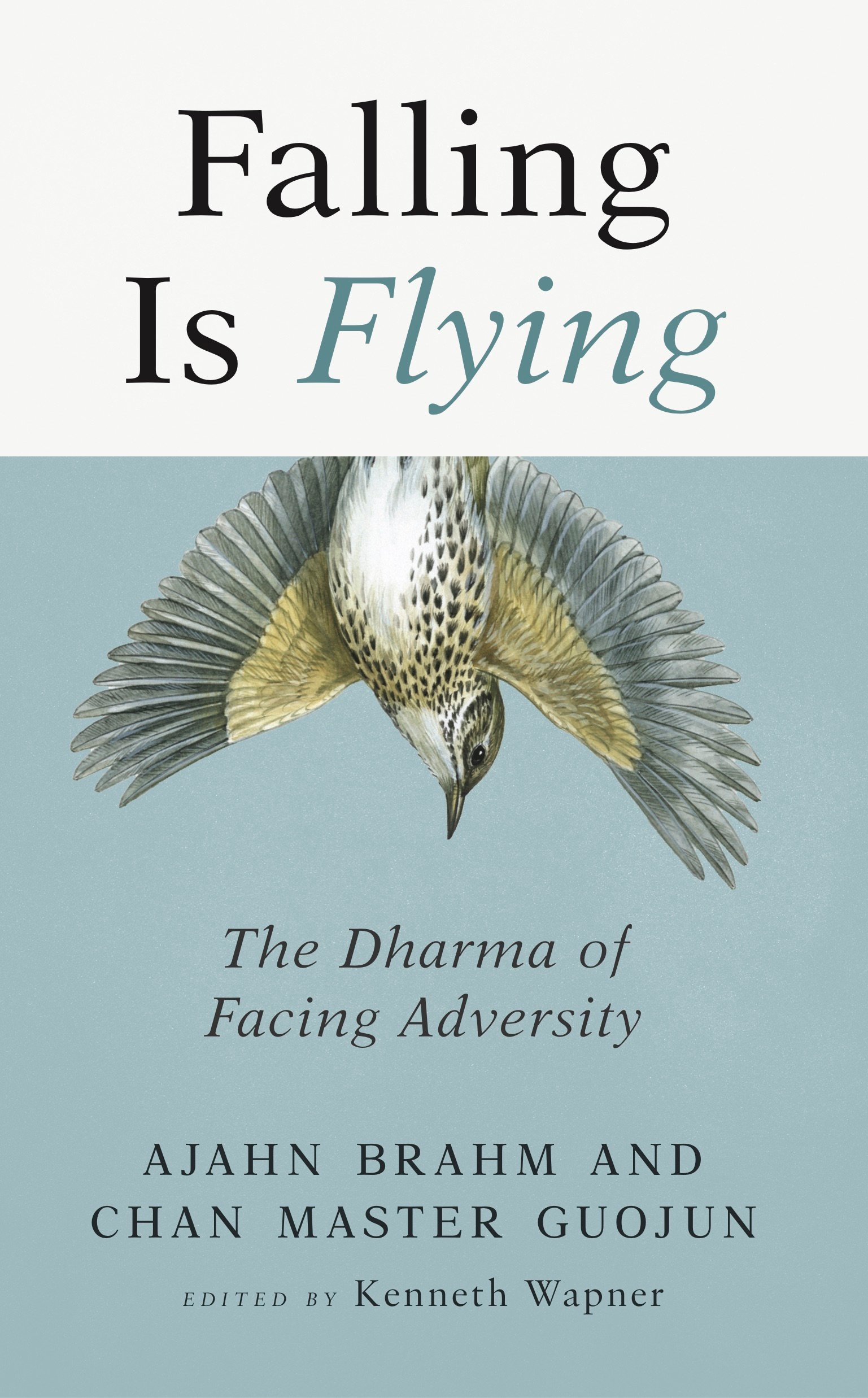
FALLING IS FLYING
The Dharma of Facing Adversity
“Instead of trying to discipline your mind with ill will, fault-finding, guilt, punishment, and fear, use something far more powerful: the beautiful kindness, gentleness, and forgiveness of making peace with life.”—Ajahn Brahm
“In free fall, nothing is solid and there is nothing to hold on to. There is no way to control the experience. You have to surrender, and with that surrender comes the taste of liberation.”
—Master Guojun
Ajahn Brahm and Chan Master Guojun—one a teacher in the Theravada Buddhist tradition, the other in the Chinese Zen tradition—share personal stories and anecdotes from their own experiences of dealing with life’s pitfalls. Personal, poetic, instructive, and often laugh-out-loud funny, this is inspiring advice for people from all walks of life.
About the Author
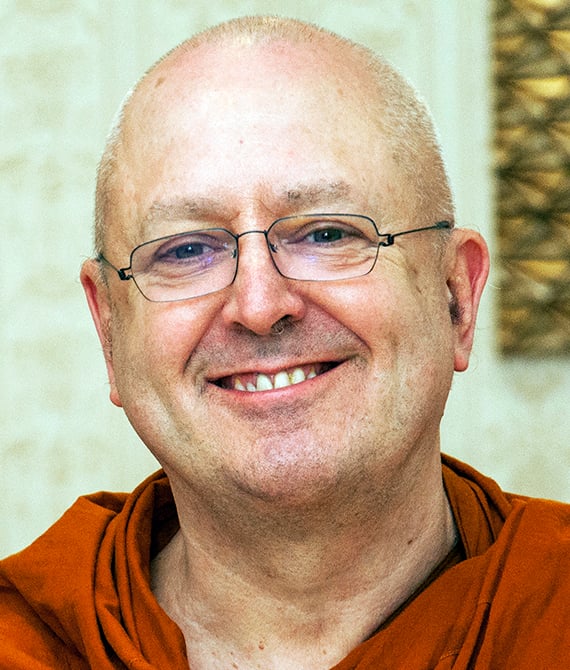
Ajahn Brahm (Ajahn Brahmavamso Mahathera), born Peter Betts in London in 1951, is a Theravada Buddhist monk. Ajahn Brahm grew up in London and earned a degree in Theoretical Physics from Cambridge University. Disillusioned with the world of academe, he trained as a monk in the jungles of Thailand under Ajahn Chah. A monk for over thirty years, Ajahn Brahm is a revered spiritual guide and the abbot of Bodhinyana Monastery, in Serpentine, Western Australia—one of the largest monasteries in the southern hemisphere. He is also the Spiritual Director of the Buddhist Society of Western Australia, and spiritual adviser and inspiration for Buddhist centers throughout Asia and Australia. His winning combination of wit and wisdom makes his books bestsellers in many languages, and on his teaching tours Brahm regularly draws multinational audiences of thousands.
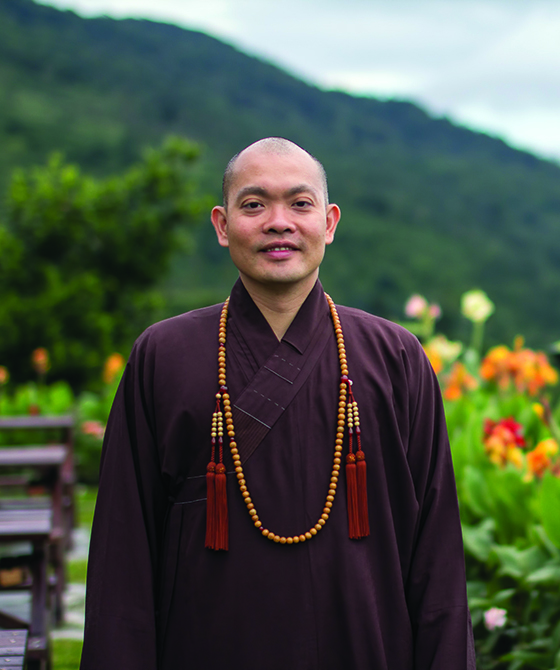
Master Guojun was born in Singapore in 1974 and ordained as a monk under Ven. Songnian of Mahabodhi Temple, Singapore. He is one of the youngest Dharma heirs of the renowned Chan master Sheng Yen. He has practiced meditation intensively since 1997. He has studied Tibetan Buddhism and Theravada Buddhism, as well as various aspects of the Mahayana tradition. Master Guojun is also a spiritual and guiding teacher of Chan Community Canada and Chan Indonesia. He was the abbot of Dharma Drum Retreat Center in Pine Bush, New York, from 2005 to 2008. He is the author of Essential Chan Buddhism, which has been published in several languages, and Chan Heart, Chan Mind. He is currently the president of Mahabodhi Monastery in Singapore.
Book Information
- eBook
- 152 pages
- $9.99
- ISBN 9781614294375
- Paperback
- 152 pages, 5 x 8 inches
- $15.95
- ISBN 9781614294252
Discover More
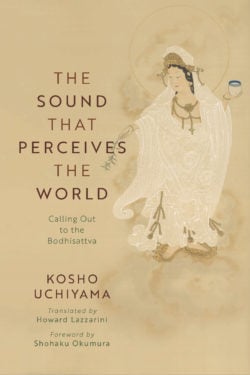


The Sound that Perceives the World
Musings and autobiographically informed commentary on the human condition through the lens of the Kannon-gyo—chapter 25 of the Lotus Sutra—connecting Zen and Pure Land Buddhism through the practice of venerating and chanting the names of buddhas and bodhisattvas.
The Kannon-gyo is chapter 25 of the Lotus Sutra, and its focus is the bodhisattva of compassion, Avalokiteshvara, known in China as Guanyin, and in Japan as Kannon or Kanzeon. The text describes the many ways in which calling out the bodhisattva’s name—Namu Kanzeon Bosatsu—can relieve suffering.
Most schools of Zen Buddhism, and especially the Soto school, eschew such practices as chanting the names of buddhas and bodhisattvas, along with venerating such figures.
The eminent Soto Zen master Kosho Uchiyama Roshi, however, while doing hard physical labor early in his career, could not practice zazen—that is, formal sitting meditation. He came to appreciate the Kannon-gyo and the practices related to it. In particular, he took to reciting Kannon’s name, as recommended in the text of the Kannon-gyo.
Later in life, Uchiyama Roshi suffered from illness that again prevented him from practicing formal Zen, so he returned to the Kannon-gyo and the practice of chanting. He went so far as to assert that chanting Kannon’s name is completely equivalent to zazen, that the two practices are simply two sides of the same coin—a revolutionary idea seemingly at odds with Zen.
Chanting practice is especially accessible, as it can be done while working, traveling, or suffering from illness, and other activities that would ordinarily get in the way of formal Zen practice.
With these practices, the Kannon-gyo, and Kannon herself as a backdrop, Uchiyama Roshi muses about the purposes of religion, the goals of religious practice, and the meaning of enlightenment—and their relation to suffering itself.
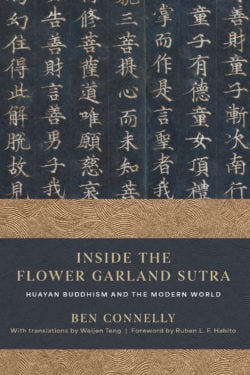
Inside the Flower Garland Sutra
A Soto Zen teacher explores the core teachings of the ancient Flower Garland school of Buddhism through an innovative and engaging narrative showing how to put these teachings into practice.
Huayan Buddhism arose in the sixth century in China rooted in the Mahayana Flower Garland Sutra. The teachings of Huayan and the sutra that inspired it had a profound influence on Chan and Zen. Huayan is relational, practical, and positive. Its emphasis on interdependence, celebration of the sensual world, and diversity of people and practices provides inspiration for what Thich Nhat Hanh called “engaged Buddhism”.
With Inside the Flower Garland Sutra Zen teacher Ben Connelly explains the significance of Huayan teachings for Buddhist practice. Each chapter is a commentary on one of the thirty lines of Uisang’s “Song of Dharma Nature”—a seminal Korean text that summarizes key aspects of Huayan thought—thus providing a broad overview of Huayan teachings and their practical implications for contemporary life, with a mix of testimonies from real-life situations and references to influential Buddhist texts.
Arising fifteen hundred years ago, Huayan has made a deep impact on East Asian Buddhism, and has much to offer during this era when many folks see ever-deepening divisions. Connelly explores how Huayan offers particular wisdom for those concerned about how to care for their own lives as they work to end harms such as ecological devastation, poverty, militarism, addiction, marginalization, and exploitation.
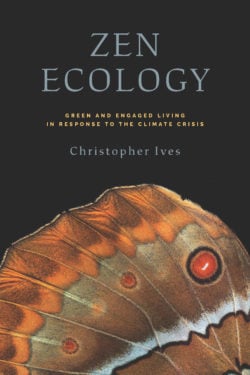
Zen Ecology
Discover a way of living that can help you slow down and stay grounded—and at the same time reduce your ecological impact and engage more fully with the climate crisis.
It may seem as though living ecologically and engaging in activism sacrifices our own enjoyment and happiness on the altar of doing the right thing. In this book, professor, naturalist, and Buddhist author Christopher Ives offers an alternative: a way of living that can actually be more fulfilling than the modern consumerist lifestyle. Rather than deprivation, it can bring us richness.
In Zen Ecology, Chris outlines his environmental ethic as a series of concentric circles, beginning with ourselves and then moving outward into our communities, all the while focusing on spaciousness, mindfulness, generosity, and contentment. At the individual level, we deal with distraction, clutter, and ecological harm. Here, Chris offers ways to help us pay attention, simplify our lives, and lower our impact. Then, we explore how to envision our home as a “place of the Way,” with Zen monastic life as a model for this—without having to be a monk! Next, we realize our embeddedness in nature and emplace ourselves in community with others, including other forms of life. Finally, we build on this basis to engage in activism to create a world that is more supportive of ecological health and spiritual fulfillment.
In this way, we avoid the two extremes of apathy and burnout, and uncover a way of living that is simple, joyful, embedded in nature, connected to others in community, and supportive of collective action.
You may also be interested in Chris’s other books, Zen on the Trail, which explores the broad question of how to be outside in a meditative way, and Meditations on the Trail, which offers do-anywhere meditations that will help you deepen your connection to nature and yourself.
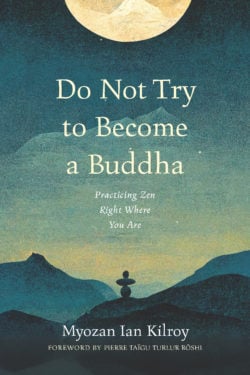
Do Not Try to Become a Buddha
A Zen Buddhist priest paints a picture of Zen in Ireland in this collection of short essays.
In this collection of short essays, Irish Soto Zen priest Myozan Ian Kilroy describes how he came to practice Zen, introduces some basics of Zen philosophy, and recalls the challenges of establishing a Zen Buddhist community in Catholic-dominated Ireland. Along the way, he explores the rituals and practices that Zen brings to everyday life, from holidays to weddings to birth ceremonies to funerals. A former journalist, Rev. Myozan’s clear yet entertaining storytelling style paints a clear picture of how Zen has adapted to the culture and traditions of Ireland.
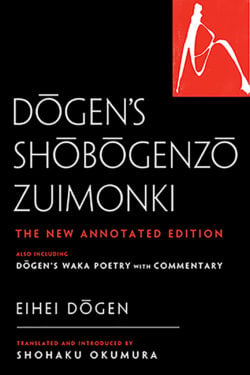
Dogen’s Shōbōgenzō Zuimonki
Discover the teachings of the preeminent Zen Master Dōgen in his own words, written down by his Dharma successor, Koun Ejō. This edition includes both the Shōbōgenzō Zuimonki and translations of and commentary on Dōgen’s luminously evocative waka poetry.
Distinct from Dōgen’s similarly titled magnum opus (simply called the Shōbōgenzō), the Shōbōgenzō Zuimonki can be read as a highly practical manual of Buddhist practice. Consisting of straightforward and accessible teachings and making more limited use of the allusion, wordplay, and metaphor that characterize the essays in the Shōbōgenzō, this work is an essential read for any student of Zen Buddhism. Among the many topics covered, Dōgen especially emphasizes the following points: seeing impermanence, departing from the ego-centered self, being free from greed, giving up self-attachment, following the guidance of a true teacher, and the practice of zazen, specifically shikantaza, or “just sitting.” Additionally, this translation of the Shōbōgenzō Zuimonki has extensive notes, which help to provide you with a new way of approaching the text.
The collection of waka poems included in this volume are a beautiful artistic expression of the Dharma. Rarely seen in this large of a collection or with commentary, this poetry offers unique insight into an important expression of Dōgen’s teachings.
By the spring wind
my words are blown and scattered
people may see them
the song of flowers
These teachings, which have informed teachers and practitioners alike throughout the centuries, will deepen your knowledge, understanding, and experience of the Sōtō Zen tradition.
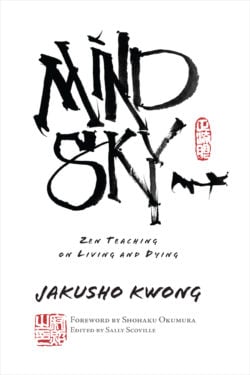
Mind Sky
“In Zen meditation, anything that comes in your mind will eventually leave, because nothing is permanent. A thought is like a cloud moving across the blue sky. Nothing can disturb that all-encompassing vastness. This is the Dharma.”
In a collection of talks and anecdotes, Jakusho Kwong-roshi, a Dharma successor of Shunryu Suzuki-roshi, presents his approach to Buddhist teaching. Containing photos of Kwong-roshi with his teachers, as well as a selection of his vibrant calligraphy, Mind Sky explores the profound beauty of Zen history and practice, nature, and the philosophy of the ancient Zen master Eihei Dōgen.
With an elegant simplicity, Kwong-roshi shows how Zen is experiential rather than intellectual. And with persistent practice, realization is already yours.
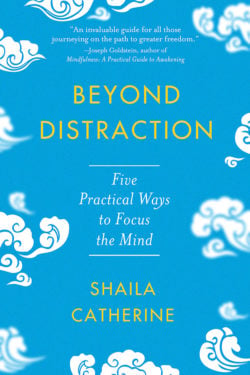
Beyond Distraction
The mind can be a potent tool, used to guide extraordinary achievements, inspire good works, and incline your spiritual path toward peace and awakening. But the mind can also produce thoughts that lead to suffering. For many people, thoughts run rampant and seem to oppress or control their lives. Even the Buddha tells us that before his enlightenment, he sometimes found his mind preoccupied by thoughts connected with sensual desire, ill will, and harm. But he figured out how to respond to thoughts skillfully and developed a step-by-step approach to calm the restless mind. Now, Insight Meditation teacher Shaila Catherine offers an accessible approach to training the mind that is guided by the Buddha’s pragmatic instructions on removing distracting thoughts. Drawing on two scriptures in the Middle Length Discourses of the Buddha, Shaila shows you how to overcome habitual modes of thinking, develop deeper concentration, and discover the insights into emptiness that are vital for a liberating spiritual path.
Following the Buddha’s pragmatic approach, Shaila guides you through five steps for overcoming distraction and focusing the mind:
- Replace unwholesome thoughts with wholesome thoughts.
- Examine the dangers of distracting thoughts.
- Avoid it, ignore it, forget it.
- Investigate the causes of distraction.
- Apply determination and resolve.
Each chapter includes exercises and reflections to help you cultivate the five steps to deeper concentration. You’ll learn about your mind and develop your ability to direct your attention more skillfully in meditation and daily activities. And ultimately, you’ll discover for yourself how these five steps boil down to one key realization: In the moment you recognize that a thought is just a thought, you will find yourself on the path to a life of remarkable freedom.
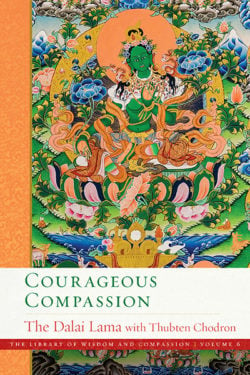
Courageous Compassion
Courageous Compassion, the sixth volume of the Library of Wisdom and Compassion, continues the Dalai Lama’s teachings on the path to awakening. The previous volume, In Praise of Great Compassion, focused on opening our hearts with love and compassion for all living beings, and the present volume explains how to embody compassion and wisdom in our daily lives. Here we enter a fascinating exploration of bodhisattvas’ activities across multiple Buddhist traditions—Tibetan, Theravāda, and Chinese Buddhism.
After explaining the ten perfections according to the Pāli and Sanskrit traditions, the Dalai Lama presents the sophisticated schema of the four paths and fruits for śrāvakas and solitary realizers and the five paths for bodhisattvas. Learning about the practices mastered by these exalted practitioners inspires us with knowledge of our minds’ potential. His Holiness also describes buddha bodies, what buddhas perceive, and buddhas’ awakening activities.
Courageous Compassion offers an in-depth look at bodhicitta, arhatship, and buddhahood that you can continuously refer to as you progress on the path to full awakening.
Learn more about the Library of Wisdom and Compassion series.
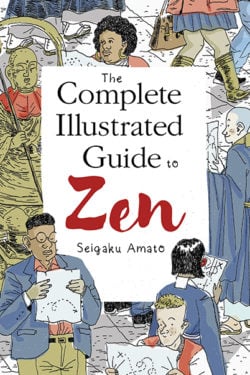
The Complete Illustrated Guide to Zen
The Complete Illustrated Guide to Zen offers a comprehensive overview of Soto Zen Buddhism in a delightfully captivating way. Complete with dynamic, detailed illustrations, Soto Zen Priest Seigaku Amato uses a semi-narrative style to take you on a visual tour of Buddhism and, using specifics to illuminate universals, dives deep into the practices and forms of Soto Zen.
Whether you are just taking your first step or have been practicing Zen for years, this creative and profound book will be a constant companion and guide on your journey as it explores topics such as:
- A brief history of Buddhism
- An iconographic overview of various buddhas and bodhisattvas
- An introduction to the various practices of Zen including meditation (zazen), work practice (samu), and meditative eating (oryoki)
- A what’s what of holidays, ceremonies, temple instruments, and religious vestments
- A how-to guide for setting up a home altar
“This is a cute book! But it’s not just cute, it’s also deep and profound, and is one of the best guides to Zen practice I have ever come across. The illustrations are delightful and the written sections are clear and easy to understand. I give it a million zillion stars!”—Brad Warner, author of Hardcore Zen
“I loved this book and smiled the whole way through. But don’t be fooled by its whimsy! There’s a wealth of experience, knowledge, and devotion behind these illustrations. This book is a perfect guide for a beginning Zen student and makes a delicious snack for the more advanced practitioner.”—Gesshin Greenwood, author of Bow First, Ask Questions Later
Meditations on the Trail
Meditations on the Trail offers a rich array of do-anywhere meditations that will help you explore and deepen your connection to nature, and yourself, in new ways, making the most of your time on the trail.
This small book—perfect for throwing in a daypack or a back pocket as you head out for the trail—is filled with practices to take you into the heart of the natural world and uncover your most vibrant self. You’ll return home grateful, more aware of interconnection, and maybe just a little wiser.
You may also be interested in Chris’s other books, Zen on the Trail, which explores the broad question of how to be outside in a meditative way, and Zen Ecology, in which he reveals a way of living that can help you slow down, stay grounded, and deal with all that is flying at you—and at the same time can help you reduce your ecological impact and engage more effectively with the climate crisis.
Abiding in Emptiness
Before the growth of the Mahāyānā and the Perfection of Wisdom, the Buddha gave his own teachings, to his attendant Ānanda, on the importance of emptiness (Pāli suññatā, Sanskrit śūnyatā) in formal meditation and everyday practice. In this volume, renowned scholar-monk Bhikkhu Anālayo explores these teachings and shows us how to integrate them into our lives.
Bhikkhu Anālayo draws from instructions found in the Greater and the Smaller Discourses on Emptiness (the Mahāsuññatasutta and the Cūḷasuññatasutta). In each chapter, he provides a translation of a pertinent excerpt from the discourses, follows this with clear and precise explanations of the text, and concludes by offering instructions for practice.
Step by step, beginning with daily life and concluding with Nirvana, Bhikkhu Anālayo unpacks the Buddha’s teachings on the foundational teaching of emptiness.
Grieving Is Loving
A book of poems, quotations, reflections, and stories from the author of one of the most beloved books on grief and loss.
This book is a companion to carry with you throughout your day, to touch in with and be supported by when bearing the unbearable pain of a loved one’s death—whether weeks or years since their passing.
In the style of a quote-a-day collection, this book from Wisdom’s bestselling author Joanne Cacciatore distills down the award-winning book Bearing the Unbearable into easy-to-access small chunks, and includes much brand-new material, including new prose and poems from Dr. Jo and other sources.
If you love, you will grieve—and nothing is more mysteriously central to becoming fully human.
Our culture often makes the bereaved feel alone, isolated, broken, and like they should just “get over it”—this book offers a loving antidote.
Open to any page of Grieving Is Loving and you’ll find something that will instantly help you feel not alone, while honoring the full weight of loss.
This book is comprised of quotations from Bearing the Unbearable, and other sources as well, plus an enormous amount of new material from Dr. Jo. Especially well-suited for the grieving mind that may struggle with concentration, just 30 seconds on any page will empower, hearten, and validate any bereaved person—helping give strength and courage to bear life’s most painful losses.
You can also explore Dr. Jo’s book, Bearing the Unbearable, its journal companion, Bearing the Unbearable: A Guided Journal for Grieving, as well her her Wisdom Academy course, Bearing the Unbearable, and her card deck, Cards for Bearing the Unbearable.
The Grand Delusion
In The Grand Delusion, bestselling author Steve Hagen drills deeply into the most basic assumptions, strengths, and limitations of religion and belief, philosophy and inquiry, science and technology. In doing so, he shines new light on the great existential questions—Why is there Something rather than Nothing? What does it mean to exist? What is consciousness? What is the nature of truth?—and does so from an entirely unexpected direction.
Ultimately, this book reveals how all of our fundamental questions stem from a single error, a single unwarranted belief—a single Grand Delusion.
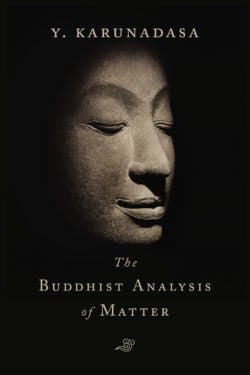
The Buddhist Analysis of Matter
The Buddhist Analysis of Matter is an in-depth study of the Buddhist view of the nature and composition of matter as interpreted in Theravāda Buddhism. The study is mainly based on the seven treatises of the canonical Abhidhamma as well as the subsequent commentarial exegesis. However, in order to bring the subject into a wider perspective and to present it with a measure of precision, it takes into consideration the parallel doctrines of the Vaibhāṣika and Sautrāntika schools of Buddhism. These were two of the leading non-Mahāyāna schools with which the Theravādins had much in common. Both subscribed to a realistic view of existence: while the former had a tendency to extreme realism, the latter had a predilection, but not a commitment, to subjectivism.
Acclaimed scholar Y. Karunadasa’s Buddhist Analysis of Matter provides a much-needed micro view of the topic with a detailed examination of the Theravādins’ list of rūpa-dhammas—the ultimate irreducible factors into which material existence is analyzed. It exposes the nature of the basic material elements and explains their interconnection and interdependence on the basis of conditional relations. It concludes with an attempt to understand the nature and relevance of the Buddhist analysis of matter in the context of Buddhism as a religion.
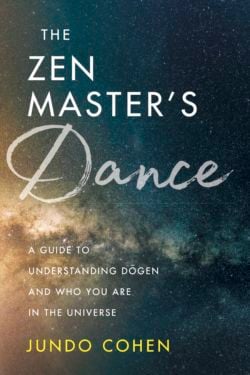
The Zen Master’s Dance
A fresh take on how to read Dōgen.
In The Zen Master’s Dance, Jundo Cohen takes us deep into the mind of Master Dōgen—and shows us how to join in the great and intimate dance of the universe. Through fresh translations and sparkling teaching, Cohen opens up for us a new way to read one of Buddhism’s most remarkable spiritual geniuses.
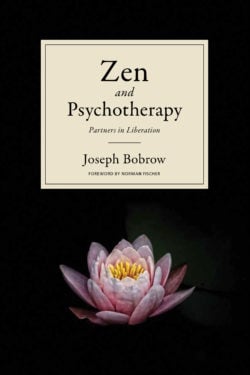
Zen and Psychotherapy
This book is an intimate dialogue that examines the interplay of emotional and spiritual development through the lens of Zen Buddhism and psychotherapy. Zen and Psychotherapy artfully illuminates the intrinsic connections between the two practices, and demonstrates how the traditions can be complementary in helping to live a truly fulfilled and contented life.
Zen teacher and psychologist Joseph Bobrow deftly shows how the major themes of trauma, attachment, emotional communication, and emotional regulation play out in the context of Zen and of psychotherapeutic practice, and how, in concert, both provide a comprehensive, interactive model of fully functioning human life.
Creating a Life of Integrity
Creating a Life of Integrity is our personal trainer for strengthening our integrity muscles.
When we don’t speak or act from our own sense of integrity, we feel lousy. Find out how you can live with more integrity—and subsequently more joy—as you follow these lively conversations between Joseph Goldstein, a founder of the modern mindfulness movement, and Gail Stark, a businesswoman and his student and friend of twenty-five years.
As Joseph and Gail unpack the components of integrity—generosity, virtue, renunciation, wisdom, courage, patience, truthfulness, resoluteness, loving-kindness, and equanimity—we discover each is a step on a path that transports us to an empowered place of clarity, commitment, and, consequently, more joy. As we strengthen and weave these qualities into our daily lives they become our trusted first response in a world that needs our integrity now.
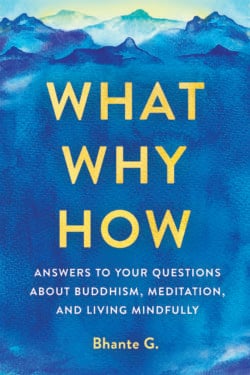
What, Why, How
Everything you ever wanted to know but never had a chance to ask about meditation and Buddhist spiritual practice, from one of the greatest mindfulness teachers of our time.
How can I fit meditation into my busy life?
How should I understand karma and rebirth?
Is enlightenment even possible for me?
Sound familiar? If you’ve ever meditated or studied Buddhism, you may have found yourself asking these questions—and many more! Here’s the good news: there are answers, and you’ll find them all in this book. Imagine that you could sit down with one of Buddhism’s most accomplished and plainspoken teachers—and imagine that he patiently agreed to answer any question you had about meditation, living mindfully, and key Buddhist concepts—even the myriad brilliant questions you’ve never thought to ask! What, Why, How condenses into one volume a half-century of Bhante G.’s wise answers to common questions about the Buddha’s core teachings on meditation and spiritual practice. With his kind and clear guidance, you’ll gain simple yet powerful insights and practices to end unhealthy patterns and habits so that you can transform your experience of the world—from your own mind to your relationships, your job, and beyond.